Horsetails (Equisetum)
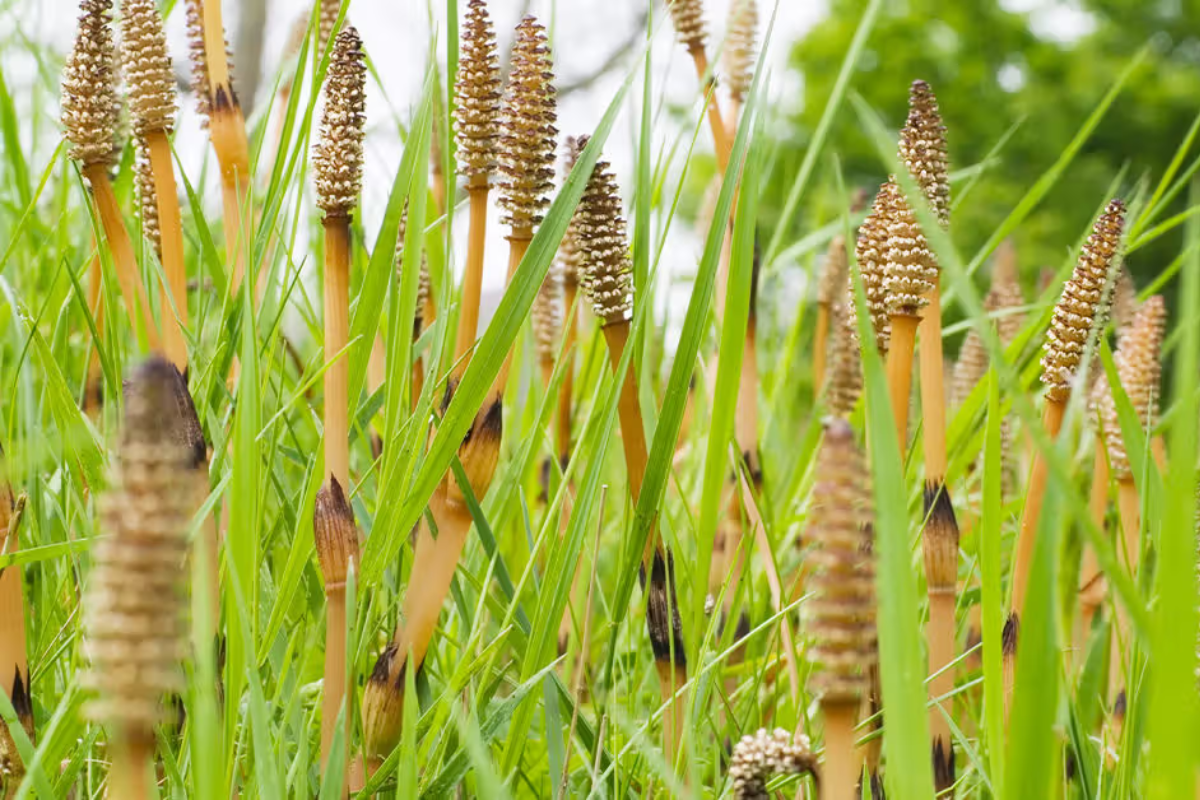
Horsetails (Equisetum), ancient botanical survivors with a lineage stretching back to the Devonian period over 350 million years ago, hold a unique place in Earth’s evolutionary chronicles. These hardy plants bore witness to the dynamic shifts in terrestrial ecosystems, standing resilient against the tide of changing landscapes. Enduring the cataclysmic asteroid impact that triggered mass extinctions, horsetails demonstrated their remarkable adaptability, thriving in a spectrum of environments ranging from waterlogged wetlands to arid expanses. Their robust, jointed stems and reproductive prowess through spores played pivotal roles in their post-apocalyptic survival, allowing them to endure and evolve.
In today’s time, horsetails, though represented by fewer species than in their primeval heyday, continue to contribute significantly to diverse ecosystems. Their adaptation strategies include a high silica content, rendering them resistant to herbivores and offering a natural defense mechanism. Beyond their resilience, horsetails actively participate in ecological processes, contributing to soil stabilization in wetland areas. Understanding the evolutionary trajectory of these ancient plants not only unveils the intricate dance between life forms and their environments over millions of years but also stresses the role they play in shaping contemporary ecosystems, emphasizing the importance of their conservation in preserving Earth’s living history.