Cephalopods
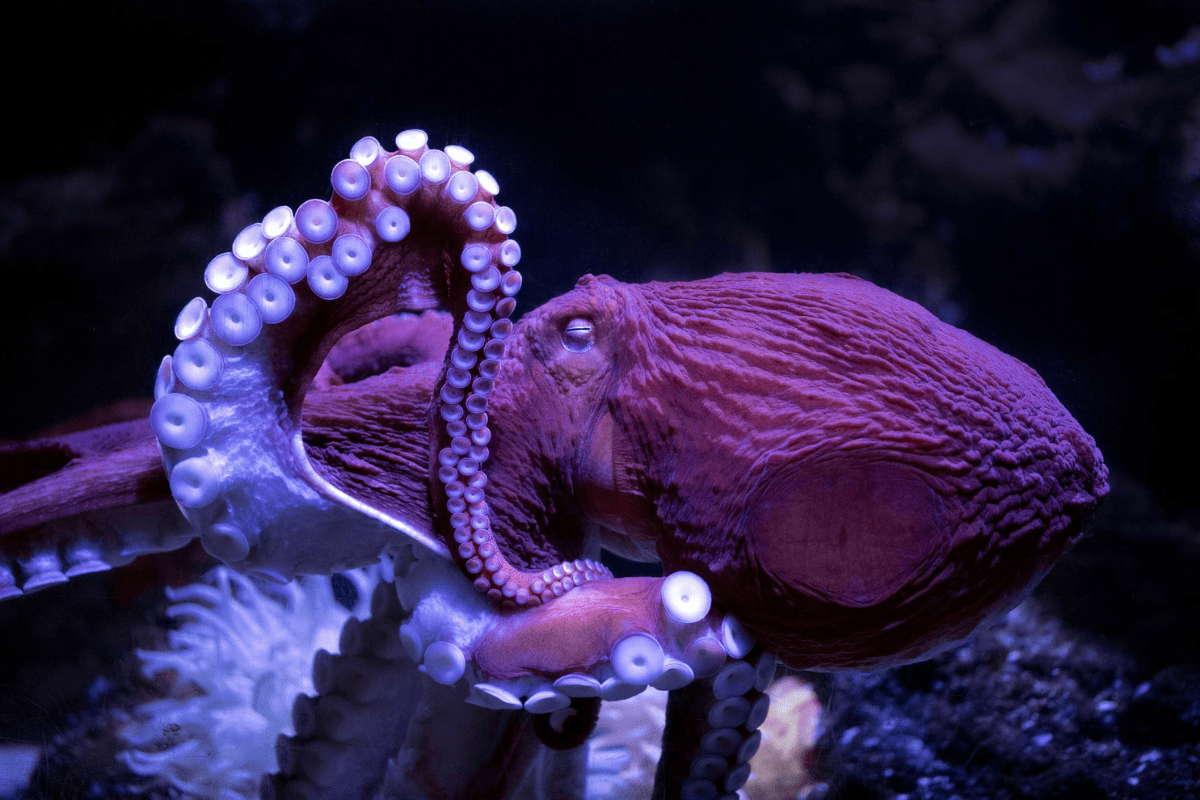
Cephalopods, a group of marine invertebrates including squids, octopuses, and cuttlefish, possess an astonishing evolutionary history that spans over 500 million years. Their lineage places them among the oldest surviving creatures on Earth, a testament to their resilience and adaptability. As the asteroid impact loomed, cephalopods found sanctuary in their deep-sea habitats. The profound darkness and pressure of the ocean depths shielded them from the immediate cataclysmic effects above, providing a haven where survival instincts could be honed. Agile and swift, their mobility became a critical factor in post-impact adaptation. Cephalopods swiftly navigated the vast oceans, finding new niches and evolving to thrive in the changing conditions.
In the modern era, cephalopods continue to be pivotal components of marine ecosystems, their existence a living testament to their survival strategies. Octopuses, renowned for their intelligence, have developed intricate camouflage abilities and advanced problem-solving skills. These adaptations enable them to navigate and thrive in a variety of habitats, demonstrating the flexibility that has allowed cephalopods to persist for millions of years. Squids showcase remarkable speed and agility, traits finely tuned through evolutionary pressures. Studying the ancient origins and ongoing evolution of cephalopods not only enriches our understanding of Earth’s biological history but also gives a sense of urgency to conservation efforts.