Sponges
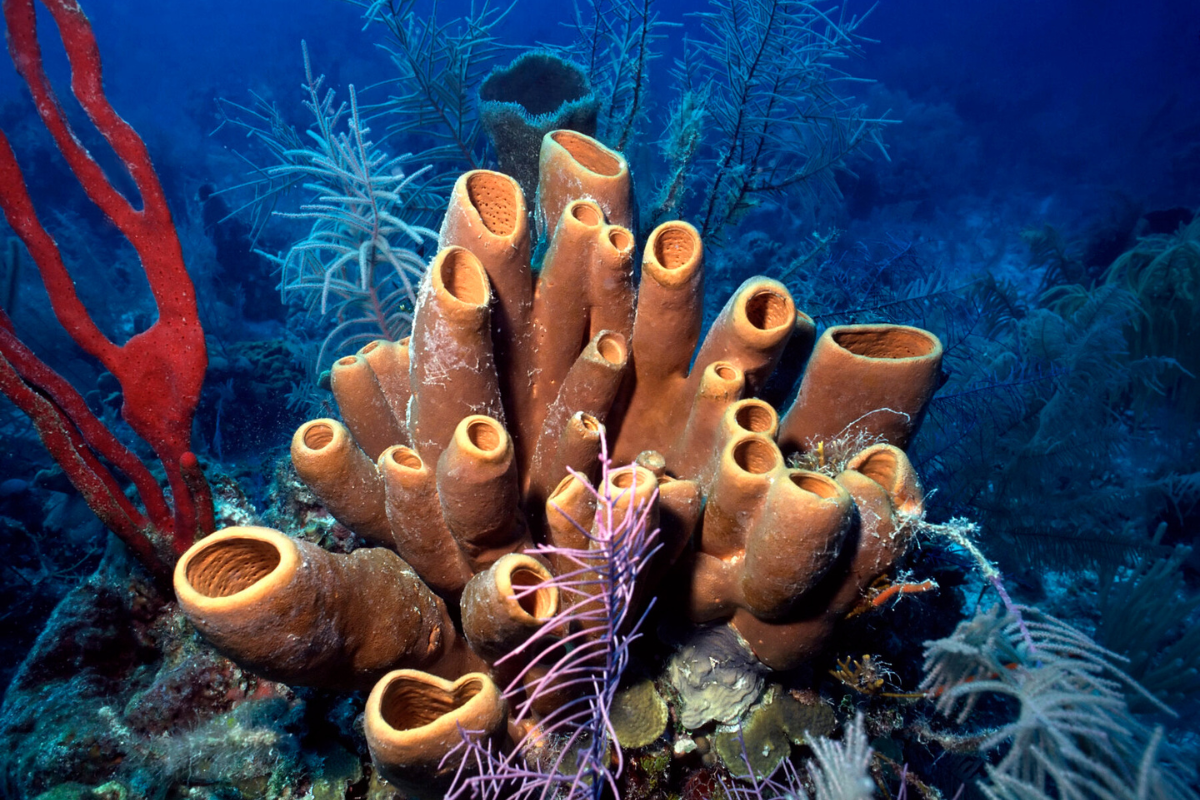
Sponges, with a lineage extending over 500 million years, stand as remarkable witnesses to Earth’s ancient history. As primitive multicellular organisms, sponges lack the complexity of true tissues and organs, yet their survival is a testament to their ability to adapt to the dynamic challenges presented by Earth’s ever-evolving ecosystems. During the catastrophic asteroid impact that marked the end of the dinosaurs, sponges exhibited a survival strategy rooted in their resilient and adaptable nature. Their sessile lifestyle, firmly attached to surfaces in marine environments, likely shielded them from the immediate devastation, allowing them to endure through the turbulent aftermath.
In the present era, sponges continue to be integral components of marine ecosystems, playing a vital role in maintaining water quality through their efficient filtration processes. Beyond their ecological contributions, sponges have garnered attention in pharmaceutical research due to their unique biochemical properties. While the fundamental body plan of sponges has persisted relatively unchanged, the ongoing exploration of deep-sea environments has unveiled new sponge species, showcasing their adaptability even in extreme conditions.