Horseshoe Crabs
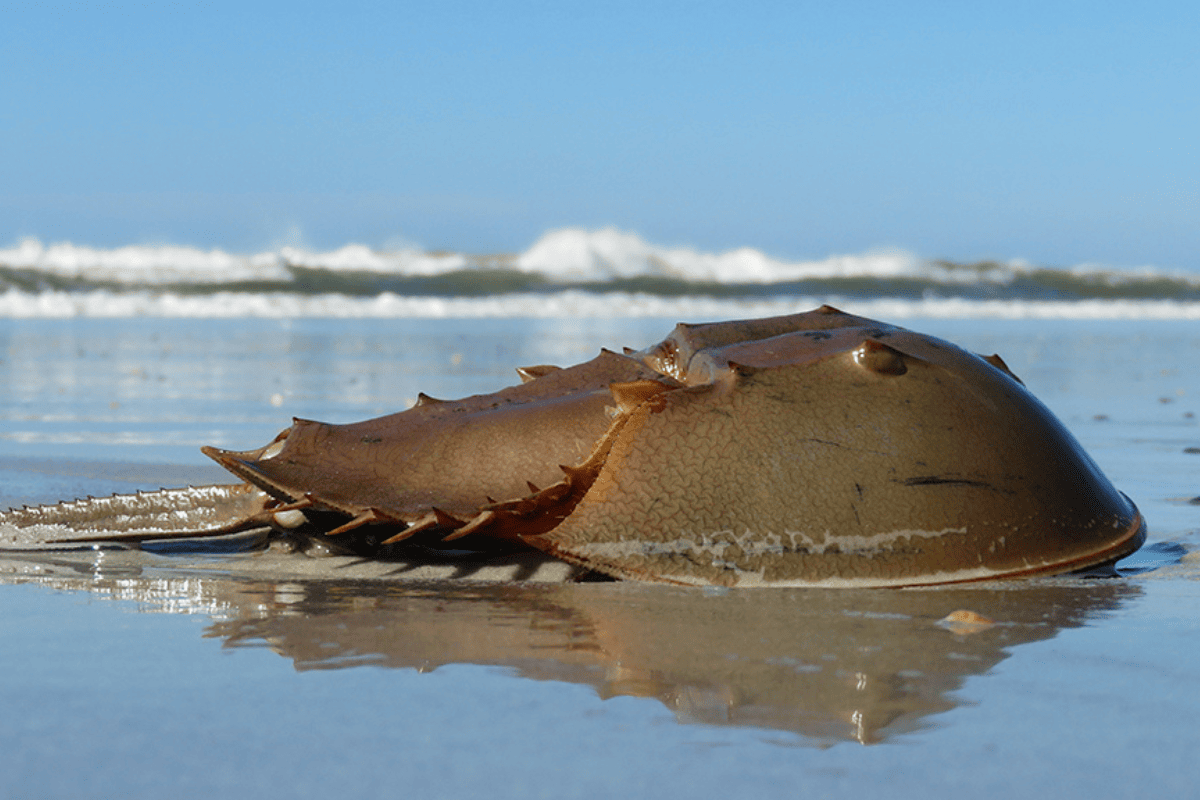
Horseshoe crabs, revered as living fossils with a lineage extending over an astonishing 450 million years, are a testament to the enduring resilience of ancient marine life. The distinctive horseshoe-shaped carapace that characterizes these arthropods has remained relatively unchanged over the millennia, earning them the moniker of living fossils. During the cataclysmic asteroid impact that triggered mass extinctions, horseshoe crabs demonstrated an exceptional survival strategy. Their preference for shallow coastal waters provided a haven, shielding them from the more severe consequences of the environmental upheaval. This adaptability and ability to withstand varying environmental conditions likely played a crucial role in ensuring their continued existence.
In the post-impact world, horseshoe crabs embarked on an evolutionary journey, diversifying into different species that adapted to various coastal ecosystems. This evolution allowed them to carve out ecological niches and thrive in environments shaped by the aftermath of the mass extinction event. In the contemporary era, the significance of horseshoe crabs in marine ecosystems cannot be overstated. Their eggs, laid in abundance along coastal shores, serve as a critical food source for migratory shorebirds during their long journeys. Furthermore, the blue blood of horseshoe crabs contains a substance called Limulus amebocyte lysate (LAL), which is integral to the detection of bacterial contamination in medical applications, ensuring the safety of vaccines and medical equipment. Recognizing the ecological and biomedical importance of horseshoe crabs, ongoing conservation efforts are diligently underway to safeguard their populations and preserve the delicate balance they contribute to marine ecosystems.
Where Do We Find This Stuff? Here Are Our Sources:
Crocodiles: https://www.dailymail.co.uk/sciencetech/article-9121809/Scientists-discover-crocodiles-survived-asteroid-strike-wiped-dinosaurs.html
Turtles: https://www.livescience.com/14984-tough-turtles-survive-extinction-event.html
Frogs: https://www.smithsonianmag.com/science-nature/how-frogs-survived-the-asteroid-impact-that-wiped-out-dinosaurs-180981195/
Lizards: https://www.cbc.ca/news/science/lizards-snakes-almost-went-extinct-with-dinosaurs-1.1266168
Birds: https://theconversation.com/how-did-birds-survive-while-dinosaurs-went-extinct-197185
Fish: https://www.science.org/content/article/fish-diversity-exploded-when-dinosaurs-went-extinct
Beetles: https://phys.org/news/2020-03-beetles-diet-cretaceous-period.html
Ferns: https://www.the-scientist.com/notebook/why-did-ferns-persist-when-all-other-plants-perished-70325
Bacteria: https://www.nytimes.com/2020/02/01/science/asteroid-dinosaurs-crater-bacteria.html
Sharks: https://www.newsweek.com/how-sharks-survived-mass-extinction-asteroid-killed-dinosaurs-1783743
Snakes: https://www.bbc.com/news/science-environment-58559735
Crustaceans: https://www.floridamuseum.ufl.edu/science/marine-predators-reshaped-ocean-life-mass-extinction-scale/
Sponges: https://www.livescience.com/57864-sponges-thrived-after-mass-extinction.html
Cephalopods: https://ocean.si.edu/ocean-life/invertebrates/cephalopods
Mollusks: https://www.iflscience.com/how-some-sea-snails-survived-a-mass-extinction-66031
Cockroaches: https://www.livescience.com/how-cockroaches-survived-dino-killing-asteroid
Horsetails: https://themeaningofwater.com/2022/10/02/from-giant-tree-to-little-plant-equisetum-a-study-an-evolution/
Mole Rats: https://www.ncbi.nlm.nih.gov/pmc/articles/PMC6789728/
Horse Shoe Crabs: https://phys.org/news/2012-01-horseshoe-crabs-nature-great-survivors.html