14. Woodland Musk Ox
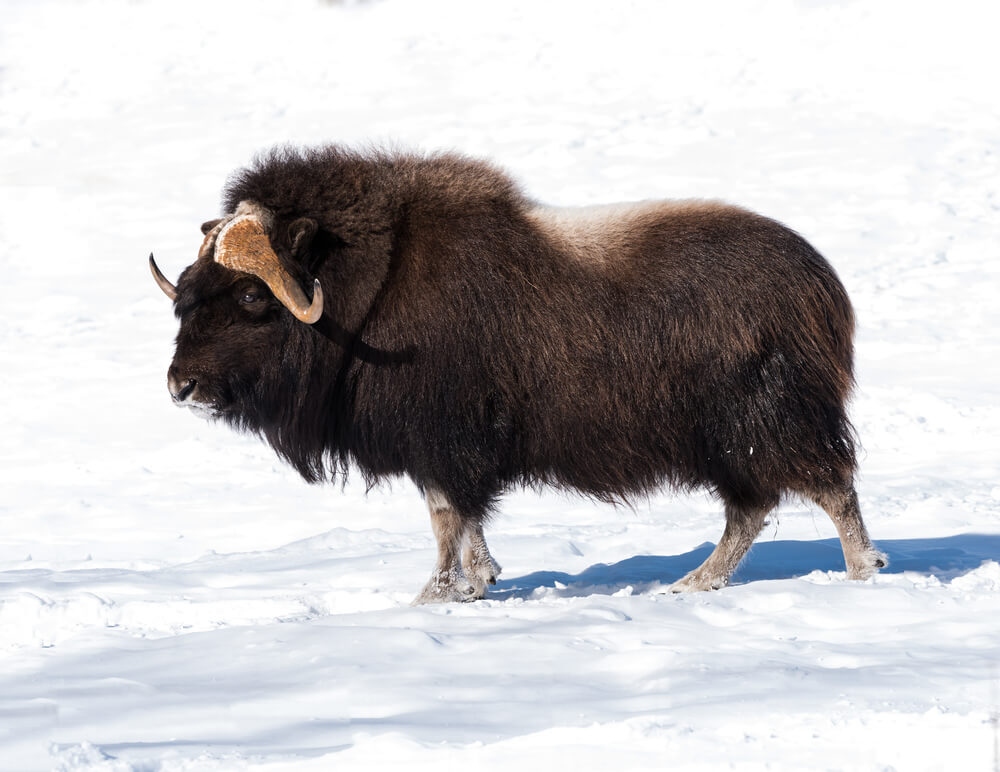
Bootherium bombifrons is the scientific term used to describe the regal woodland musk ox. During the Pleistocene era, this large mammal was one of the most prominent musk ox species in North America. Woodland musk ox fossils have been discovered all over the country, including in Alaska, Texas, California, New Jersey, and Oklahoma.
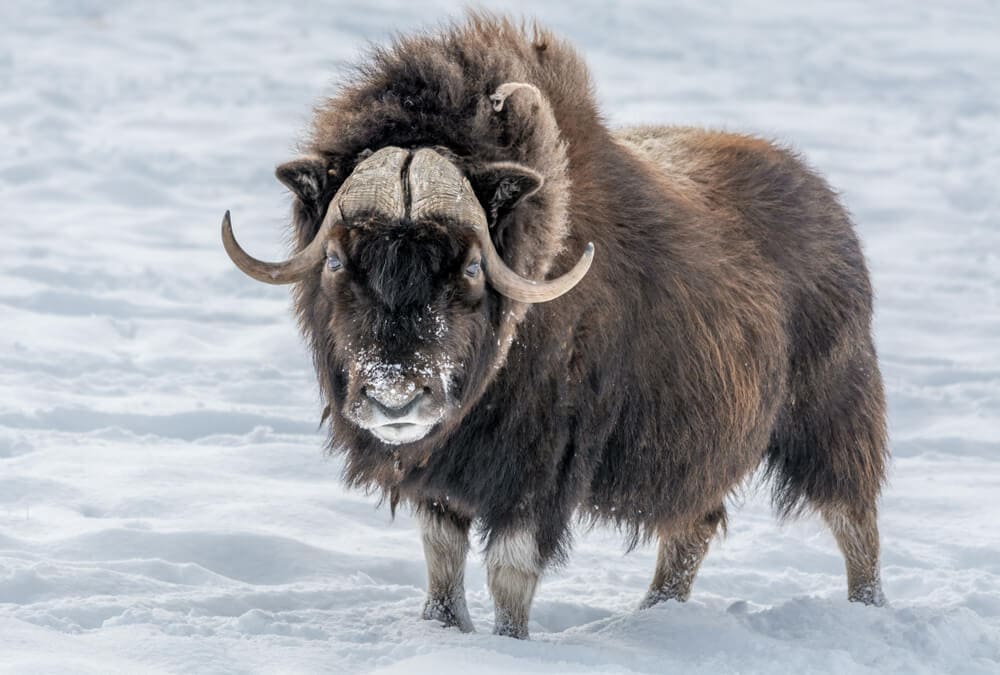
The woodland musk ox is most closely related to the modern musk ox, frequently found in Arctic regions. This species evolved to live best in less frigid climates, which is why it only remained in North America. Bootherium bombifrons were much more significant than their modern descendants, weighing nearly 1,000 pounds. Also, their skulls were thicker, and their snouts were longer. Their horns sat high on the head and curved downwards. Woodland musk oxen ate a diet rich in plants, dining mostly on woody plants, willows and a wide variety of upland grasses.