
The Moon is not a forgiving construction site. With no atmosphere to buffer temperature swings of roughly 500 degrees Fahrenheit between lunar day and night, no magnetic field to deflect deadly radiation, and a constant rain of micrometeorites moving faster than a bullet, it is arguably the most hostile building environment in the solar system — and NASA has decided that students might be exactly the right people to help figure it out.
What NASA Just Announced

NASA has officially opened its Moon Base Student Challenge, inviting high school and post-secondary student teams across the United States to submit real-world design solutions for a future lunar habitat. The total prize pool is $1 million, spread across winning teams — making this one of the most financially substantial student STEM competitions the agency has launched in recent memory.
The competition runs through NASA’s STEM Gateway platform, the agency’s central hub for connecting young innovators with mission-critical problems. What separates this from a typical science fair is the framing: NASA explicitly ties submissions to its Artemis program, the active initiative to return humans to the Moon and establish a sustained human presence there. These are not hypothetical sketches. They are concept designs NASA wants developed with the seriousness of actual mission planning.
The competition is structured around six distinct design categories, each targeting a different brutal engineering reality of long-term lunar habitation. That structure allows student teams to specialize — a group with a background in robotics can focus on construction automation, while another targets habitat pressurization or thermal management. By dividing the challenge into six lanes, NASA signals something important: there is no single silver-bullet solution to building on the Moon. It requires solving an interconnected web of problems simultaneously.
What Makes Building on the Moon So Hard?
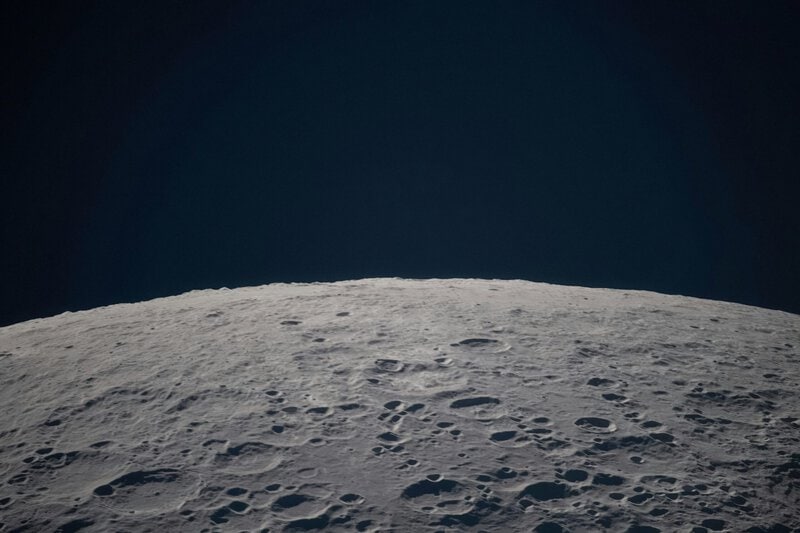
To appreciate why a $1 million student competition is not an overreach, it helps to understand just how fundamentally different lunar construction is from anything humanity has attempted before.
Materials and supply chains. There is no ready supply chain on the Moon. Every kilogram launched from Earth costs thousands of dollars to deliver, which means any realistic long-term habitat must eventually be built from local resources — primarily regolith, the loose layer of fragmented rock and dust covering the lunar surface. Using local materials this way is called in-situ resource utilization, or ISRU, and it remains one of the central unsolved engineering challenges in space exploration.
Radiation. Earth is protected by both a thick atmosphere and a powerful magnetic field that deflect solar particle events and galactic cosmic rays. The Moon has neither. Inhabitants of a lunar base would be exposed to radiation levels far exceeding what humans experience on Earth, and over a months-long stay, that exposure accumulates into a serious health threat. Any structure must provide meaningful shielding — ideally using regolith itself — without becoming so massive or complex that limited robotic and human labor cannot assemble it.
Thermal extremes. A lunar day lasts roughly 14 Earth days, followed by 14 days of total darkness and extreme cold. No terrestrial building has ever been engineered for temperature swings of that duration and magnitude. Power systems, insulation strategies, and thermal management hardware must all account for this brutal rhythm.
Moonquakes. Weaker than most earthquakes but notoriously long-lasting and poorly understood, lunar seismic events add a structural variable that engineers must confront with very limited geological data. A habitat designed to survive decades on the lunar surface must be built for a seismic threat that remains understudied.
Six Problems, One Moon, No Easy Answers
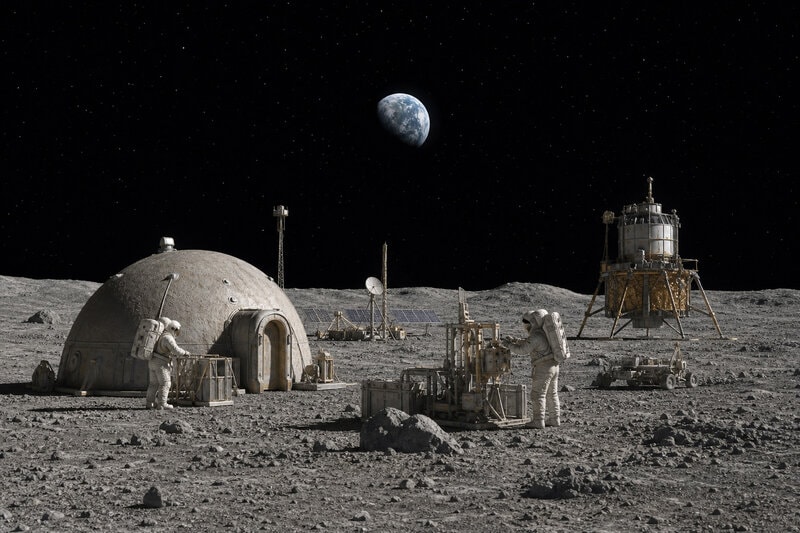
The six-category structure of the challenge reflects the reality that lunar habitation is not one problem — it is many problems that must be solved in parallel and made to work together. As detailed in the official STEM Gateway listing, the challenge broadly invites teams to engage with survival essentials: radiation shielding, structural integrity, power generation, life support, and resource utilization from lunar soil.
This architecture is deliberate. By assigning teams a specific lane, NASA lowers the barrier to entry for groups that lack expertise across every discipline, while still generating a broad map of potential solutions. A team of architecture students thinking through pressurized living volumes does not also need to solve nuclear power generation. They need to solve their piece exceptionally well — and solve it in a way that could realistically interface with the other pieces.
That systems-thinking dimension is worth noting. Even within a single category, winning submissions will likely need to demonstrate awareness of how their solution connects to adjacent problems. A radiation-shielding concept that requires regolith excavation, for instance, must reckon with the same labor and equipment constraints that a construction-automation team is trying to solve. The six categories are separated for manageability, not because the Moon will cooperate with clean disciplinary boundaries.
Why Students — and Why Now?
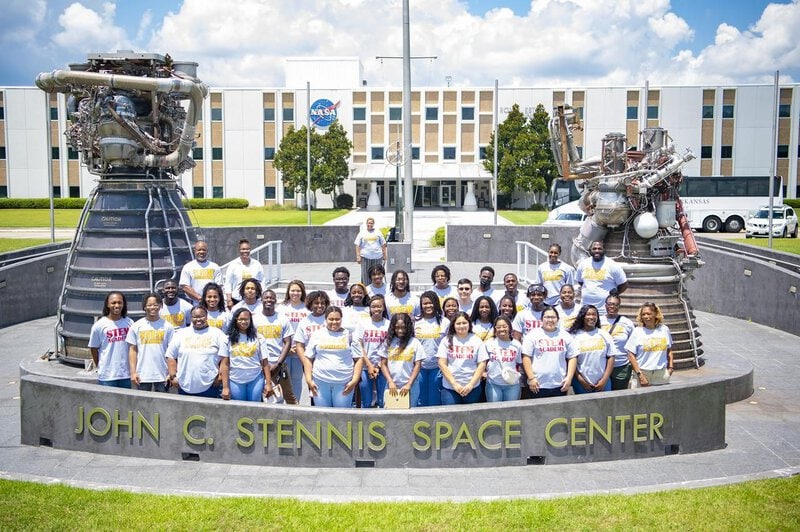
The involvement of students in a challenge this consequential is not tokenism. NASA’s Artemis timeline is accelerating, and the agency needs a pipeline of engineers, architects, and systems thinkers who have already grappled seriously with lunar construction concepts before they enter the workforce. Student competitions have historically surfaced genuinely novel approaches — without the weight of legacy assumptions, young teams often attack constraints from angles that career engineers, shaped by decades of terrestrial practice, might overlook.
The timing also reflects a broader geopolitical reality. International competition in lunar exploration has intensified significantly, adding urgency to developing American scientific and engineering talent fluent in deep-space infrastructure. By seeding these problems into high school and college classrooms nationwide, NASA multiplies the number of minds actively working on solutions — a form of open, distributed problem-solving that closed institutional development cannot replicate at scale.
As coverage of the challenge notes, this is part of a broader philosophical shift in how space agencies approach their hardest problems. Rather than keeping complex engineering questions inside a small circle of specialists, NASA is increasingly inviting wider participation — recognizing that the next breakthrough in lunar construction might come from a college sophomore in Ohio just as plausibly as from a veteran aerospace contractor.
How to Enter and What NASA Is Looking For
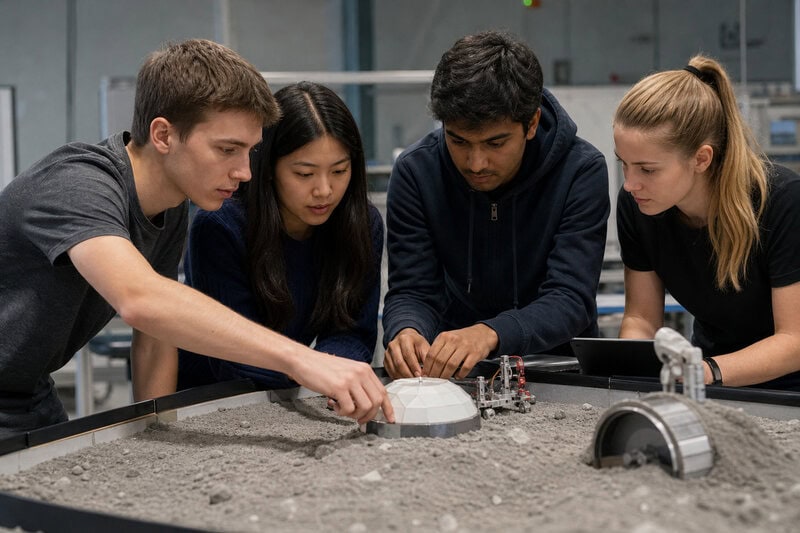
Eligible participants are student teams enrolled at U.S. high schools or post-secondary institutions. The challenge is designed to be accessible at both levels, though the depth of technical work required will naturally reward teams who bring genuine scientific and engineering rigor to their submissions.
NASA’s stated interest is in ideas that could plausibly inform Artemis planning — not speculative science fiction, but grounded concept development that grapples honestly with the physical constraints of the lunar environment. Teams are advised to identify which of the six design categories they are best positioned to tackle and to build their submission around focused expertise in that area rather than spreading thin across every challenge at once.
Prospective entrants should begin at NASA’s Prizes, Challenges, and Crowdsourcing hub, where the agency maintains its full portfolio of open competitions. From there, the official Moon Base Challenge listing on STEM Gateway provides specific guidelines, deadlines, and submission requirements. Teams are encouraged to review those requirements early — the technical expectations are substantive, and the strongest submissions will likely take months to develop properly.
What a Winning Submission Could Mean
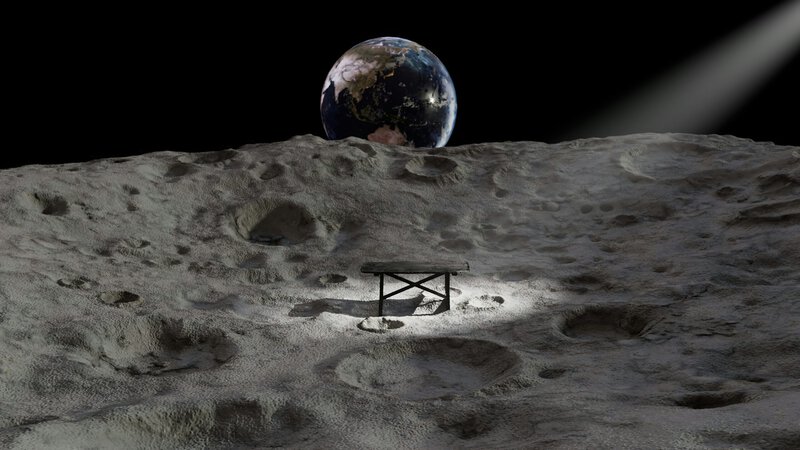
Prize money is the visible reward, but it may not be the most consequential one. A strong submission enters NASA’s awareness at exactly the moment the agency is making real architectural decisions about Artemis surface infrastructure. The students who compete seriously today are the aerospace engineers, mission architects, and space construction specialists NASA will be hiring within the decade. This challenge functions simultaneously as a problem-solving exercise, a talent identification mechanism, and an early-career credential in a field where few students have any equivalent experience to show.
More broadly, whether or not any single submission ever becomes a physical structure on the lunar surface, the act of thousands of students genuinely wrestling with how to build a Moon base — working through regolith construction, radiation physics, power budgets, and seismic risk — accelerates the collective intelligence working on what may be humanity’s most ambitious engineering challenge yet. The answers NASA needs are unlikely to arrive from a single direction. This competition is a deliberate bet that some of them will arrive from directions no one has looked yet.