
Every few years, NASA opens a door that almost no one walks through. The agency’s 2025 Astronaut Candidate Class drew more than 8,000 applications and produced exactly 10 selections — a success rate of roughly 0.1%. Now that door is open again. Understanding what NASA’s own selection history reveals about who actually gets chosen may matter far more than simply meeting the posted requirements.
8,000 Applicants. 10 Seats. What the Numbers Really Mean

On September 22, 2025, NASA announced the members of its 2025 Astronaut Candidate Class — ten individuals chosen from a pool of more than 8,000 applicants. Those candidates are now training at NASA’s Johnson Space Center in Houston, working through a two-year program before they become eligible for any mission assignment. A selection rate hovering around one-tenth of one percent puts the odds in sharper relief than most applicants expect when they first consider applying.
NASA has since opened applications for its 25th astronaut class, with a submission window running through December 3, 2026, via USAJOBS, the federal government’s official employment portal. This is the agency’s first call for astronaut applications in two years. A final selection is expected in late 2027, meaning the full journey from application to announcement spans roughly a year and a half. The stakes are higher than usual: the new class is being recruited specifically to support Artemis missions, covering both low-Earth orbit operations and crewed lunar surface activities.
Before filling out the form, it helps to understand what NASA’s selection history actually shows about who gets chosen — and what most applicants consistently get wrong.
What NASA’s Astronaut Requirements Actually Say

The official NASA astronaut requirements establish a clear baseline. To be considered, candidates must hold a master’s degree in a STEM field — science, technology, engineering, or mathematics — from an accredited institution. Qualifying alternatives include a completed medical degree or graduation from a military test pilot school. Beyond the degree, applicants need at least two years of relevant professional experience after earning their qualifying credential, or a minimum of 1,000 hours of pilot-in-command time in jet aircraft. U.S. citizenship is required, as is the ability to pass NASA’s long-duration spaceflight physical.
These are the floor, not the ceiling. In a pool of 8,000 applicants, the vast majority likely meet every one of these stated minimums. The posted requirements determine who can apply — not who gets selected.
What NASA’s Selection History Reveals About Real Priorities
Looking across NASA’s astronaut classes, a consistent pattern emerges in the backgrounds of those who actually make the cut. Selected candidates tend to share characteristics that go well beyond academic credentials:
- Operational experience in high-consequence environments. Test pilots, military officers, field scientists, and physicians who have worked under physical or cognitive stress appear disproportionately in NASA’s chosen classes. The common thread is not a specific job title but demonstrated ability to perform when the stakes are real.
- Experience in analog environments. Underwater research stations, remote polar field work, military deployments, and medical service in resource-limited settings consistently appear in selected candidates’ backgrounds. These experiences serve as proxies for the isolation, teamwork demands, and problem-solving conditions of long-duration spaceflight.
- Versatility across disciplines. NASA has increasingly favored candidates who can operate across mission types rather than specialists optimized for a single narrow function. This tendency has grown more pronounced as mission profiles have grown more complex.
- Documented leadership and collaboration. Not self-reported leadership — documented instances of leading teams through uncertainty, resolving conflicts under pressure, and subordinating individual instinct to collective mission success.
The 2025 class selection reinforced these priorities. Being chosen from more than 8,000 applicants required a coherent record of performance, not just an impressive résumé of credentials.
The Application Process, Step by Step

Applications are submitted through USAJOBS and must be received by December 3, 2026. After the window closes, NASA conducts an initial screening against its minimum qualifications. The field is then narrowed through a tiered review process until a smaller group of Highly Qualified Applicants — known internally as HQAs — is identified.
HQAs are invited to Johnson Space Center in Houston for in-person interviews, medical evaluations, and behavioral assessments. This stage goes well beyond reviewing paperwork. It is designed to assess how candidates actually function under scrutiny, in unfamiliar environments, and alongside people they have just met. A final group is then selected from among those who complete the full evaluation process, with NASA’s announcement for this new class expected in late 2027.
For additional context on the current recruitment cycle, NASA Watch’s coverage of the application opening provides a useful breakdown of what the process involves.
Why the Artemis Factor Changes the Equation
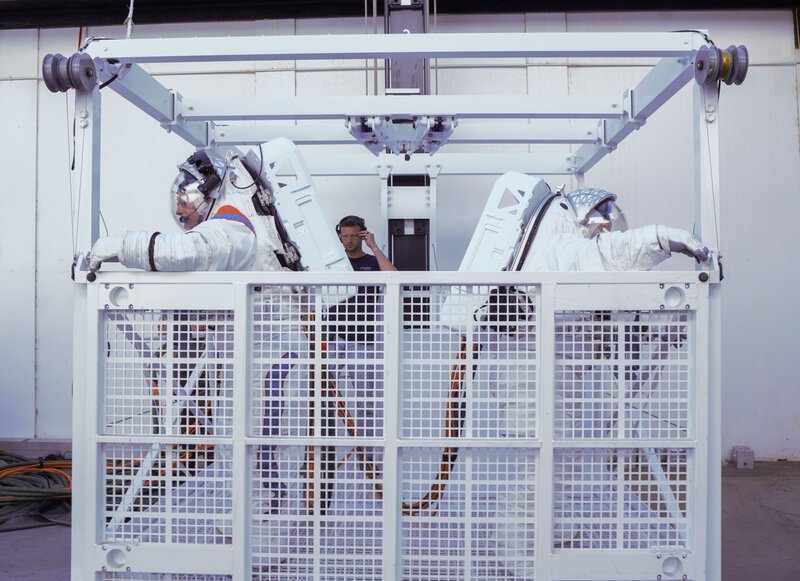
The incoming 25th class will be the first recruited with Artemis mission timelines explicitly in mind. That distinction matters. Artemis introduces operational demands that earlier mission architectures did not require at scale: lunar surface geology, extended moonwalks, and crewed missions operating farther from Earth than any since the Apollo era.
This broader mission scope expands the range of scientific and operational backgrounds NASA finds genuinely valuable. A candidate with deep expertise in geology, remote field operations, or systems engineering for complex autonomous systems may now be more competitive than in earlier cycles that skewed more heavily toward test pilots and military aviators.
Understanding the Artemis architecture before applying is not just intellectually useful — it gives applicants a framework for presenting their experience in terms of the actual demands the mission will place on the people who fly it. KeepTrack Space’s briefing on the Class 25 application opening offers a concise summary of how the Artemis context shapes the current recruitment cycle.
What Most Applicants Get Wrong — and What Creates a Real Edge
The most common misconception among first-time applicants is that meeting NASA’s stated requirements makes them competitive. It does not. It makes them eligible. In a pool where thousands of applicants hold advanced degrees, relevant experience, and clean medical histories, meeting the floor requirements is simply the price of entry.
What separates candidates who advance is a coherent narrative — a clear, evidence-backed account of why their specific combination of experience, temperament, and demonstrated performance maps directly onto the demands of long-duration spaceflight. Strong applicants do not list credentials; they demonstrate a through-line connecting everything they have done to what the mission will actually require.
NASA explicitly encourages applications from diverse backgrounds, disciplines, and life experiences, consistent with what Artemis mission complexity demands. The agency has noted publicly that modern missions benefit from crews whose perspectives and expertise do not all come from the same mold.
Should You Apply? A Realistic Framework
With the application window open through December 3, 2026, prospective candidates have meaningful time to build a thoughtful submission rather than a rushed one. That window is an asset. Use it to review your experience through the lens of what NASA’s selection history actually rewards, not just what the requirements page lists.
Even candidates who are not ultimately selected have reported that the process itself sharpened their professional focus and connected them to NASA’s broader ecosystem of researchers, contractors, and mission partners. The application is not a lottery ticket — it is a structured self-assessment of whether your life’s work has prepared you for one of the most demanding roles in human spaceflight.
If you meet the requirements and have spent years building relevant experience in high-stakes, team-dependent environments, NASA’s selection data does not really ask whether you are qualified enough to apply. It asks whether your application tells the right story about who you have become and what you are ready to do. The New York Times’ guide to applying for NASA’s next class offers additional perspective for those weighing whether to submit.