
The same institution that guided the Perseverance rover across the ancient lakebed of Jezero Crater — threading it between boulders, drilling into Martian rock, and relaying every data point across roughly 100 million miles of space — is now navigating its own uncertain terrain on Earth. NASA is actively meeting with potential new operators to determine who will manage the Jet Propulsion Laboratory going forward, and the outcome of those conversations could represent one of the most consequential structural shifts in the history of American space science.
A Laboratory at a Crossroads

JPL has operated under Caltech’s management since 1936, an arrangement spanning nearly nine decades that stands as one of the longest-running government-university partnerships in American science. Any serious reconsideration of that relationship is not a minor administrative adjustment — it is a potential reordering of the institutional foundations beneath U.S. robotic space exploration. The Los Angeles Times is reporting this as a race for control, with multiple interested parties already in discussions with NASA and the outcome far from settled.
The central question, stated plainly: who gets to run one of humanity’s most storied science institutions, and what does the answer mean for missions that have not launched yet — missions to Europa, to Uranus, to a Mars whose soil samples are still waiting to come home?
What JPL Actually Does — and Why It Matters

JPL is a federally funded research and development center, known in policy circles as an FFRDC — a category of institution owned by the federal government but operated by an outside entity under contract. That outside entity, for nearly nine decades, has been the California Institute of Technology. The lab sits in La Cañada Flintridge, California, just northeast of Los Angeles, though the reach of its work is genuinely global.
The portfolio is extraordinary by any measure. JPL built and operates the Mars rovers Curiosity and Perseverance, which together have driven more than 50 kilometers across the Martian surface and fundamentally reshaped scientific understanding of the planet’s past habitability. JPL manages the Voyager probes — both now in interstellar space, more than 15 billion miles from the Sun — and continues to receive faint signals from them decades after launch. And JPL runs the Deep Space Network, a global system of large radio antennas with stations in California, Spain, and Australia, that maintains contact with dozens of active spacecraft simultaneously. No equivalent infrastructure exists anywhere else on Earth.
Unlike NASA’s in-house centers — Goddard Space Flight Center in Maryland or Johnson Space Center in Texas — JPL is not a civil-service facility. Its roughly 5,000 employees are Caltech staff, not federal workers. That legal and cultural distinction has profound consequences for how the lab is funded, how it hires, how it handles layoffs, and how any future transition would actually work in practice.
The Caltech-NASA Relationship: Nearly Nine Decades of Unusual Partnership
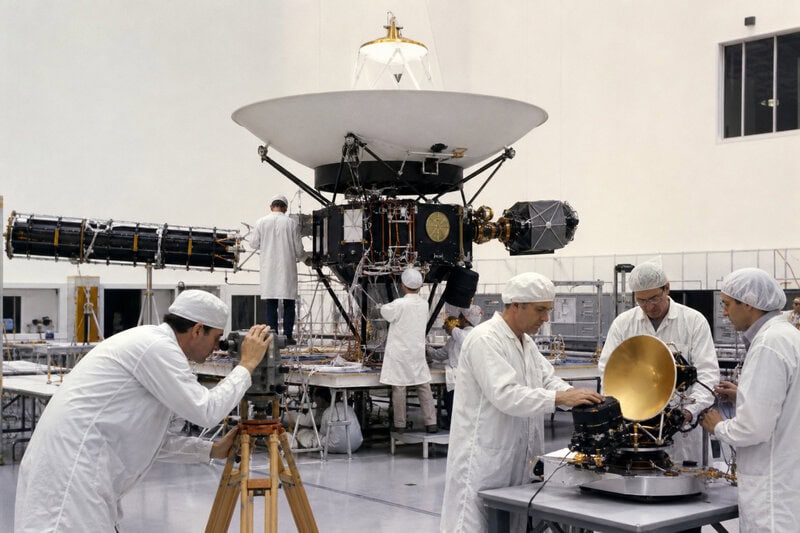
Caltech has managed JPL under a series of NASA contracts since the lab’s formal incorporation in 1936 — a relationship that actually predates NASA itself, which was not established until 1958. For most of that period, the arrangement delivered clear value on both sides. NASA gained access to academic credibility, a pipeline of scientific and engineering talent drawn by Caltech’s reputation, and a degree of institutional flexibility that NASA’s own centers, bound by federal civil-service and procurement rules, cannot easily replicate. Caltech, in turn, received a management fee and an unparalleled platform for applied space science.
But structural tensions have always existed beneath the surface. Caltech profits modestly from the management arrangement, yet the university also absorbs reputational and financial risk whenever JPL faces public difficulties. That tension became acute and visible in 2023, when JPL conducted two rounds of significant layoffs amid budget pressure — an event that focused sustained attention on whether the current management model was still serving both parties well.
NASA is now evaluating whether Caltech’s approach still delivers the best value for the federal investment, or whether a different operator — a private aerospace firm, a university consortium, or some hybrid entity — could manage JPL more efficiently without sacrificing scientific output. Reporting from the Los Angeles Times confirms that NASA is in early-stage discussions with interested parties as it works through that question.
The Budget Squeeze: How JPL Got Here
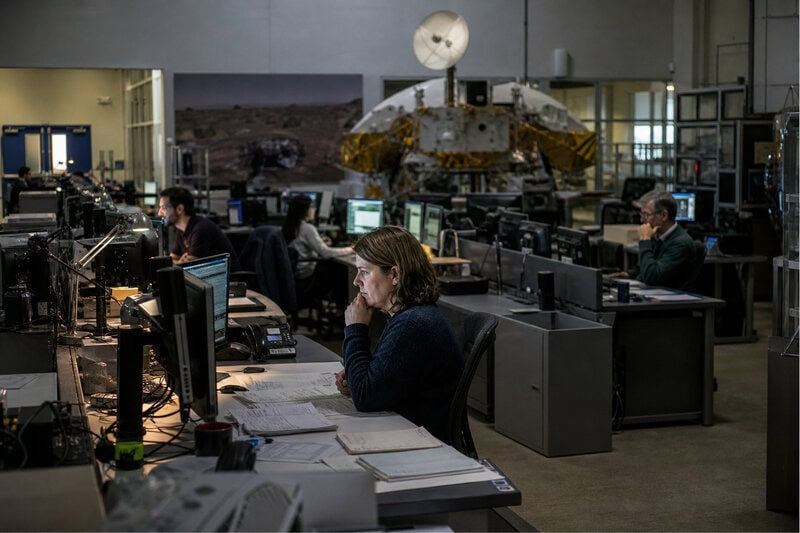
The 2023 layoffs were not an isolated event. JPL conducted two rounds of workforce reductions that year, totaling roughly 530 positions, citing reduced NASA funding for planetary science and cost overruns on large flagship missions. The upstream cause was broader: NASA’s science budget has faced sustained pressure from Congress, and enormous flagship programs — the Mars Sample Return campaign in particular, with cost estimates that ballooned well beyond initial projections — consumed resources that once supported a wider portfolio of smaller, faster missions.
The cascading effect on institutional stability was significant. Because JPL employees are Caltech staff rather than federal workers, they do not carry the civil-service protections that employees at a center like Goddard would have. When mission funding contracts sharply, workforce reductions at JPL happen faster and more visibly than they would at a federal center. That visibility, in turn, drew attention to the management model itself and whether it was structurally equipped to absorb the volatility of modern NASA budget cycles.
It is worth being precise about what is established fact and what remains open. It is confirmed that NASA is in early-stage discussions with interested parties about JPL’s future management structure. It is not yet established which entities are formally competing, what criteria NASA will apply in evaluating them, or when any decision will be reached. Readers should treat specific timelines or candidate lists reported speculatively elsewhere with appropriate skepticism.
Who Wants to Run JPL — and What’s at Stake

The competitive landscape is still taking shape. Potential operators could include major aerospace contractors with existing NASA relationships, research universities seeking to expand their federal science footprint, or multi-institution consortia designed to distribute both the risk and the reward of running a facility this complex. Each model carries a distinct philosophy about how science and operations should be balanced.
A for-profit contractor as operator might introduce greater cost discipline and faster procurement cycles — genuine advantages in an era of sustained budget pressure. Critics of that model argue, however, that it risks eroding the academic freedom and long-horizon research culture that has historically produced JPL’s most ambitious and successful missions. Breakthrough science, by its nature, is not always the most cost-efficient activity in the short run.
A university consortium model could preserve shared governance and broaden the talent pipeline beyond what any single institution can supply. But coordinating decisions across multiple academic institutions introduces its own complexity — and JPL is a place where engineers sometimes need to make consequential calls about a spacecraft in real time, with no margin for extended deliberation.
The highest-order stake is worth stating plainly: the entity that wins management of JPL will effectively shape the scientific agenda of American robotic space exploration for the next generation. That includes proposed missions to the outer planets, continued science from the Europa Clipper currently en route to Jupiter, next-generation Earth observation systems, and the still-unresolved question of how — and whether — Mars rock samples collected by Perseverance will ever reach a laboratory on Earth.
What NASA Is Looking For — and What Comes Next
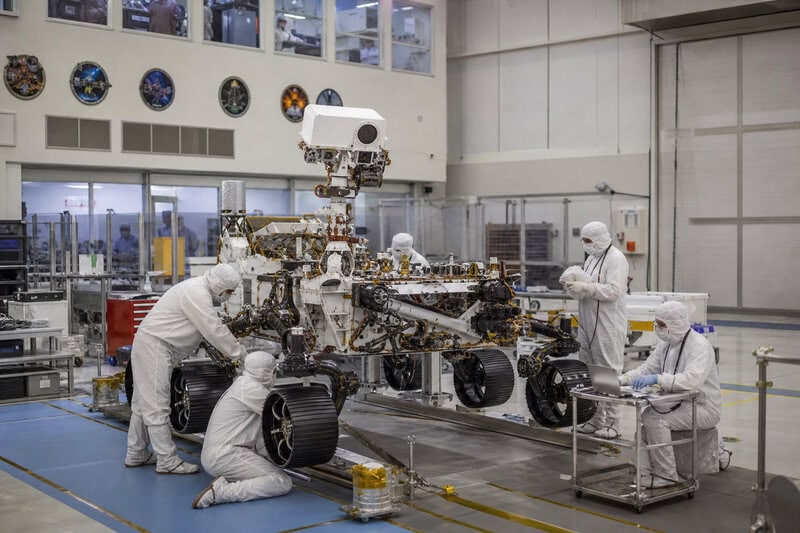
According to current reporting, NASA is still in the early stages of determining what it will formally ask of prospective operators. No solicitation document has been publicly released, and no candidates have been officially named. The key variables NASA must weigh are substantial: workforce continuity, mission execution capability, cost structure, the ability to maintain security clearances for sensitive government work, and the preservation of deep infrastructure like the Deep Space Network — capabilities that cannot simply be rebuilt if institutional knowledge is lost in a rushed or poorly managed transition.
There is broad consensus among space-policy analysts that JPL’s scientific output under Caltech has been world-class by any reasonable standard. The genuinely contested question — the one NASA’s evaluation will ultimately have to answer — is whether that output is a product of the Caltech management model specifically, or whether it is a function of the lab’s people, culture, and accumulated expertise, and would therefore survive, or even improve, under a different operator.
JPL is not simply a government contractor performing a defined service. It is the primary American institution capable of landing, driving, and communicating with robotic spacecraft on other planets, and no comparable capability exists anywhere else in the world today. The lab’s roughly 5,000 employees — many of whom hold specialized expertise accumulated over decades of mission work — face genuine uncertainty. Their individual decisions about whether to remain through a potential transition will partly determine whether JPL’s institutional knowledge survives it intact.
The race for JPL is real, early, and consequential. But it is a process still being designed, not a crisis already resolved. The full scope of what NASA is considering, and who is in the room, continues to be tracked by the Los Angeles Times. The outcome will depend as much on what NASA decides to ask for as on who steps forward to answer — and the questions NASA has not yet formulated may ultimately matter more than any of the answers already being prepared.