Binary Stars
Lifespan: 8 to 14 Billion Years
Class: Various (due to multi-star differences)
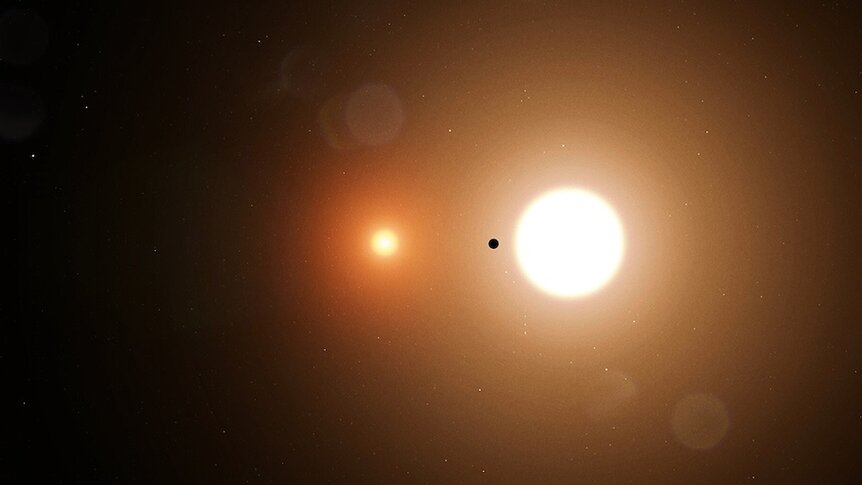
You’ve likely seen a binary star system in the past via the original Star Wars film. If you recall, we meet Luke Skywalker when he is on the planet Tatooine. There are many more systems like this in the series. We have known these systems existed dating back to 1890. Since then, several more systems like them have been found. Of course, “binary” is the big word for this. These systems will have two stars that simply orbit around a common barycenter. Both stars can be the same size or wildly different sizes. We also used to assume life could not live in these systems, but scientists now believe it is possible.
Systems like this often appear distant to the naked eye, and as a single point of light. Yet when you see them through proper telescopes, you’ll see the two-star system. Binary stars have been found more but they are by no means common. Astrophysicists love these stars because they can properly calculate the masses of component stars using their orbit. That can then give them an indirect picture of their radius and density. This, in turn, leads to finding the mass-luminosity relationship that allows them to measure other single mass stars.