Blue Giant Stars
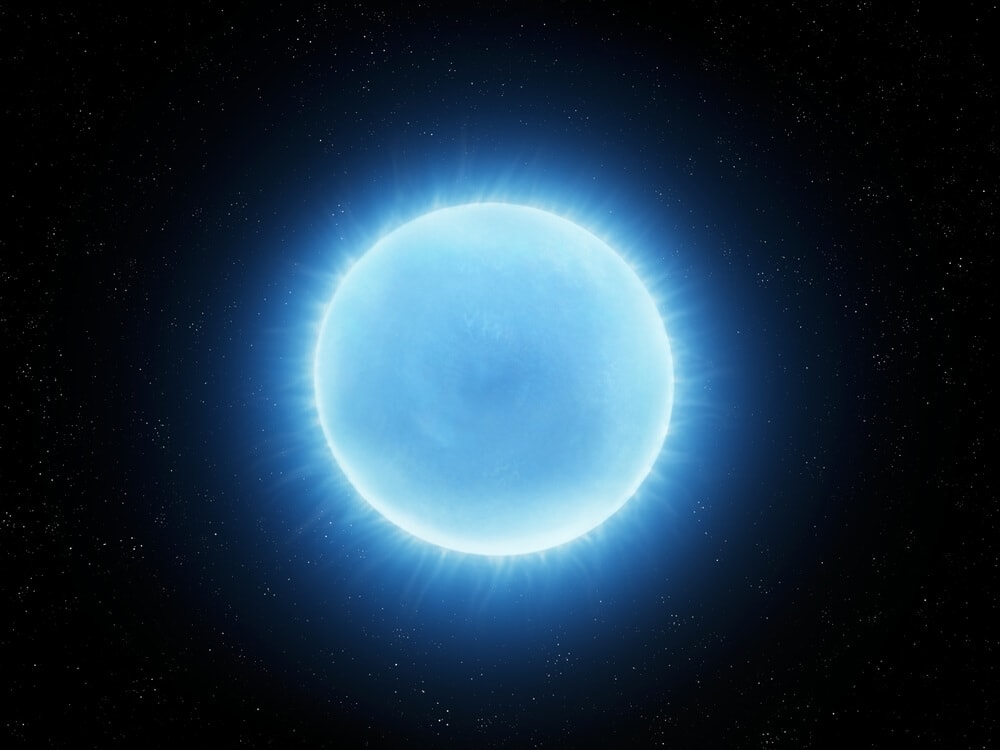
Lifespan: Few Million To 10 Million Years
Class(es): A, F, G
We should point out that the term “Blue Giant” is often mistaken for other high-mass, bright stars in our universe. This can include other main-sequence stars. However, not all giants are part of the Blue Giant category just because they are larger with a high temperature. Blue Giants rank at Class III or II on the Hertzsprung-Russell diagram, putting them just to the right of main-sequence stars on the diagram.
Regarding the main class based on the Kelvin temperature, they might fall anywhere between A to G. This is why the Blue Giant term will typically apply to several different types of stars in various development phases. They are evolved stars that move beyond the main sequence but might differ wildly after that. This could be why they are classified as stars in a specific region on the HR Diagram. Blue Giants tend to be rare because they form from much larger parental stars on top of the fact that blue stars in general live a much shorter life compared to other stars.