
LATEST POSTS

Rocket Attached to Aircraft: How Air-Launch-to-Orbit Works
NASA's Swift telescope is losing altitude, and the fix starts with dropping a Pegasus XL rocket from a modified L-1011 jet over the Pacific. This is how air-launch-to-orbit actually works—and why it's the only practical option for the Katalyst LINK mission.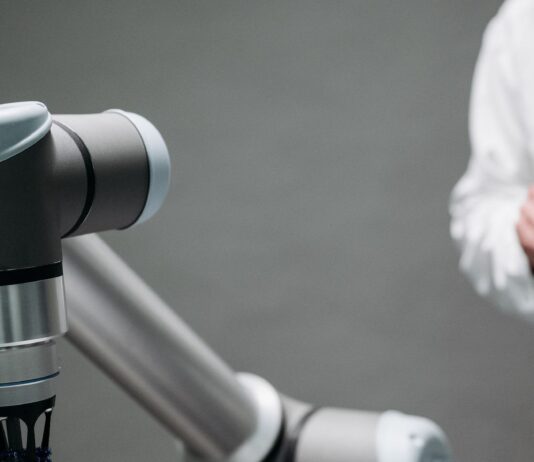
Precision Robotics & Protein Science Reinvent Cancer Surgery
MD Anderson Cancer Center and UT Austin have launched a joint initiative pairing engineered fluorescent proteins with AI-guided surgical robots—aiming to make truly clean tumor margins possible for the first time.
Fermilab AI Infrastructure Powers DOE’s Genesis Mission
Fermilab's Fermi Data Platform is a centralized, AI-compatible storage system built to eliminate the data bottleneck that has long hidden anomalous signals in particle physics experiments. It serves as the core infrastructure for the U.S. Department of Energy's Genesis Mission, which embeds AI across the full scientific workflow.
Fossil-Free Sponge Iron: How LKAB’s Permit Changes Green Steel
On June 15, 2026, LKAB secured a landmark permit to build a fossil-free sponge iron plant at Malmberget capable of producing 1.5 million tons of hydrogen-reduced iron per year. This explainer breaks down the DRI chemistry, the Hybrit process, and why replacing coal with green hydrogen is harder than it sounds.
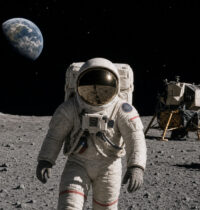
Cold War Space Race: Fear, Not Curiosity, Drove 1957–1969
The Cold War space race of 1957–1969 was driven not by scientific curiosity but by nuclear-era geopolitical fear—a high-altitude arms race choreographed by strategists as much as engineers. Here's the real history behind the myth.
Artificial Intelligence Breakthroughs Scientists Didn’t Expect
Artificial Intelligence (AI) has evolved from a concept of theoretical machines to a transformative force...Load More
TOP POSTS
November 9, 2026
EDITOR PICKS


December 12, 2024

July 1, 2025
