2. Polar Night
At the North Pole, the Sun remains below the horizon for approximately six months, from late September to late March, resulting in a continuous period of darkness known as the “Polar Night.” This phenomenon occurs due to Earth’s axial tilt of about 23.4 degrees, which causes the poles to be oriented away from the Sun during their respective winter seasons. (nationalgeographic.com)
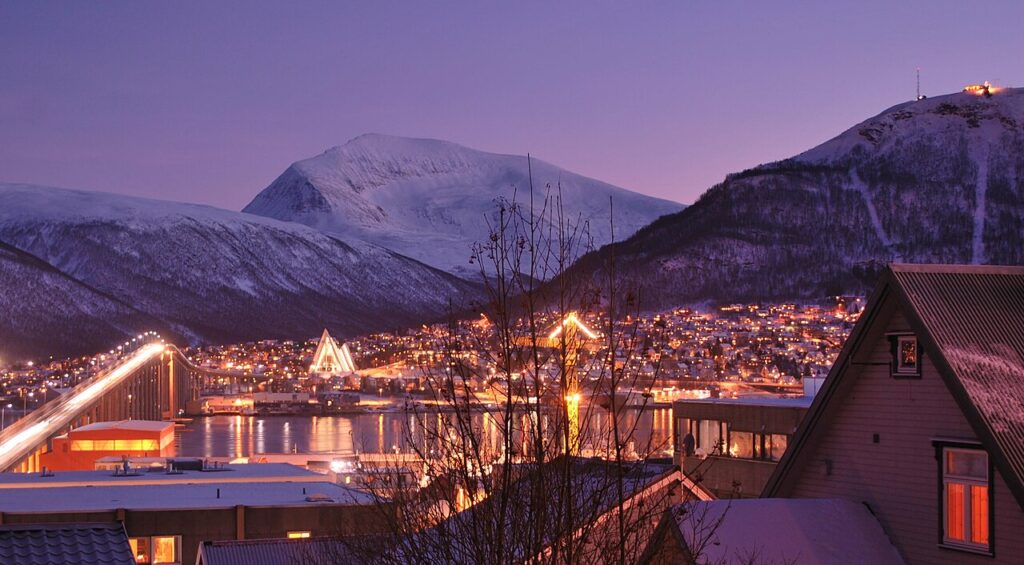
In contrast, high-latitude cities like Tromsø, Norway, experience a shorter Polar Night. Located at 69 degrees north, Tromsø’s Polar Night lasts from late November to mid-January, with the Sun remaining below the horizon for about two months. (en.wikipedia.org) During this period, the city is bathed in a unique twilight, offering a serene and otherworldly atmosphere.
The extended darkness at the North Pole leads to unique phenomena, such as the aurora borealis, which can be observed more frequently and vividly during this time. Additionally, the absence of sunlight affects both the environment and the inhabitants, influencing animal behavior and human activities in profound ways.