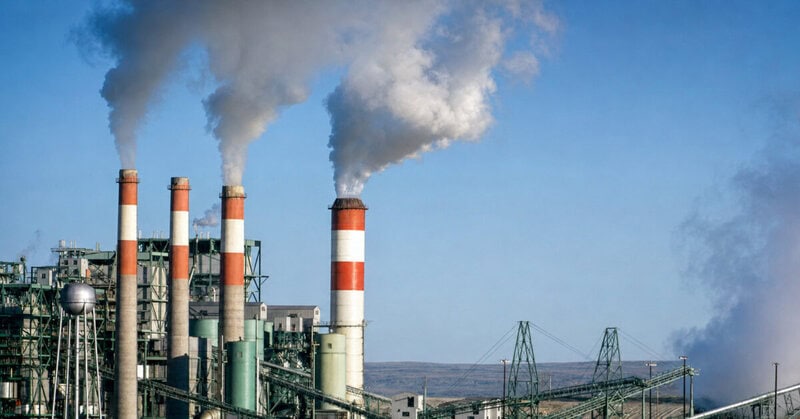
In a year when U.S. fossil fuel emissions were widely expected to continue their gradual decline, they instead rose by 2.4% — and AI-driven data center demand was identified as a contributing factor, according to the Rhodium Group, an independent research firm. That single data point reframes the entire narrative around artificial intelligence and climate change: the technology celebrated as a potential tool for solving the climate crisis is, right now, measurably making it worse.
The Number That Reframes the AI Boom

The Rhodium Group’s finding is striking not just for its size but for its direction. For years, a combination of fuel switching, efficiency gains, and renewable energy deployment had pushed U.S. emissions onto a downward trajectory. The surge in power demand from AI infrastructure helped reverse that trend, according to reporting by the Associated Press. The reversal is a present-tense consequence, not a projected future risk.
The paradox sits at the heart of this story: the same technology companies pledging net-zero futures are signing long-term energy contracts that keep coal and gas plants running well into the 2040s. Their sustainability reports promise clean energy; their procurement teams are quietly locking in fossil fuels at a scale the reports do not fully disclose. This gap between green branding and infrastructure reality applies broadly across the industry — and, as investigative reporting has shown, even safety-focused laboratories like Anthropic are not exempt from scrutiny.
The stakes extend far beyond any single company’s reputation. When energy infrastructure is built or contractually extended today, it typically operates for 20 to 40 years. Decisions made in 2024 do not just shape next year’s emissions balance sheet — they shape the climate of 2060.
What ‘Locking In’ Actually Means — and Why It Matters
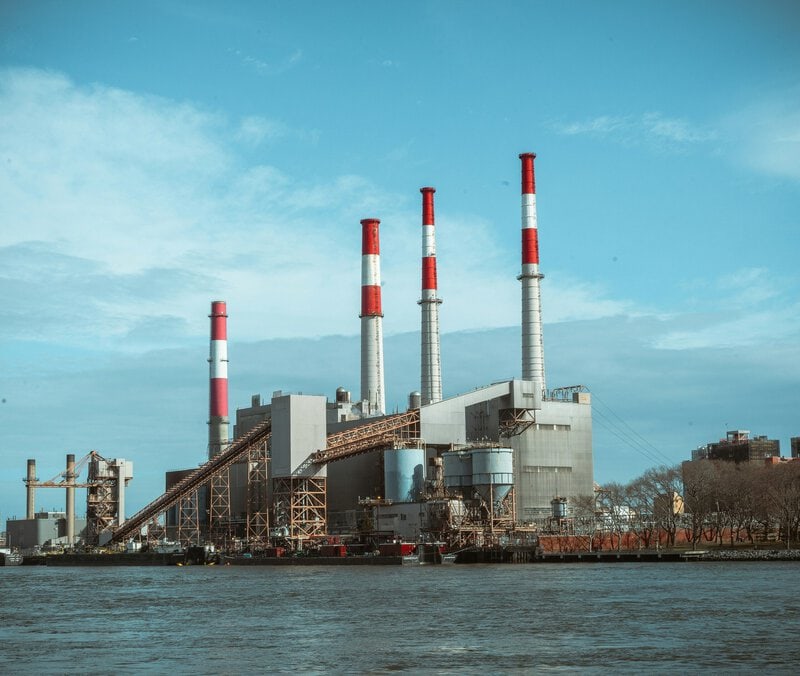
The term “fossil fuel lock-in” refers to the economic and contractual commitment to carbon-emitting energy sources for the full operational lifetime of an asset. Once a gas plant is built or a long-term supply contract is signed, early retirement becomes financially punishing — for utilities, ratepayers, and investors alike. The incentive to keep the asset running until its natural end-of-life is baked into the economics from day one.
The mechanism connecting AI to lock-in runs through data center construction. Hyperscale facilities — the warehouse-scale computing complexes operated by major cloud and AI providers — require guaranteed electricity supplies, formalized through power purchase agreements (PPAs) signed years in advance. Grid operators tasked with fulfilling that demand often turn to the cheapest available dispatchable source, which in much of the United States remains natural gas. The data center gets its power; the gas plant gets its guaranteed revenue stream and a reason to keep operating for decades.
According to Stop Bad Data Centers, a research and advocacy coalition, 56% of U.S. data centers are currently structured in ways that entrench fossil fuel dependence rather than accelerating grid decarbonization. That figure underscores a critical distinction: the problem is not simply that AI consumes a great deal of electricity today. The deeper problem is that the infrastructure being built to serve AI demand is hardwiring carbon emissions into the energy grid for decades to come, regardless of how much renewable capacity is added elsewhere on the system.
The Carbon Footprint Behind Every AI Query

To understand the scale of the issue, it helps to trace the full carbon footprint chain. Training a large language model — the foundational process that teaches an AI system to understand and generate text — consumes vast amounts of compute over days or weeks, drawing heavily on data center electricity. That is a one-time cost per model generation, but it is not the dominant ongoing source of emissions. Inference — the energy consumed every time a user submits a query and the model generates a response — multiplies across millions of daily interactions, making it the more significant long-term driver of power demand.
Corporate climate disclosures typically cover only Scope 2 emissions, which refers to the greenhouse gases associated with purchased electricity. The fuller picture includes Scope 3 emissions — a category encompassing supply chain impacts, cooling water consumption, and the energy and materials embedded in hardware manufacturing. Because most AI companies report only Scope 2 figures, their published carbon footprints systematically undercount their true climate impact.
AI’s energy intensity per task is also substantially higher than that of conventional web services. A standard internet search consumes a modest amount of electricity; an AI-generated response to a comparable query requires significantly more compute and therefore more power, a point underscored in energy analyses cited by the Associated Press. The measurement challenge is compounded by the fact that hyperscale operators treat detailed energy data as commercially proprietary, making independent verification of corporate climate claims difficult. This opacity is precisely why third-party research from organizations like the Rhodium Group carries particular weight.
Even the ‘Good Guys’ Are Implicated

Anthropic occupies an unusual position in the AI landscape. The company has built its public identity around AI safety and responsible development, positioning itself as a more conscientious alternative to competitors focused primarily on commercial scale. Yet investigative reporting by Grist raises substantive questions about whether Anthropic’s infrastructure choices contribute to fossil fuel lock-in, despite the company’s safety-first branding.
Anthropic is not being singled out here as uniquely culpable. Rather, it serves as an illustration of a structural problem: mission-driven branding does not automatically translate into clean-energy procurement or transparent emissions accounting. The pressures that push safety-focused labs toward carbon-intensive power sources are the same pressures facing every other actor in the space. Compute demand for frontier model training is intense enough that labs compete for any available large-scale power supply, often regardless of its carbon content. The grid is the bottleneck, and the grid in most of the United States still runs substantially on fossil fuels during peak demand periods.
This is not an accusation of bad faith against any particular company. It is a description of how systemic incentives override individual corporate values when infrastructure is the binding constraint. A company can genuinely believe in its climate commitments and still, through the mechanics of power procurement, end up sustaining fossil fuel infrastructure for decades. Good intentions do not rewrite energy contracts.
Oil and Gas Companies Are Using AI to Drill Faster — a Feedback Loop

The relationship between AI and fossil fuels is not one-directional. While AI increases demand for fossil-fuel-generated electricity through data center energy consumption, the fossil fuel industry is simultaneously using AI to accelerate its own operations. Global Witness has documented how some of the world’s wealthiest oil and gas companies are actively investing in AI to speed up the discovery and extraction of new fossil fuel reserves — a process the organization describes as “the digital drill.”
The feedback loop this creates is worth stating plainly. AI increases fossil fuel demand on the consumption side by requiring enormous quantities of electricity, much of it gas-generated. AI simultaneously helps fossil fuel producers expand supply by making exploration and extraction faster and cheaper. Both effects push in the same direction: upward pressure on the total stock of fossil fuels burned. This dynamic complicates the popular tech-sector narrative that AI will ultimately solve climate change by optimizing grids, accelerating materials discovery, and improving climate modeling. Those applications are real and potentially significant — but they do not automatically offset the emissions driven by AI infrastructure itself, let alone the expanded fossil fuel production AI is enabling upstream.
To be clear about what is established and what remains contested: the fossil fuel industry’s investment in AI for extraction purposes is documented by Global Witness reporting. The net climate calculus of AI overall — whether the technology’s beneficial applications will outweigh its emissions contributions — remains an active and genuinely uncertain area of scientific and economic debate.
What Responsible AI Energy Policy Would Actually Look Like

Researchers and advocates working on this problem have identified several concrete policy interventions that would begin to address the lock-in dynamic. The most foundational is mandatory, standardized Scope 1 through Scope 3 emissions disclosure for AI companies, covering the full chain from hardware manufacturing through operational electricity use. Without standardized disclosure requirements, independent verification is impossible and corporate self-reporting remains the only available evidence base — an inherently insufficient arrangement.
On the procurement side, the meaningful standard is 24/7 carbon-free energy matching: buying renewable electricity in the same hour and location as consumption, rather than purchasing annual renewable energy certificates that can be generated during low-demand periods in distant locations. Annual certificate purchases can allow a data center to claim “100% renewable” status while drawing heavily on gas-generated power during the overnight hours when solar generation is unavailable and wind is insufficient. Hour-by-hour matching eliminates that accounting gap.
The Stop Bad Data Centers coalition has argued that federal and state permitting processes for new data center construction should include binding clean-energy requirements — a policy position that has not yet been codified into law at the federal level but is gaining traction in several state legislatures. Energy economists have increasingly emphasized that the speed of electrification matters as much as total renewable capacity. A data center that comes online in 2026 running on gas-backed power is not a “transitional” facility if its power purchase agreement runs to 2046. It is a 20-year fossil fuel commitment dressed in transition-era language.
Branding Is Not a Climate Strategy
The AI industry’s climate credibility will ultimately be determined not by its press releases but by the energy contracts it signs today and the grid infrastructure those contracts sustain for decades. No amount of sustainability reporting rewrites the physics of a gas turbine or shortens the economic life of a data center built to run on fossil-fuel power.
The Rhodium Group’s finding — a 2.4% rise in U.S. fossil fuel emissions in a year when they were supposed to keep falling — is the appropriate place to anchor any honest accounting of where things currently stand. It is a measured, documented data point, and it reflects choices already made about which power sources would supply the AI build-out.
Demanding transparency in AI energy sourcing is not an anti-technology position. It is the minimum condition for trusting any company’s climate commitments, regardless of how sincerely those commitments are expressed. The evidence base for holding the industry accountable will grow as EPA reporting rules evolve, state-level data center legislation advances, and independent research organizations continue the kind of systematic energy accounting that corporate disclosures have so far failed to provide. What the data already shows is sufficient to recognize that the AI boom and the clean-energy transition are, at present, pulling in opposite directions — and that good intentions alone will not change that.