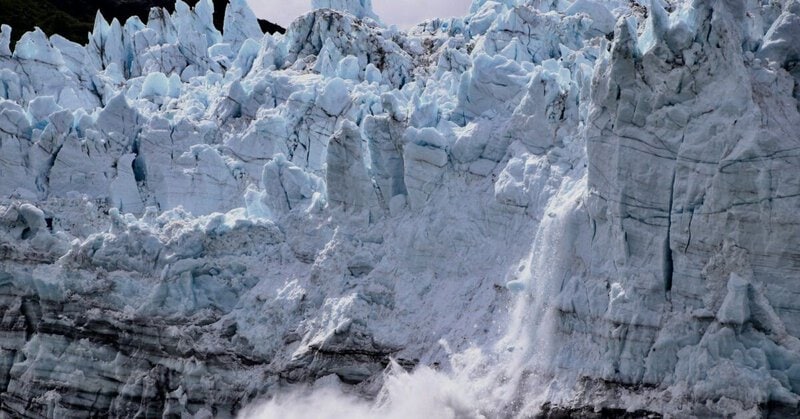
At 1.45°C above pre-industrial levels in 2023 — just a few hundredths of a degree below the threshold the world agreed to treat as a generational red line — negotiators at COP31 published a draft deal that erased every single reference to fossil fuels while still nominally endorsing the 1.5°C limit. Scientists are unambiguous: that combination is not a political compromise. It is a thermodynamic contradiction.
A Draft Deal With a Missing Word — and What Was Lost With It
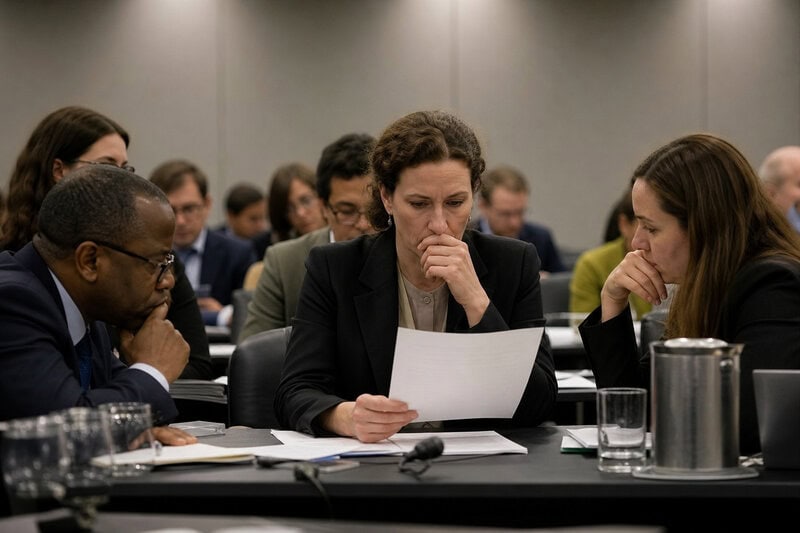
When a revised negotiating text circulated on Thursday, climate delegates and observers noticed the absence immediately. An earlier draft had contained two references to fossil fuels, including language on limiting their use. Both were gone. The slimmed-down document that replaced it acknowledged the 1.5°C goal without once naming coal, oil, or gas — the combustion of which is responsible for roughly three-quarters of current global greenhouse gas emissions, according to the International Energy Agency (IEA). Inside the summit venue, climate activists delivered a “Missing: Ambition” message, a visual that translated the scientific stakes into a single, shareable image.
The removal was not the only hollowing-out. A $120 billion climate finance target was also quietly stripped from the same draft, compounding concerns that the deal’s ambition had been eroded from both the emissions and the money sides simultaneously. COP31 talks entered their endgame on Friday, November 20, with countries sharply divided: fossil-fuel-producing states and their allies defended the leaner text, while climate-vulnerable nations and the European Union pressed to restore explicit fuel language as a minimum credibility threshold.
The pattern is familiar. At COP28 in Dubai, negotiators fought for weeks over whether the final text would include “phase-out” of fossil fuels; they settled for the softer phrase “transitioning away from fossil fuels.” That softer phrasing is now itself absent from the COP31 draft, representing a step backward even from the incremental progress of the previous summit. The IEA has described an explicit commitment to no new coal, oil, or gas fields beyond those already approved as of 2021 as the central operational requirement of any 1.5°C-aligned pathway. A draft deal silent on fossil fuels has, by that standard, removed its own operational core.
The Science of 1.5°C: Why Half a Degree Is Not a Rounding Error
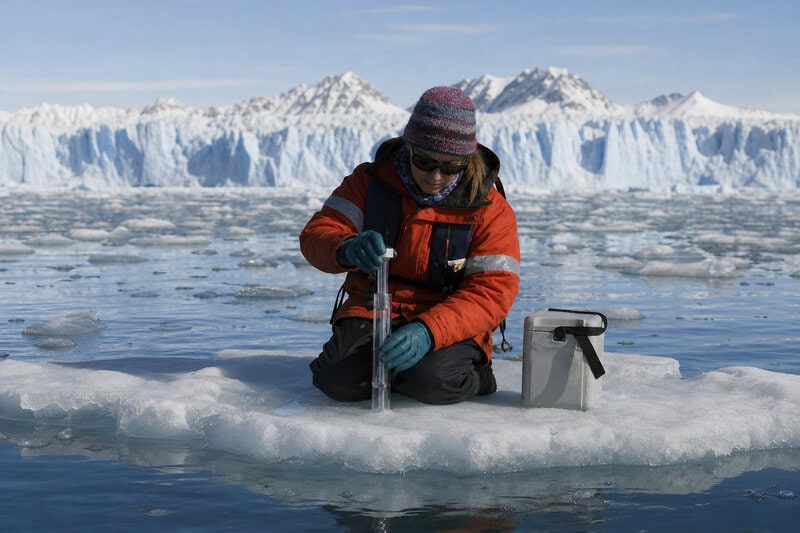
To understand why the gap between the draft’s stated goal and its missing language matters, it helps to understand what the Intergovernmental Panel on Climate Change (IPCC) actually projects at each temperature level. The IPCC’s Sixth Assessment Report (AR6), published between 2021 and 2022, is the most comprehensive synthesis of climate science ever produced, drawing on thousands of peer-reviewed studies. Its findings on the difference between 1.5°C and 2°C of warming are stark.
- At 1.5°C, coral reefs decline by 70-90 percent; at 2°C, more than 99 percent are projected to be lost — a difference the IPCC describes as “decisive” for entire ocean ecosystems and the roughly one billion people who depend on reef fisheries for food security.
- Roughly 14 percent of the global population would be exposed to severe heat waves at least once every five years at 1.5°C; at 2°C, that share rises to 37 percent — a difference of hundreds of millions of people experiencing conditions that push against human physiological limits.
- Arctic summers free of sea ice, which fundamentally alter weather patterns across the entire Northern Hemisphere, are projected to occur roughly once per century at 1.5°C but at least once per decade at 2°C — a qualitative shift in baseline climate conditions, not a marginal quantitative change.
- Agricultural models synthesized in AR6 project that maize yields in tropical regions decline significantly more steeply at 2°C than at 1.5°C, with food-insecure populations disproportionately concentrated in those same zones.
Critically, 1.5°C is not a safe zone. It is the upper bound of a relatively safer zone. Even at that level, AR6 projects increased frequency of previously rare extreme heat events, intensified rainfall, and accelerated ice-sheet destabilization. The goal exists because the alternative is measurably, quantifiably worse — not because 1.5°C carries no consequences.
The World Meteorological Organization (WMO) reported that the global mean surface temperature in 2023 reached 1.45°C above the 1850-1900 pre-industrial baseline, meaning the world is already operating within a few hundredths of a degree of a threshold the Paris Agreement treats as a hard limit. That is not a projection. It is a measurement.
Carbon Budgets: The Arithmetic That Makes Fossil Fuel Language Non-Negotiable
A carbon budget is the total cumulative volume of carbon dioxide (CO₂) the atmosphere can absorb before a given temperature threshold is crossed with a specified probability. Think of it as a shared overdraft limit for humanity’s energy system: once it is exhausted, the temperature consequence is locked in regardless of subsequent action.
The IPCC AR6 estimated that as of January 2020, the remaining carbon budget for a 50 percent chance of staying below 1.5°C was approximately 500 gigatonnes of CO₂ (GtCO₂). At current global emission rates of roughly 37 GtCO₂ per year, as measured by the Global Carbon Project in 2023, that budget could be exhausted in under 14 years from that starting point — and several of those years have already elapsed.
Research published in the journal Nature by Welsby and colleagues in 2021 found that meeting the 1.5°C target requires leaving approximately 60 percent of proven oil and gas reserves and 90 percent of remaining coal reserves unextracted. That finding makes a draft deal silent on fossil fuels structurally misaligned with its own stated temperature goal: the document endorses the destination while removing every mention of the road that leads there.
Every year of delayed fossil fuel reduction effectively borrows from future budgets, requiring steeper, costlier, and technically more uncertain cuts later. The IPCC describes this as “lock-in risk” — today’s infrastructure decisions constrain options for decades. A new gas-fired power plant built in 2025 is designed to operate until 2055 or beyond; a new oil field approved now will produce for 20 to 40 years. The carbon budget does not pause while those assets are written off.
Tipping Points: The Hidden Reason the Margin Is Razor-Thin
Climate tipping points are thresholds in the Earth system where self-reinforcing feedbacks drive further change independent of additional human emissions. Once crossed, they cannot be reversed on human timescales regardless of subsequent mitigation. The concept is not speculative: it is grounded in the physics of ice-albedo feedbacks, permafrost carbon release, and forest-rainfall cycles that have been studied for decades.
A landmark study by Armstrong McKay and colleagues, published in Science in 2022, identified 16 major tipping elements — including the Greenland Ice Sheet, the West Antarctic Ice Sheet, and Amazon rainforest dieback — and found that some may be triggered at warming levels as low as 1.5°C. More concerning, the study found that interactions between tipping elements could cascade, with one threshold crossing increasing the likelihood of others in a “tipping cascade” that amplifies warming beyond what emissions alone would produce.
The same research concluded that the probability of triggering at least one major tipping point increases sharply between 1.5°C and 2°C, reinforcing why the half-degree difference dismissed as marginal in political negotiations carries outsized physical consequences. It is worth being precise about the science here: tipping points are classified as an “emerging but not yet fully quantified” risk in AR6, meaning scientific confidence in their existence is high, but precise trigger temperatures carry uncertainty ranges that cut in both directions. Some tipping elements may activate sooner than central estimates suggest; others may have higher thresholds. That uncertainty is not a reason for complacency — it is an argument for caution at exactly the margins where the COP31 draft is weakest.
What ‘Only Just Alive’ Means — and What Comes Next
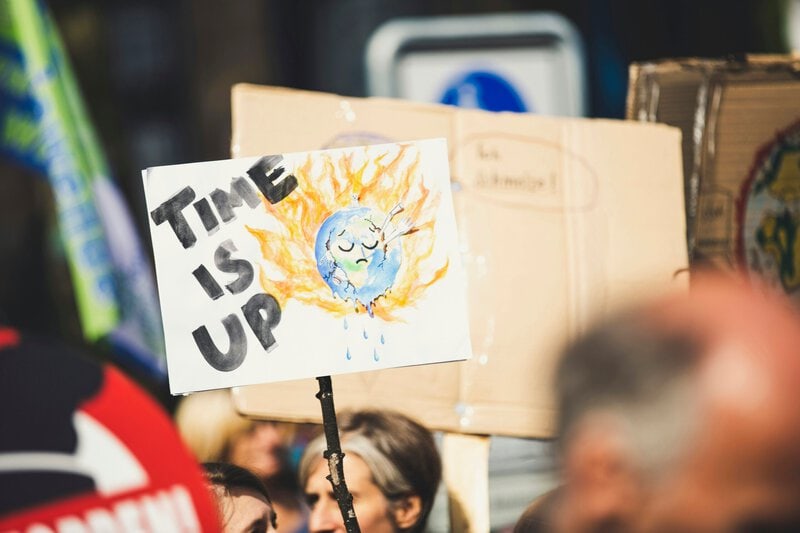
The 1.5°C goal remains legally alive under the Paris Agreement regardless of what any single COP produces. No conference of parties can unilaterally dissolve a treaty commitment. But legal survival and scientific viability are different things. The UN Environment Programme’s 2023 Emissions Gap Report found that current national pledges — the Nationally Determined Contributions (NDCs) that each country submits under Paris Agreement rules — would lead to approximately 2.5-2.9°C of warming if fully implemented. A fossil-fuel-silent deal does nothing to close that gap.
Restoring fossil fuel language to the final COP31 text would not itself reduce a single tonne of emissions. Words in a conference room do not alter atmospheric chemistry. But they matter as a signalling mechanism with measurable downstream effects. The IEA’s World Energy Outlook 2023 found that policy signals from international agreements measurably shift private capital flows away from high-carbon assets. Symbolic language, in that sense, carries real-world investment consequences — and its absence sends an equally real signal in the opposite direction.
The next critical juncture is the NDC submission cycle, when countries are required under Paris Agreement rules to submit updated and more ambitious climate plans. A weak COP31 outcome reduces political pressure on major emitters to strengthen those plans, potentially locking in the current emissions gap for another five years — which, given the carbon budget arithmetic, is not a gap that delay makes easier to close.
The scientific consensus on this point is clear and, within the peer-reviewed literature, uncontested: 1.5°C is physically achievable only through rapid, deep, and immediate reductions in fossil fuel combustion, beginning now. Whether that conclusion finds its way back into the final COP31 text before the summit closes is a political question. The carbon budget, however, is not waiting on the answer.