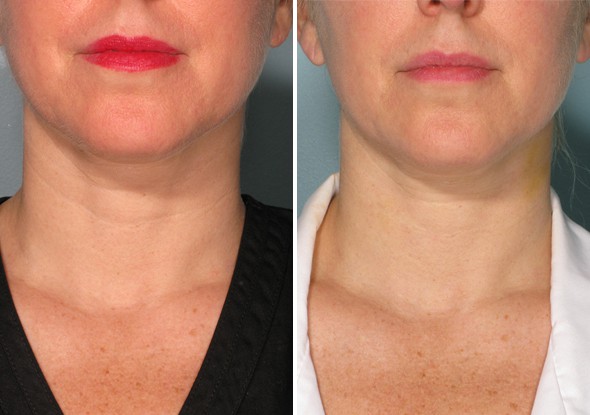
6. Losing the elasticity in the neck skin area
Even though the skin is homogenous on the entire body, some places are simply thinner than others. One of the thinnest skin pieces on the entire body is found in the neck area, right under the chin. Thin skin possesses less elastin and collagen cells than the other parts of the body. Because of this, deterioration in these parts is faster and more visible than anywhere else.
Colloquially, this phenomenon is called “turkey neck”. This name was installed because flabby skin resembles the skin formation that turkeys have on their necks. Since the skin in the neck doesn’t have much fat tissue, the need for connective tissue is lesser. Areas like the stomach and the triceps have the largest amount of connective cells.
The conclusion is that neck skin is, in biological terms, mostly for cosmetic purposes. It doesn’t cover any important muscles or ludicrous amounts of fat tissue. Since it’s under the face, this piece of the skin is one of the most visible signs of aging. As we all know, our skin type is partially predetermined by genetics. Because of this, some people may have larger “turkey necks” than others.
There are several ways you can worsen the deterioration of neck skin. The most prominent ones are surely sun exposure and extreme weight fluctuations.
Fixing the process is not easy, but medically possible. Here are some ways you can take control of it.
- The essential move should be pampering the flabby parts with a good moisturizer. Giving the skin fluids allows it to slow down the disappearance of connective tissues.
- Furthermore, adding high-quality sunscreen to your beach arsenal will only help.
- Drinking water is essential, too. Skin hydration helps a lot.