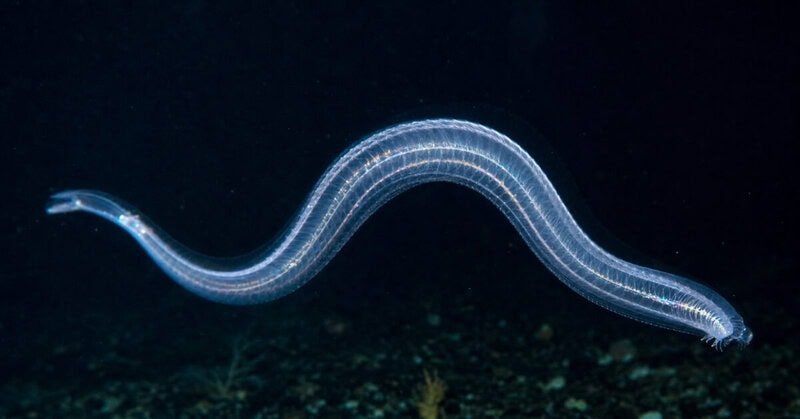
During a routine remotely operated vehicle (ROV) dive into the ocean’s midnight zone, marine biologists watching live footage encountered something that made them pause the playback: an elongated, translucent organism undulating through the water column in long, sinuous waves — matching nothing in any existing taxonomic database they could cross-reference on the spot. That creature, now provisionally called the Squirmaid, has since become one of the most discussed new animal species discoveries in recent memory. Its significance lies not in impossibility but in anatomy: the organism appears to combine biological traits that scientists had previously assumed evolved along entirely separate lineages.
A Discovery That Stopped Scientists in Their Tracks
Fewer than 20 percent of the world’s oceans have been mapped at high resolution, according to ocean-mapping bodies including the National Oceanic and Atmospheric Administration (NOAA). That figure is not rhetorical decoration — it is the practical context in which encounters like the Squirmaid discovery become scientifically plausible rather than extraordinary. The deep sea is not a well-catalogued library with a few shelves left to dust; it is a largely unread archive. Creatures that have evolved in permanent darkness, under crushing hydrostatic pressure, and at temperatures hovering just above freezing have had millions of years to diverge from body plans familiar to surface-focused biology — and many have never been photographed, let alone named.
The provisional common name “Squirmaid” was coined by the discovery team itself, a practice that is not unusual in early-stage marine biology when researchers need a working label before formal taxonomic processes are complete. The name reflects the organism’s most immediately visible behavior: a fluid, squirming locomotion that struck observers as unlike the movement patterns of any documented invertebrate or vertebrate at comparable depths. The formal scientific binomial name — the two-part Latin designation that would appear in peer-reviewed literature — has not yet been assigned and awaits the completion of taxonomic analysis and publication. Until then, “Squirmaid” functions as journalistic and working shorthand, not official nomenclature.
What Is the Squirmaid? Anatomy and First Impressions
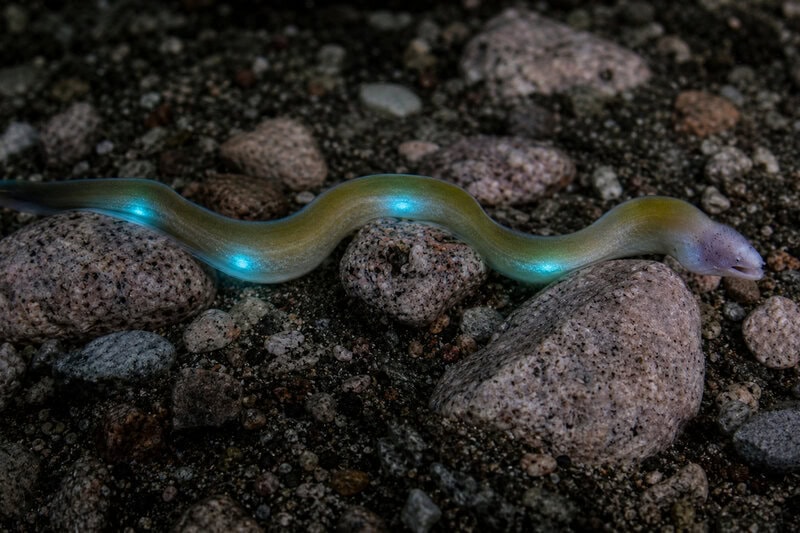
Based on available footage and preliminary descriptions, the Squirmaid’s most striking observable characteristics include a ribbon-like, elongated body that appears to lack rigid skeletal structures, and bioluminescent patches — light-producing regions — distributed at intervals along its length. Bioluminescence is a well-documented adaptation in the deep sea, present in organisms ranging from anglerfish to certain species of jellyfish and marine worms, so that feature alone would not trigger a new-species claim. What appears to have unsettled taxonomists is the combination of traits the organism displays simultaneously.
To understand why that matters, it helps to understand the concept of a phylum — a major branch of the animal family tree, one level below the kingdom Animalia. Humans belong to the phylum Chordata, which includes all animals with a notochord at some stage of development. Jellyfish belong to Cnidaria; segmented worms to Annelida; sea cucumbers and starfish to Echinodermata. These are not arbitrary administrative categories — they reflect genuinely deep evolutionary divergences. When an organism appears to combine anatomical features associated with more than one phylum, scientists face a significant interpretive challenge: either those shared features arose independently through convergent evolution, meaning the same solution evolved twice, or the organism occupies a genuinely unexpected position on the evolutionary tree.
The Squirmaid, according to preliminary assessments, appears to display characteristics associated with at least two distinct phyla — a finding described as scientifically contentious rather than settled. Physical specimen collection, which would be essential for formal taxonomic description under the rules of the International Code of Zoological Nomenclature, remains a logistical challenge at the depths involved. Whether physical tissue has been recovered has not been confirmed publicly as of the time of writing. Some institutions have accepted high-quality image and genetic-sequence data as supplementary type material in recent years, though a physical specimen remains the gold standard for formal description.
How Deep-Sea Discovery Actually Works
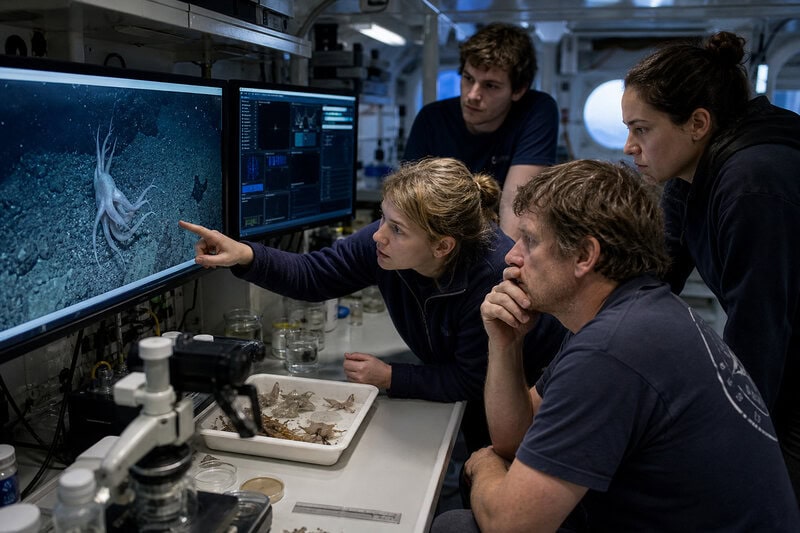
The pipeline from ROV footage to formal new-species publication is longer and more rigorous than a single dramatic video clip suggests. Onboard biologists flag anomalous organisms during or immediately after a dive; that footage is then compared against global species databases — including the World Register of Marine Species (WoRMS), which catalogs all accepted marine organism names — by shore-based taxonomists. Only when no existing entry matches the organism’s morphology does a new-species investigation formally begin.
It is worth distinguishing between two categories of novelty, because they carry very different scientific weight. A new species within a known genus — for example, a previously undocumented species of snailfish in the genus Pseudoliparis — is a meaningful but relatively incremental discovery. A creature with a genuinely novel body plan, one that cannot be placed within any existing phylum, would be among the rarest categories of biological find in modern science. The Squirmaid appears to be under investigation for the latter possibility, though researchers have not publicly confirmed a final assessment. The distinction between “novel body plan” and “highly unusual member of a known group” is precisely what molecular analysis is intended to resolve.
Environmental DNA, or eDNA — genetic material shed passively by organisms into surrounding water through mucus, feces, or shed cells — is increasingly used as a complementary discovery tool. Water-column samples taken near the Squirmaid sighting, if collected, could provide preliminary phylogenetic data: by comparing recovered genetic sequences against reference databases, researchers can estimate where an organism sits on the evolutionary tree before a physical specimen is in hand. This method has become standard practice on major oceanographic expeditions and has accelerated the preliminary identification of new marine species in surveys such as those conducted off New Zealand, where scientists described around 100 previously unknown organisms from a single expedition.
Why the Deep Sea Keeps Surprising Us
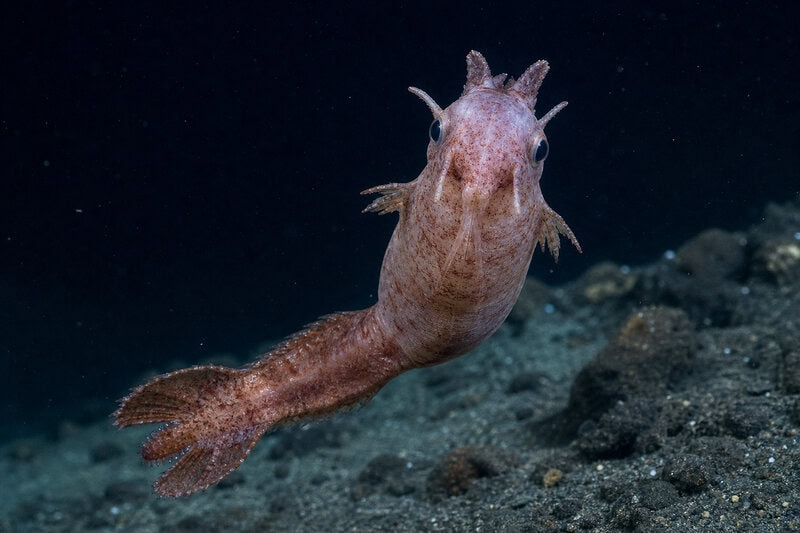
The deep ocean — broadly defined as water below 200 meters — covers more than 60 percent of Earth’s surface, making it the planet’s single largest biome. NOAA and allied ocean science institutions have consistently characterized it as the least explored habitat on Earth, a designation supported by discovery data: marine scientists formally describe hundreds of new ocean species annually, with deep-sea expeditions disproportionately represented among finds involving the most morphologically unusual body plans. A recent Southern Ocean survey yielded 30 new species, including iridescent scale worms and carnivorous organisms — creatures whose existence was entirely unknown before the expedition.
The adaptive pressures that shape deep-sea life are extreme and consistent: hydrostatic pressure that would crush most surface organisms, temperatures near freezing, and the total absence of sunlight below approximately 1,000 meters. These conditions drive both convergent evolution — where unrelated lineages independently evolve similar solutions, such as transparency or bioluminescence — and divergent evolution, where isolated populations develop body plans with no shallow-water analogues. The result is a fauna that can appear, at first inspection, to violate the rules of animal organization as scientists have understood them from surface and coastal species.
An emerging and contested area of research concerns the total number of undescribed marine species. Some researchers have argued that current discovery rates, extrapolated against the volume of unexplored habitat, suggest hundreds of thousands of marine species remain undocumented. That figure is disputed; methodologies for estimating undescribed biodiversity vary significantly, and conservative estimates are substantially lower. What is not disputed is that the rate of morphologically unusual deep-sea finds — including the dozens of new marine species recently described from the South Atlantic — shows no sign of slowing.
The Classification Problem: Where Does the Squirmaid Fit?
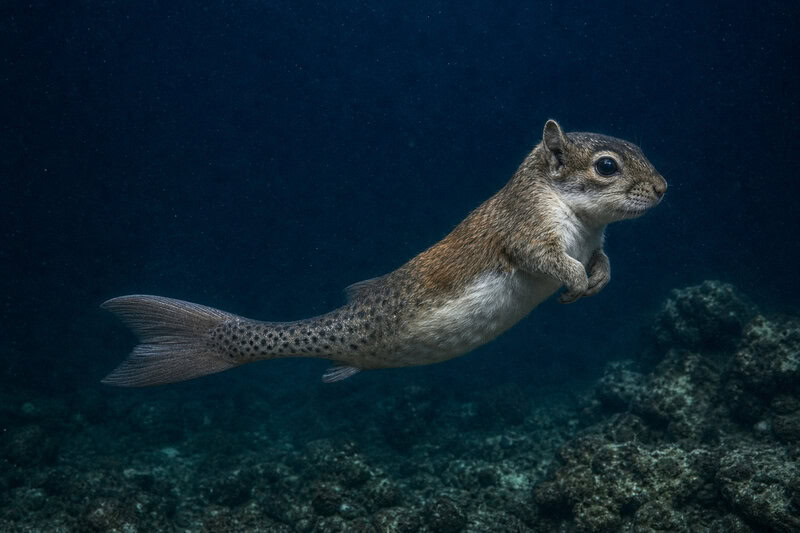
Every known animal is assigned a position in the Linnaean hierarchy: kingdom, phylum, class, order, family, genus, species. The system is designed for organisms that fit cleanly into established branches, and it functions well for the vast majority of new species described each year. It becomes scientifically contested when an organism shares structural features across branches that are supposed to be evolutionarily distinct — not because the system is broken, but because the organism forces a question the system was not built to answer easily.
Researchers investigating the Squirmaid are most likely weighing two leading hypotheses. The first is that the creature is a highly derived — meaning evolutionarily specialized — member of a known phylum, and that its apparent similarities to other phyla reflect superficial convergence: the same functional solution evolved independently, as has happened repeatedly in deep-sea evolution. The second hypothesis is that the Squirmaid represents a genuinely novel lineage, one that diverged from other animal groups early enough in evolutionary history to deserve its own taxonomic grouping.
Molecular phylogenetics — the comparison of DNA sequences to construct evolutionary trees — is the gold-standard method for resolving this dispute, and it is typically the most time-consuming step between initial discovery and formal publication. Readers should understand clearly what is established fact and what remains contested interpretation: the creature was observed and appears morphologically unusual — that is documented. Where it belongs in the tree of life is still being determined, and no claim about its final classification should be treated as settled until peer-reviewed publication confirms it.
Why It Matters: Science, Conservation, and What Comes Next
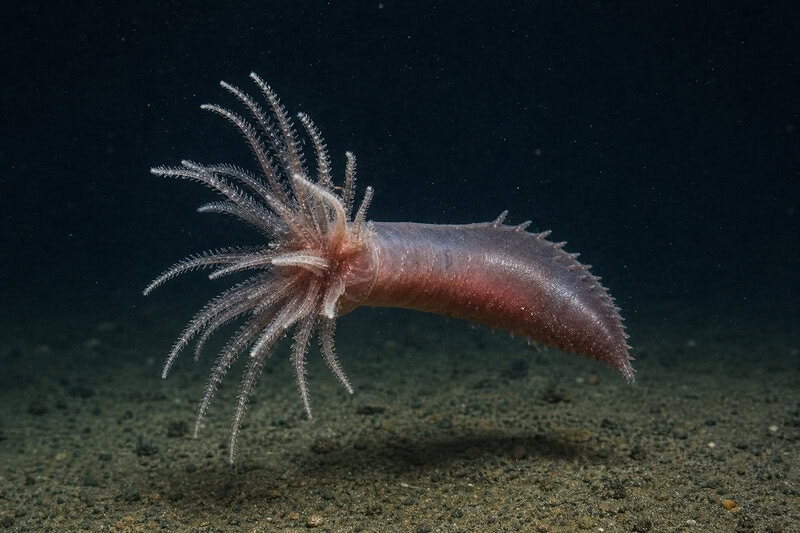
If the Squirmaid’s unusual anatomy is confirmed through molecular and morphological analysis to represent a genuinely novel body plan, the scientific significance would be difficult to overstate. Discoveries of genuinely new branches on the animal tree are exceptionally rare in modern biology, and each offers a window into evolutionary pathways that existing animal groups no longer make visible. Understanding how life solved the problem of surviving in the deep ocean, using mechanisms not previously documented, has implications for evolutionary biology, biochemistry, and materials science.
The conservation dimension is equally pressing. Deep-sea ecosystems face accelerating pressure from proposed seabed mining operations, climate-driven deoxygenation of deep water, and the accumulation of plastic pollution at extreme depths. Marine conservation scientists have consistently raised the concern that species may be lost before they are formally described — a form of extinction that leaves no scientific record. The Squirmaid’s discovery, like comparable finds highlighted in recent reports of new species discovered during diving expeditions, underscores how much biological knowledge is at stake in decisions about deep-sea habitat protection made before the inventory is complete.
Practically, the discovery reinforces the scientific and policy case for sustained investment in deep-sea ROV programs and open-access species databases. High-profile finds demonstrably increase public engagement with marine science, and that engagement has historically preceded increases in research funding and marine protected area designations — an argument ocean-science advocates make regularly to funding bodies and legislators.
The remaining steps toward formal recognition are well-defined: peer-reviewed publication in a recognized taxonomy journal, assignment of a binomial Latin name, and deposition of a type specimen — or, if physical collection proves impossible, a designated image or genetic sequence — in a recognized repository such as a natural history museum collection. That process can take months to years for morphologically complex organisms.
Whatever taxonomic address the Squirmaid ultimately receives, it stands as a concrete reminder that Earth’s ocean still holds creatures that have never encountered a human observer, and that the age of biological discovery is far from over. Readers who want to follow the story as it develops should monitor public communications from the discovering institution directly and consult the World Register of Marine Species for authoritative updates on formal classification as the peer-review process advances.