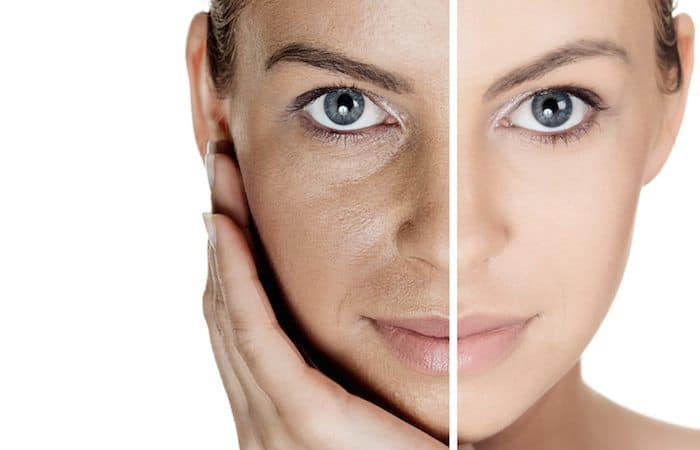
5. Hyperpigmentation and age spots
Melanin is the pigment that gives the skin its distinct color. The cells that produce this pigment are called melanocytes. They reside in the stratum basale, which is the lower layer of the skin’s epidermis. As the body ages, it only focuses on essential life-giving activities and processes. Melanocyte distribution, sadly, isn’t one of these essential processes.
During the aging process, melanocytes become more and more diffuse and pigment production becomes less regulated by the body. This results in various darker skin spots. They are a common feature on faces of people over the age of sixty. They can appear earlier, but such cases are rare. It can be due to negligence and prolonged substance abuse. Also, exposure to UV rays can stimulate excess melanin production.
Age spots are smaller manifestations of bigger hyperpigmentation spots. They are abundant in older people, but can appear even at a young age. Basically, the more sun exposure the skin gets, the more likely age spots are to appear. Of course, genetics, dieting, and several other factors play a prominent role. It simply shows that with time your skin will lose its charm and glow.
Ways to treat age spots:
- The first step to treat and lessen age spots is to stress less. Overstraining the nerves is also a prominent factor in causing the darkening of the skin.
- Thankfully, there are effective natural remedies. Citrus juice from lemons is the best solution to this skin-related conundrum. Rubbing it on your skin twice a day will reduce skin discoloration.
- Aloe Vera juice and gel are two more efficient solutions that combat excessive melanin production. Unlike citrus juice, they work best when left overnight for the skin to absorb them.
- Using sunscreen helps a lot too. Good sunscreens protect the skin from various forms of UV light.