
A corridor barely 33 kilometers wide at its narrowest point funnels roughly 25 percent of all seaborne oil trade on Earth — and yet, according to a new Oxford Economics study, the Strait of Hormuz is just one entry on a long list of geographic bottlenecks that could, if disrupted, send shockwaves through the global economy within days. Hormuz dominates the headlines, but a new wave of research shows the global economy is one disruption away from crisis at a half-dozen other waterways most people have never heard of.
What Is a Maritime Chokepoint — and Why Does Narrowness Matter So Much?
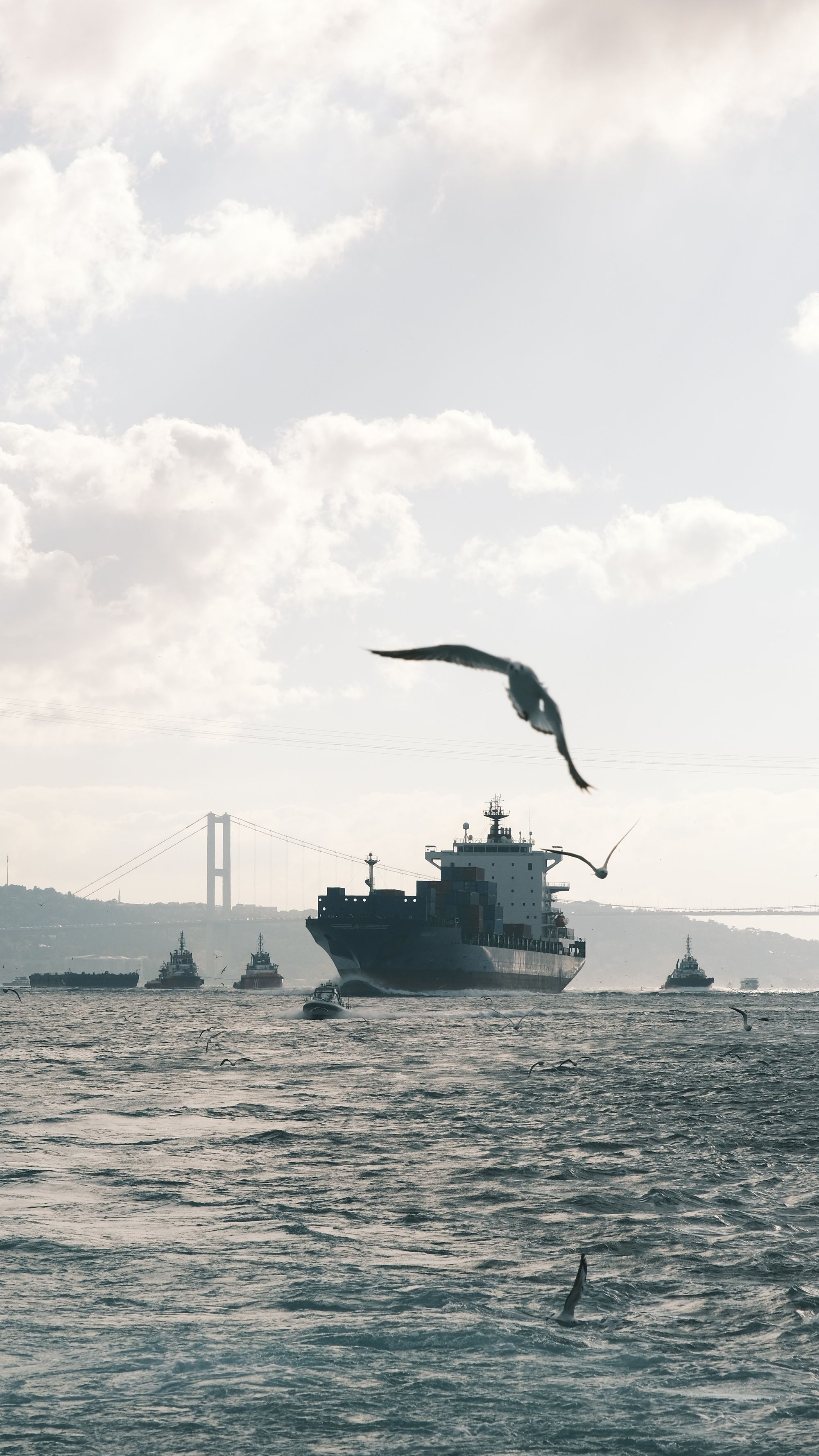
A maritime chokepoint is a narrow, strategically positioned waterway where the volume of passing vessel traffic is so high, and alternative routes so costly or slow, that any sustained closure can cascade into a global supply shock. The definition sounds technical, but the underlying mechanism is intuitive: imagine compressing a six-lane highway into a single lane with no exits for hundreds of kilometers. That is, in essence, what these straits do to the flow of global commerce.
Unlike open-ocean shipping, where vessels have room to maneuver and reroute, chokepoints compress thousands of daily vessel movements into corridors measured in single-digit kilometers. That compression creates acute vulnerability to blockade, accidental grounding, extreme weather, or targeted attack. When a chokepoint closes — for any of those reasons — oil prices spike, grain shipments stall, and factory supply chains seize up within days, not months.
The U.S. Energy Information Administration analyzes seven major oil transit chokepoints in its World Oil Transit Chokepoints report, a formal recognition that systemic risk is plural, not singular. What the Oxford Economics study adds — and what remains an evolving area of research — is a quantified, comparative risk ranking across dozens of additional nodes simultaneously, shifting the conversation from a single point of failure to an entire network of vulnerability.
Chokepoints 1 and 2: The Suez Canal and Bab el-Mandeb — Europe’s Paired Lifeline
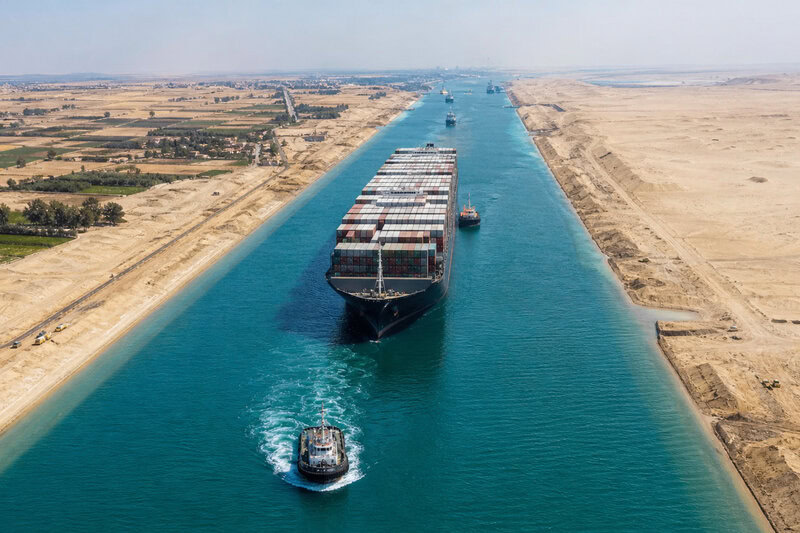
The Suez Canal is the most-used artificial waterway in the world, carrying roughly 12 to 15 percent of global trade by volume annually, according to the United Nations Conference on Trade and Development. Its importance became viscerally clear in March 2021, when the container ship Ever Given ran aground and blocked the canal for six days. That single grounding halted an estimated $9.6 billion in daily trade — a figure that illustrated, better than any academic model, how a solitary vessel incident can freeze a global artery.
But the Suez Canal does not operate in isolation. To reach it from the Indian Ocean, all shipping must first pass through the Bab el-Mandeb — Arabic for “Gate of Grief” — a 29-kilometer-wide strait connecting the Red Sea to the Gulf of Aden. In 2023 and 2024, Houthi drone and missile attacks in the region forced dozens of major carriers to reroute around the Cape of Good Hope, adding up to 14 days and significant additional fuel costs per voyage. The disruption demonstrated that Bab el-Mandeb is not a secondary concern — it is the mandatory southern approach to Suez, and closing it effectively closes both waterways for European-Asian trade simultaneously.
The Baker Institute identifies this kind of paired vulnerability as part of a broader array of global chokepoints where maritime traffic is easily interdicted — a framing that underscores why analyzing any single bottleneck in isolation understates the true risk. Rerouting around Africa is not simply slower; it consumes substantially more fuel, tightens global vessel capacity, and raises freight rates for goods as varied as electronics, wheat, and clothing — costs that eventually reach consumers.
The Houthi campaign also exposed a practical limitation in contingency planning: the Cape of Good Hope alternative, while viable in the short term, adds thousands of nautical miles per voyage. When dozens of carriers make that rerouting decision simultaneously, it does not merely slow individual shipments — it removes effective vessel capacity from the global fleet, amplifying freight-rate increases across trade lanes that had no direct connection to the original disruption.
Chokepoint 3: The Strait of Malacca — Asia’s Indispensable but Fragile Artery

If Hormuz is the energy world’s most-watched chokepoint and Suez is Europe’s commercial lifeline, the Strait of Malacca is the circulatory system of Asian trade. Stretching between Malaysia, Singapore, and Indonesia, it is the shortest sea route connecting the Indian Ocean to the South China Sea and the Pacific. According to UNCTAD, the strait handles an estimated 40 percent of global trade by value annually — a figure that places it, by some measures, above even Hormuz in aggregate economic importance.
Its physical constraints are severe. At its narrowest section — the Phillips Channel near Singapore — the strait is just 2.8 kilometers wide, yet it accommodates some of the highest vessel density of any waterway on Earth. That combination of extreme narrowness and extreme traffic creates acute risk of collision, grounding, and interdiction. The EIA includes Malacca in its seven-chokepoint analysis and notes that, unlike Hormuz — which is deep enough and wide enough to handle the world’s largest crude oil tankers — Malacca imposes draft restrictions that force the very largest vessels onto longer alternate routes even under normal operating conditions.
Beyond the physical constraints, the geopolitical overlay is significant. Territorial disputes among regional nations, a well-documented history of piracy, and the converging strategic interests of China, the United States, India, and ASEAN nations make Malacca as much a diplomatic flashpoint as a logistics one. A disruption here would ripple through semiconductor supply chains, energy imports to Japan and South Korea, and consumer goods flows to North America and Europe simultaneously.
That breadth of exposure is what distinguishes Malacca from most other chokepoints. Hormuz is primarily an energy chokepoint; Suez is primarily a containerized-goods artery; Malacca is both at once. A closure would impose simultaneous stress on energy markets, manufacturing supply chains, and consumer goods logistics — with no single rerouting option capable of absorbing the full volume of displaced traffic.
Chokepoint 4: The Turkish Straits — the Black Sea’s Only Exit to the World
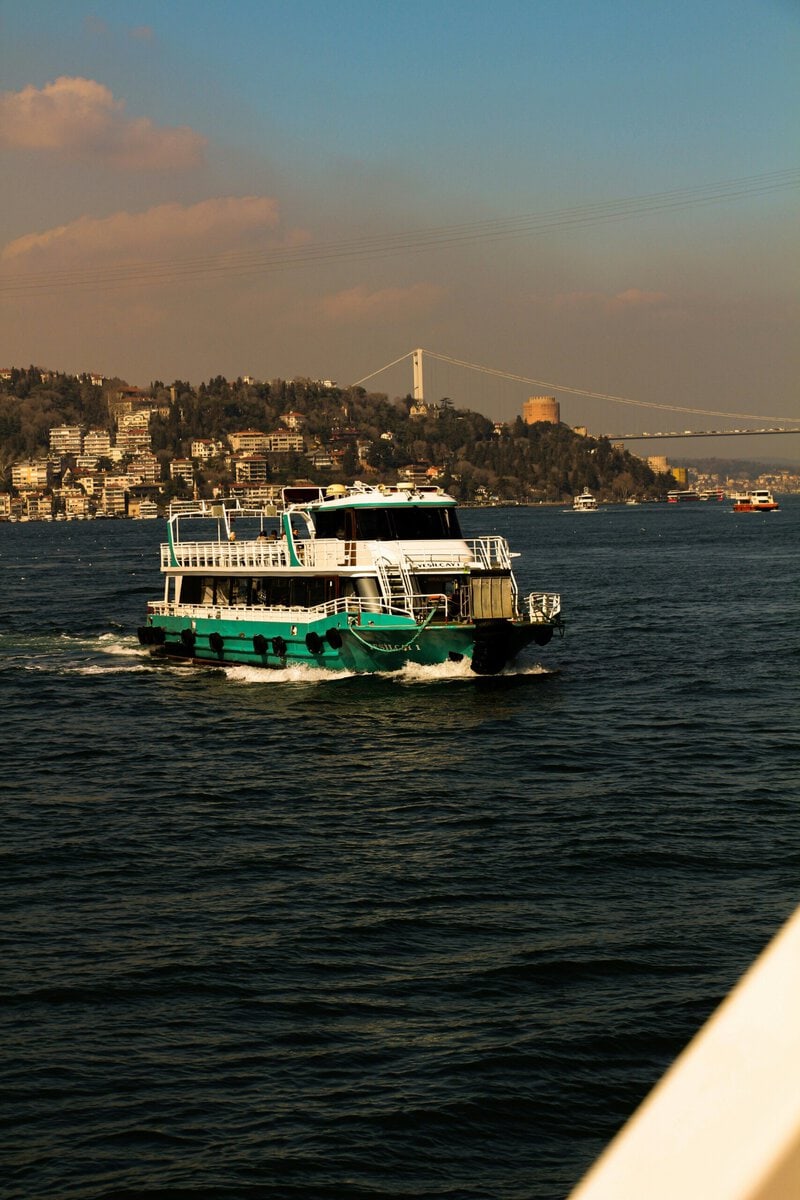
The Bosphorus, running directly through the center of Istanbul, is just 700 meters wide at its narrowest point — narrow enough that vessels can observe the city’s architecture from their decks. Together with the Dardanelles to its south, it forms the Turkish Straits, the sole maritime exit for Black Sea nations including Ukraine, Russia, Romania, and Bulgaria, whose grain and energy exports move almost exclusively through this corridor.
Russia’s full-scale invasion of Ukraine in February 2022 threw the Turkish Straits into sharp global relief. With Black Sea ports blockaded in the early months of the war, global wheat and sunflower-oil prices spiked sharply, demonstrating with uncomfortable clarity how a regional conflict can transmit a food-security crisis worldwide within weeks — not through the conflict zone itself, but through the narrow geographic corridor that connects it to global markets.
The Turkish Straits add a regulatory dimension absent from most other chokepoints. Under the 1936 Montreux Convention, Turkey holds legal authority to restrict warship passage through the straits — a power it exercised following the 2022 invasion. That political and legal layer means risk at the Bosphorus is not purely geographic; it is shaped by treaty obligations, great-power politics, and bilateral diplomacy in ways that no freight-rate model can fully capture.
The food-security dimension also sets the Turkish Straits apart. While Hormuz and Malacca are primarily associated with energy and manufactured goods, the Bosphorus corridor is one of the world’s most critical grain arteries. Disruptions there do not raise the price of consumer electronics — they raise the price of bread, in countries least able to absorb that increase.
The Hormuz Fixation: Why Concentrating on One Chokepoint Is a Policy Blind Spot
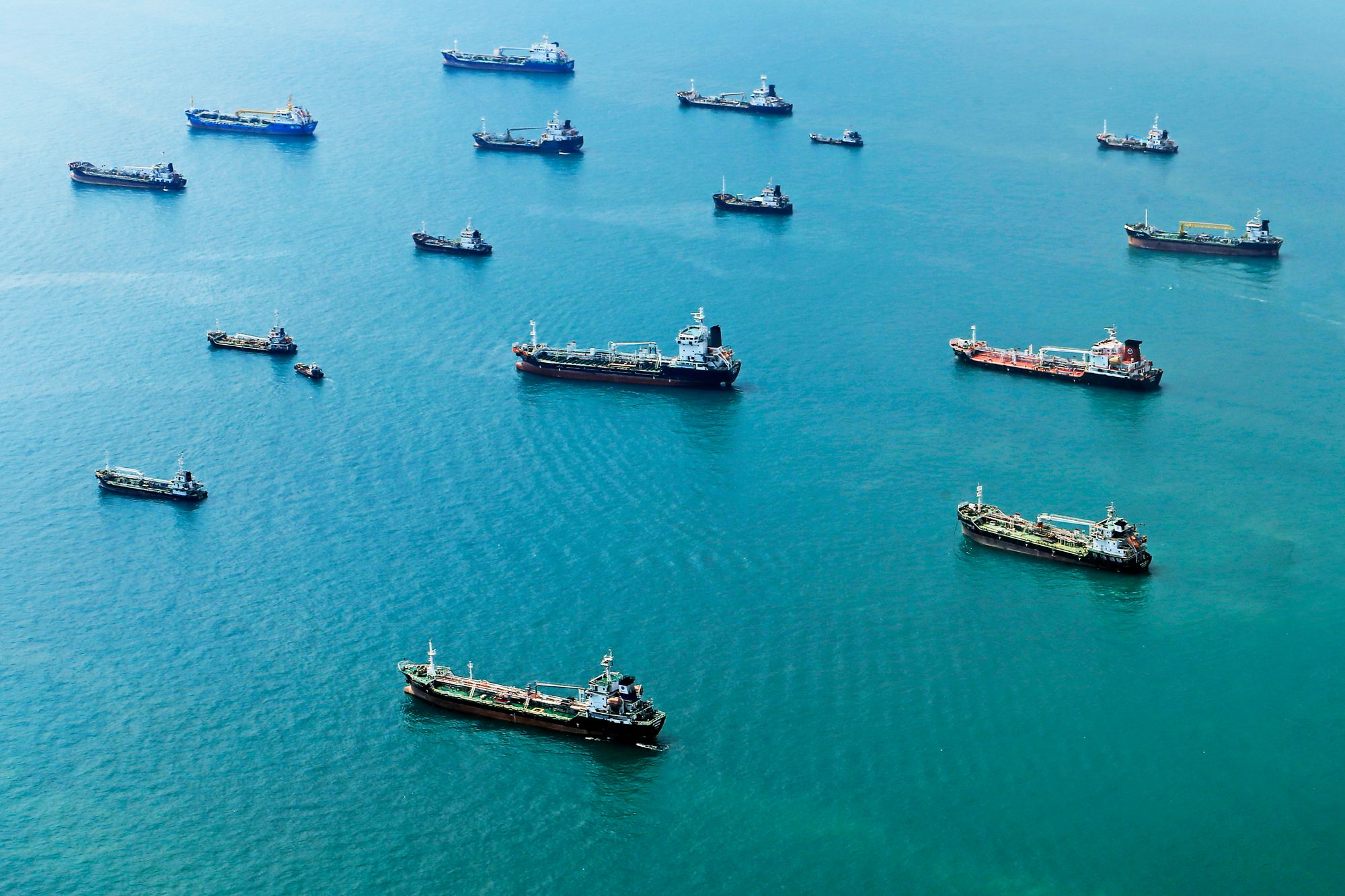
The Oxford Economics study’s central finding is direct: maritime chokepoint risk is spread across dozens of waterways and ports, not concentrated solely at the Strait of Hormuz. That conclusion challenges the media and market tendency to treat Hormuz as the singular systemic threat — a tendency reinforced by decades of geopolitical coverage focused on the Persian Gulf. The Baker Institute reinforces this framing, identifying Hormuz as just one element of an array of global chokepoints where maritime traffic is easily interdicted, implying that hedging strategies focused exclusively on Hormuz create a false sense of security.
It is not contested that Hormuz matters enormously. UNCTAD’s detailed analysis of Strait of Hormuz disruptions and their implications for global trade makes the stakes unambiguous. What remains an active area of research — and what the Oxford Economics study begins to address — is how to quantify and compare risk across simultaneous multi-chokepoint disruption scenarios. That is a methodological frontier, and researchers are careful to distinguish between what is known and what is still being modeled.
The policy implication is significant, even without overstating certainty: analysts and supply-chain managers who model only single-chokepoint failure may systematically underestimate tail risk — the low-probability, high-consequence events that stress-test entire economies. Insurance pricing, strategic petroleum reserve policy, and corporate supply-chain architecture have all historically been calibrated against single-point scenarios. The new research suggests that framework may be inadequate.
There is also an institutional inertia problem. Because Hormuz has been the dominant narrative for so long, it has attracted the deepest investment in monitoring, contingency planning, and diplomatic attention. The other chokepoints examined here have received comparatively less analytical scrutiny — which means that when disruptions occur at those locations, as the Houthi attacks demonstrated, both markets and policymakers tend to be caught underprepared.
How Chokepoint Disruptions Propagate Through the Global Economy
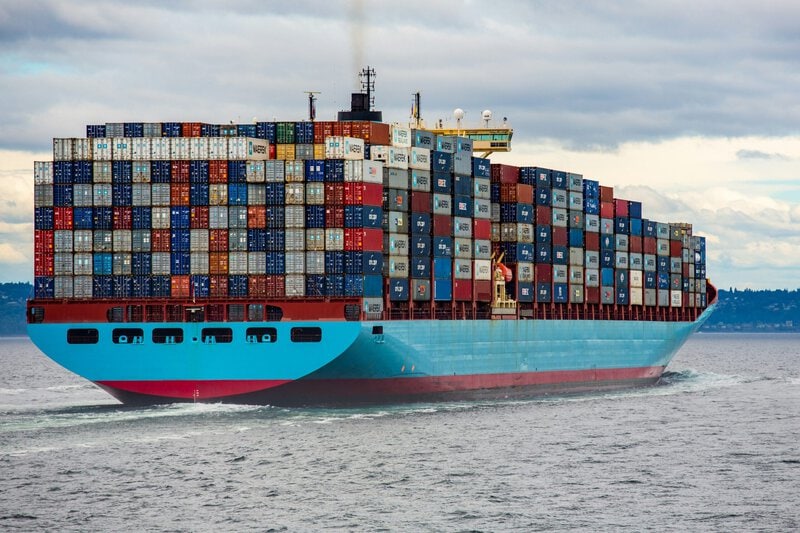
Understanding why these waterways matter requires understanding the transmission mechanism — the specific chain of events through which a geographic disruption becomes a consumer price increase thousands of miles away.
The process works in stages. When a chokepoint becomes impassable or dangerous, carriers reroute to longer alternatives, adding transit time and fuel costs. Those additional costs are embedded in freight rates, which rise rapidly as available vessel capacity tightens. Higher freight rates increase the landed cost of imported goods — whether crude oil, grain, or manufactured components. Those cost increases move through supply chains and eventually reach retail prices, typically within weeks for commodities and within months for finished goods.
The speed of transmission depends on how central the affected chokepoint is to a given trade lane, how much spare vessel capacity exists globally, and whether the disruption is perceived as temporary or sustained. A grounding that closes a waterway for a week produces a different market response than a military campaign that threatens a corridor for months. The Houthi attacks illustrated the latter: because carriers could not predict when the threat would end, many committed to permanent rerouting decisions — absorbing higher costs rather than betting on a rapid resolution — which amplified and extended the freight-rate impact well beyond what the physical disruption alone would have produced.
Simultaneous disruptions at two or more chokepoints would compress this mechanism into a narrower window, leaving fewer rerouting options and creating feedback loops between tightening vessel capacity and rising fuel costs that current models have not been calibrated to capture.
What This Means for the Global Economy — and What Comes Next
Taken together, the Strait of Hormuz, the Suez Canal, Bab el-Mandeb, the Strait of Malacca, and the Turkish Straits represent a set of geographic pinch points through which the overwhelming majority of global energy and commodity trade must pass. The Oxford Economics research suggests that their combined risk is underpriced by markets that have grown accustomed to treating each waterway as a discrete, manageable variable rather than as nodes in an interconnected and mutually reinforcing system of vulnerability.
Researchers are careful to note that the probability of simultaneous multi-chokepoint closure remains low. The concern is not imminent catastrophe but systematic under-preparedness — in insurance markets, in strategic reserve architecture, and in the supply-chain decisions of firms that have optimized relentlessly for efficiency at the expense of resilience. The Ever Given grounding lasted six days and cost an estimated $9.6 billion in delayed trade per day. The Houthi campaign against Red Sea shipping lasted months and restructured freight markets globally. Neither was considered a realistic scenario in the risk models that preceded it.
The practical implication for supply-chain strategy is concrete: firms that have built their logistics around the assumption that any single chokepoint disruption can be managed through a single alternative route are operating with an incomplete risk picture. The research emerging from Oxford Economics and parallel work at institutions such as UNCTAD and the Baker Institute points toward a more demanding standard — one in which resilience planning accounts for cascading, multi-node failures rather than isolated incidents.
For policymakers, the implication is equally direct. Strategic petroleum reserves, naval patrol commitments, and diplomatic engagement with transit states have historically been allocated in rough proportion to perceived threat — and perceived threat has historically been disproportionately concentrated on Hormuz. Rebalancing that attention does not require abandoning Hormuz planning; it requires extending the same analytical seriousness to Malacca, Bab el-Mandeb, the Bosphorus, and the other bottlenecks through which the global economy quietly flows every day.
The lesson of the Ever Given, the Houthi attacks, and now a new generation of chokepoint research is the same: the global economy does not have a Hormuz problem — it has a chokepoint problem, and solving it requires watching all the narrow places at once.