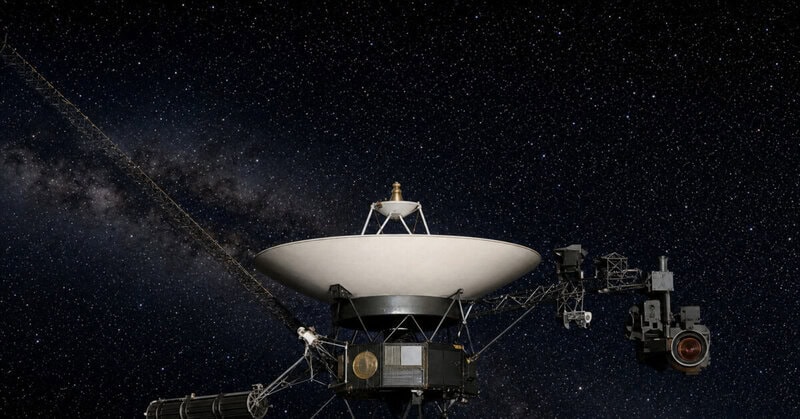
When a NASA engineer at the Jet Propulsion Laboratory sends a command to Voyager 1 today, that signal — traveling at the speed of light, the fastest anything in the universe can move — still takes more than 14 hours to arrive. The reply, if everything works, won’t return for another 14-plus hours. Every single two-way exchange with humanity’s most distant spacecraft consumes more than a full day, and that delay is only going to grow.
A Command Sent Today Won’t Arrive Until Tomorrow
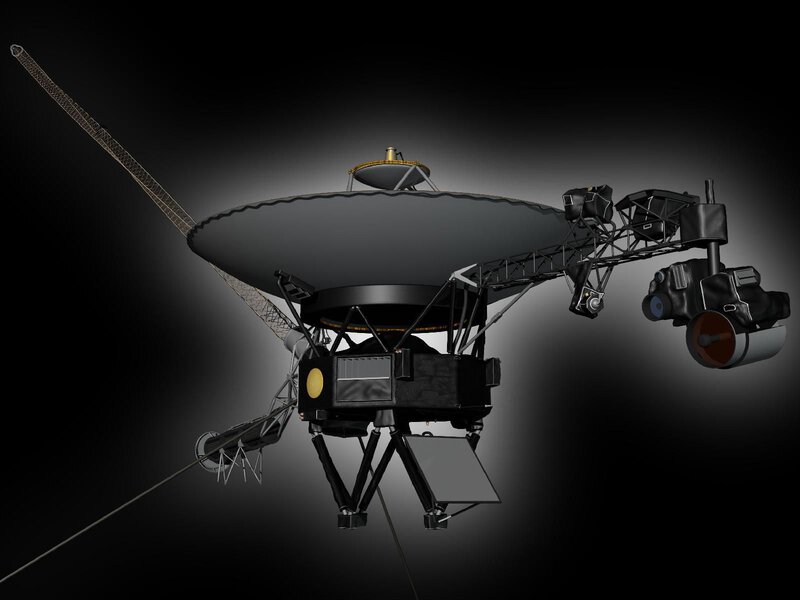
On November 18, 2026, Voyager 1 is expected to cross a threshold no human-made object has ever reached: a distance of one light-day from Earth. NASA describes this crossing as a historic milestone for both science and human exploration. Launched in 1977 — nearly 50 years ago — the spacecraft has been pushing outward ever since, and it still transmits data home using a radio transmitter that NASA’s Jet Propulsion Laboratory (JPL) says is no more powerful than a refrigerator light bulb. That this signal reaches Earth at all is a testament to the extraordinary sensitivity of the antennas built to receive it. That it takes over 14 hours to arrive is a reminder of just how incomprehensibly far Voyager has traveled.
The core challenge this creates is not merely logistical — it is philosophical. You cannot steer a spacecraft in real time when your steering wheel is light-hours away. Every instruction must be composed, reviewed, and transmitted with the understanding that the spacecraft receiving it will be in a slightly different position and state than it was when the command was written. Deep-space operations at this scale are less like driving a car and more like writing a letter to someone who will only read it tomorrow, and whose reply you won’t see until the day after that.
What ‘One Light-Day’ Actually Means — and Why It Matters
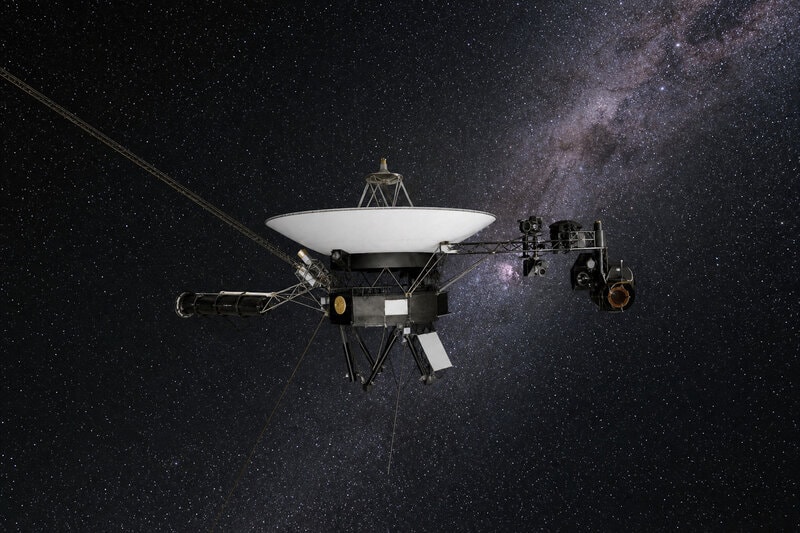
A light-day is the distance light travels in 24 hours: roughly 26 billion kilometers, or about 16 billion miles. To put that in perspective, the distance between Earth and the Sun — which feels enormous at approximately 150 million kilometers — is crossed by light in only about eight minutes. One light-day is more than 170 times that Earth-Sun distance. It is a number that resists easy comprehension, which is precisely why NASA’s public milestone events are designed to make it emotionally graspable rather than merely numerically stated.
Voyager’s position at one light-day also places it well inside the Oort Cloud, the vast, loosely bound shell of icy bodies that astronomers consider the gravitational outer boundary of the solar system. It is worth noting that Voyager 1 has already crossed a different and equally significant boundary: the heliopause, the region where the Sun’s solar wind gives way to interstellar plasma. NASA confirmed that crossing in 2012, making Voyager 1 the first spacecraft to enter interstellar space. The one-light-day milestone is a distance marker layered on top of that already remarkable achievement — a measure of how far human engineering has extended its reach into a domain that was, for all of human history before 1977, completely inaccessible.
Understanding this scale matters for public science literacy. At one light-day, the concept of “sending a message” to a spacecraft is no longer a routine operation. It is a logistical and philosophical exercise in patience, planning, and institutional endurance that has few parallels in any other human endeavor.
How NASA Communicates with Voyager 1: The Deep Space Network Explained

NASA communicates with Voyager 1 through the Deep Space Network (DSN), a global array of large radio antenna complexes located in Goldstone, California; Madrid, Spain; and Canberra, Australia. The three sites are positioned roughly 120 degrees apart in longitude so that as Earth rotates, at least one station always has Voyager 1 above its horizon. The system was designed with exactly this kind of perpetual coverage in mind.
The DSN dishes used for Voyager can reach up to 70 meters in diameter. At that size, they are sensitive enough to detect Voyager’s signal, which arrives at Earth carrying approximately 10⁻¹⁸ watts of power — roughly 0.000000000000000001 watts — according to JPL. That is far weaker than the energy of a single photon of visible light hitting your eye from a distant candle. Detecting it requires not only large dishes but also extremely low-noise receivers and sophisticated signal-processing techniques developed and refined over decades.
Because of the signal delay of more than 14 hours each way, flight controllers cannot operate in a conventional command-and-response mode. Instead, they practice what engineers call open-loop commanding: instructions are pre-programmed and uploaded in sequences, with the expectation that the spacecraft will execute them autonomously over a defined period. There is no real-time feedback loop. If something goes wrong mid-sequence, the team on Earth will not know about it until the problem has already been unfolding for over 14 hours. The DSN is also a shared resource used simultaneously by dozens of active missions, meaning that scheduling antenna time for Voyager — a 50-year-old spacecraft with diminishing power and no guarantee of continued operation — requires careful and ongoing prioritization.
For a broader overview of what NASA has planned around this historic distance crossing, the official announcement is available on both the NASA website and the JPL news page.
Operating a Spacecraft in Interstellar Space: The Engineering Reality

Voyager 1’s power source is a radioisotope thermoelectric generator, or RTG — a device that converts heat from the natural radioactive decay of plutonium-238 into electricity. RTGs produce no power from solar panels and require no fuel combustion; they simply exploit the steady heat of decaying atoms. The problem is that plutonium-238 decays at a fixed rate, and Voyager’s RTGs produce roughly four watts less power each year. Over nearly five decades, that accumulated loss has forced JPL engineers to periodically shut down instruments and onboard heaters to extend the mission’s operational life. Deciding which science instruments to sacrifice — and in what order — is one of the more consequential engineering decisions the Voyager team makes on a recurring basis.
The fragility of that power budget was made painfully clear in 2023, when Voyager 1 began returning garbled telemetry — corrupted data that made the spacecraft’s status impossible to read. Diagnosing and resolving the fault took months, because every diagnostic command and every response had to cross more than 22.5 billion kilometers of interstellar space. Engineers at JPL eventually traced the problem to a faulty chip in one of the spacecraft’s flight data computers and found a creative workaround that restored coherent data transmission — a remarkable achievement given that Voyager 1 runs on 1970s-era computing hardware with approximately 70 kilobytes of onboard memory, less than a typical email attachment today.
NASA scientists are careful to distinguish what is known from what remains uncertain. Voyager’s continued operation is an established engineering fact; it is transmitting data and receiving commands as of this writing. How long it can continue to do so before power levels fall below the threshold needed to operate any science instrument is genuinely uncertain and depends heavily on which instruments are kept active. Current estimates suggest that useful science transmission may become impossible sometime in the late 2020s, though the exact timeline is not fixed.
What Voyager 1 Is Still Telling Us About Interstellar Space
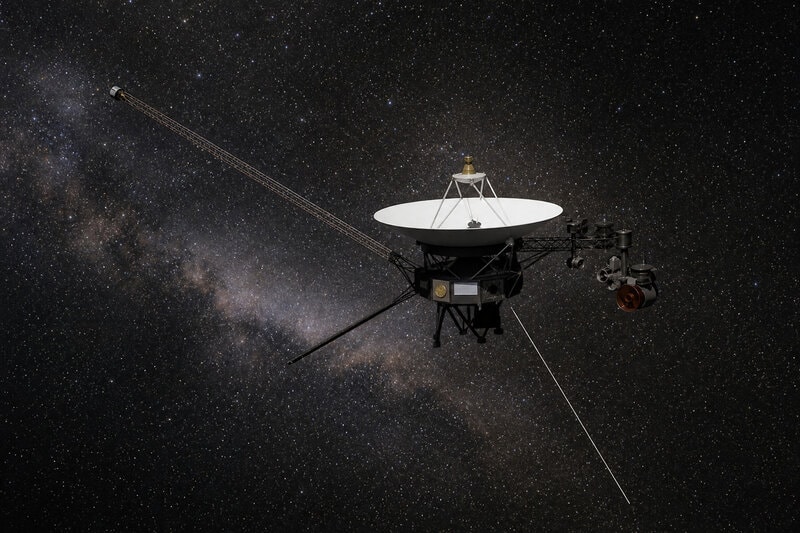
Since crossing the heliopause in 2012 — a finding confirmed by NASA and published in the journal Science — Voyager 1 has been sampling the interstellar medium: the thin, ionized plasma that fills the space between star systems. No other spacecraft has ever collected data from that environment, making Voyager’s measurements genuinely irreplaceable. Instruments aboard the spacecraft have measured the density and magnetic field direction of interstellar plasma, and the results have been scientifically surprising. The boundary between the solar wind and interstellar space appears sharper and more structured than many pre-mission theoretical models had predicted, according to research published in Nature Astronomy.
Some of Voyager’s interstellar observations — including the precise behavior of cosmic rays near and beyond the heliopause, and questions about the structure of the heliosphere’s trailing region — remain active areas of scientific debate. These are not controversies about whether Voyager’s instruments are working; they are productive scientific disagreements about how to interpret data that existing theoretical frameworks were not fully built to accommodate. Every additional month Voyager 1 operates adds to a dataset that no other mission can replicate. No follow-up mission to the interstellar medium has been approved or launched, meaning Voyager is currently the only source of in-situ measurements from beyond the solar wind’s reach.
A detailed video exploration of what the one-light-day milestone means scientifically is available on NASA’s YouTube channel.
NASA’s Public Milestone Events: ‘Shine Bright for Voyager’s Light-Day’
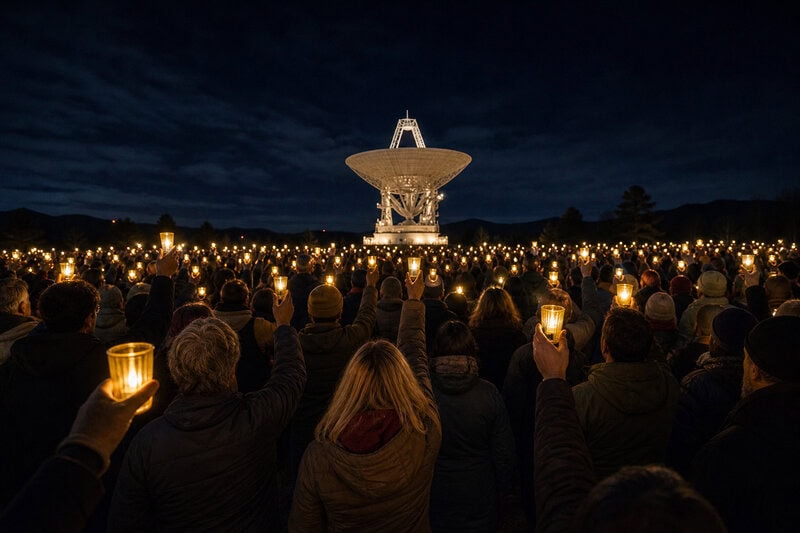
To mark the one-light-day crossing, NASA invited the public to participate in an event called “Shine Bright for Voyager’s Light-Day” on November 17, 2026 — the day before the milestone itself. The event centered on a symbolic wave of golden light, intended to connect people around the world to the spacecraft’s journey through a shared, human-scale ritual. NASA also scheduled a moderated public discussion on November 19, 2026, giving scientists and engineers the opportunity to explain the milestone’s significance and answer questions from a broader audience.
The city of Pasadena — home to JPL — joined communities worldwide in marking the occasion, as reported by Pasadena Now. Media organizations were also formally invited to participate in the milestone activities, signaling that NASA views the one-light-day crossing not just as a technical marker but as a cultural moment in the longer story of human exploration. The strategy of anchoring abstract astronomical distances to human-scale rituals — light, community gatherings, shared time — reflects a deliberate NASA communications approach: making a spacecraft 26 billion kilometers away feel emotionally proximate even when it is physically unreachable.
The Bigger Picture: What Voyager 1 Reveals About the Future of Deep Space Exploration
Voyager 1’s one-light-day milestone exposes a fundamental constraint that will shape any future human or robotic mission beyond the solar system. At the velocity Voyager travels, reaching even the nearest star system — Proxima Centauri — would take roughly 70,000 years. The communication latency that makes Voyager operations so demanding today would become completely unworkable at interstellar distances: a signal to a spacecraft near Proxima Centauri would take more than four years to arrive. Mission planners studying proposed future interstellar probes, including concepts explored under NASA’s Interstellar Probe study, cite Voyager’s communication challenges as a central design driver. Any spacecraft sent beyond the solar system in a future generation would need to be largely autonomous — capable of making its own decisions across timescales that render Earth-directed commands meaningless.
Voyager 1’s endurance also makes it an argument for a kind of institutional patience that is rare in any human enterprise. The mission has outlasted the careers of its original engineers, the Cold War geopolitical environment that partially motivated its launch, and multiple generations of computing technology. It operates today because successive generations of engineers chose to keep it going, learning its aging systems and finding creative solutions to problems its designers never anticipated.
As JPL frames it, Voyager 1 is not simply a spacecraft. It carries the Golden Record — a physical time capsule of human music, language, images, and greetings — into a universe where it may travel for billions of years, long after the Sun has exhausted its fuel and Earth itself has changed beyond recognition. The one-light-day milestone is, in that sense, less an ending than a marker on a journey whose true destination no one alive today will ever see.