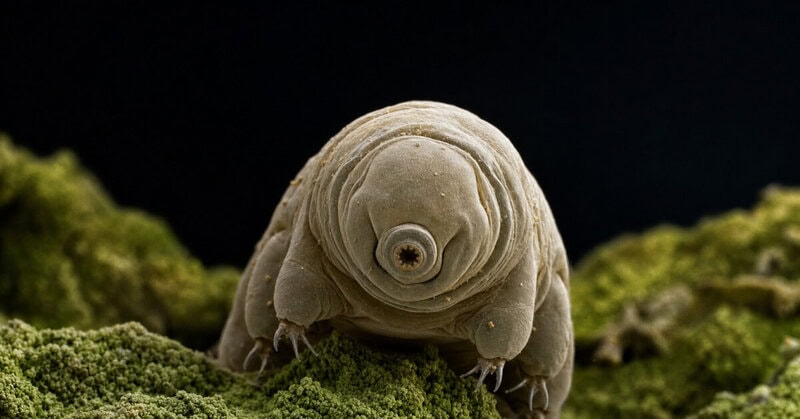
In September 2007, the European Space Agency’s FOTON-M3 mission carried a payload that no one had bothered to protect from the vacuum of space — intentionally. Tardigrades, the half-millimeter animals sometimes called water bears, were exposed to raw solar ultraviolet radiation and the near-perfect vacuum of low Earth orbit, and when the capsule returned, roughly two-thirds of them were still alive. The finding stunned researchers not because tardigrades are tough in a vague, general sense, but because the specific mechanism enabling that survival — a reversible suspended-animation state called cryptobiosis, enforced at the molecular level by a newly characterized family of proteins — has become one of the most consequential areas of biological inquiry of the past decade.
What Cryptobiosis Actually Is — and Why It Is Not Simply ‘Dormancy’
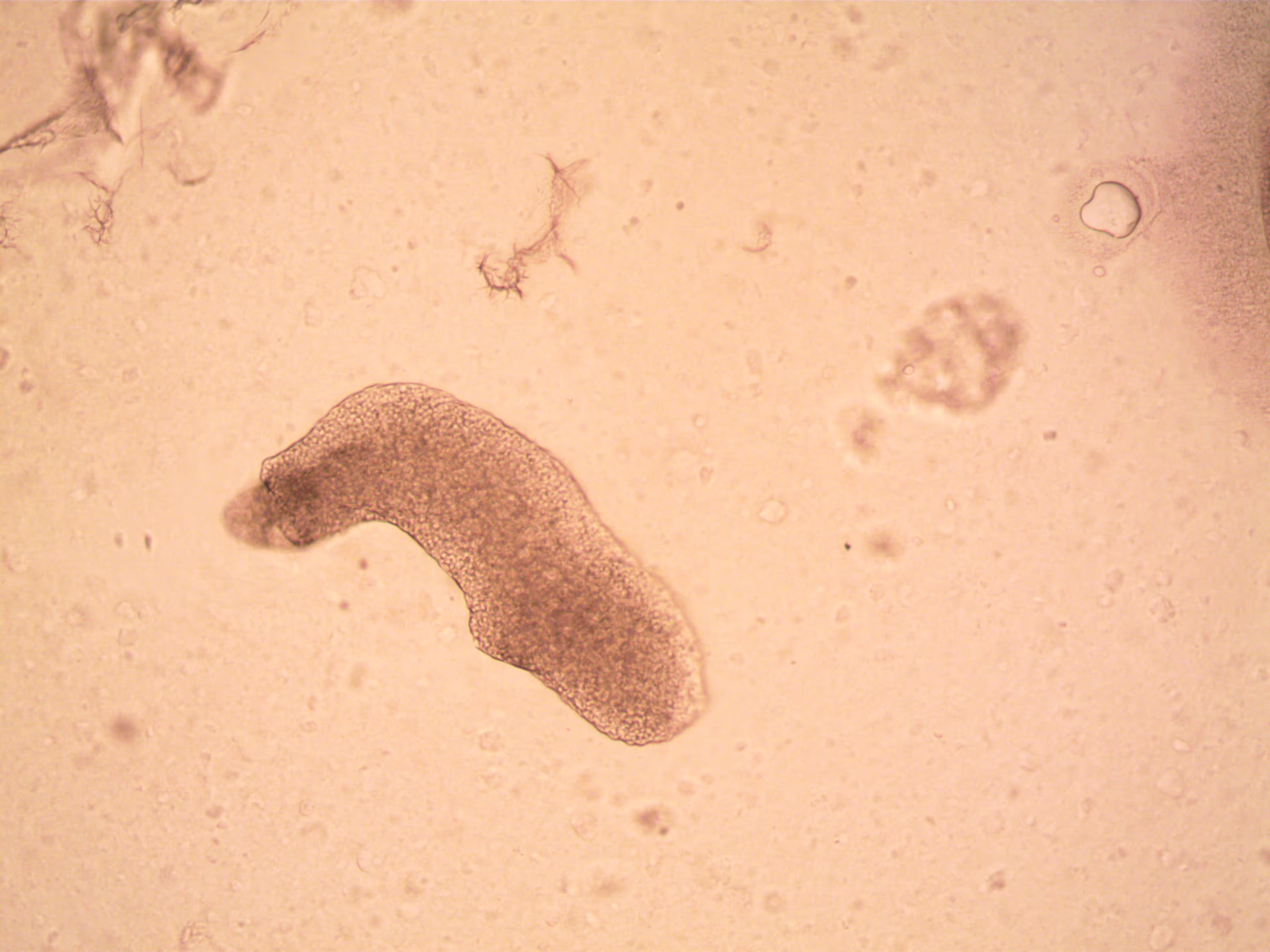
The word cryptobiosis comes from the Greek for “hidden life,” and the name is precise. During cryptobiosis, a tardigrade’s metabolic activity drops to below 0.01 percent of its normal rate, leaving the animal in a physiological state that is neither fully alive in the conventional sense nor dead. It is, in the most rigorous biological language available, almost-death that is fully reversible.
The physical transformation is dramatic. When environmental stress triggers the response, a tardigrade pulls its eight stubby legs inward, expels nearly all of the water from its body, and contracts into a compact barrel shape researchers call a “tun.” The tun minimizes surface area, slowing further water loss and presenting the least possible exposure to whatever threat is present. Add water back to a tun that has been desiccated for decades, and the animal resumes normal movement, feeding, and reproduction within hours. That reversibility is what distinguishes cryptobiosis from ordinary dormancy or hibernation, in which metabolism slows but never approaches zero.
Scientists recognize at least four distinct forms of cryptobiosis in tardigrades. Anhydrobiosis is triggered by desiccation. Cryobiosis occurs in response to freezing. Osmobiosis is induced by dangerously high salt concentrations. Chemobiosis arises in the presence of toxic chemicals. Each represents a separate physiological response to a different insult, and research published in Frontiers in Physiology has begun to untangle the specific molecular triggers and survival strategies associated with osmobiosis and chemobiosis, two forms that remain less characterized than anhydrobiosis. The existence of four independent but overlapping protective modes helps explain why tardigrades are described, with reasonable accuracy, as the most resilient animals on Earth.
The Desiccation Problem: Why Losing Water Kills Almost Everything Else
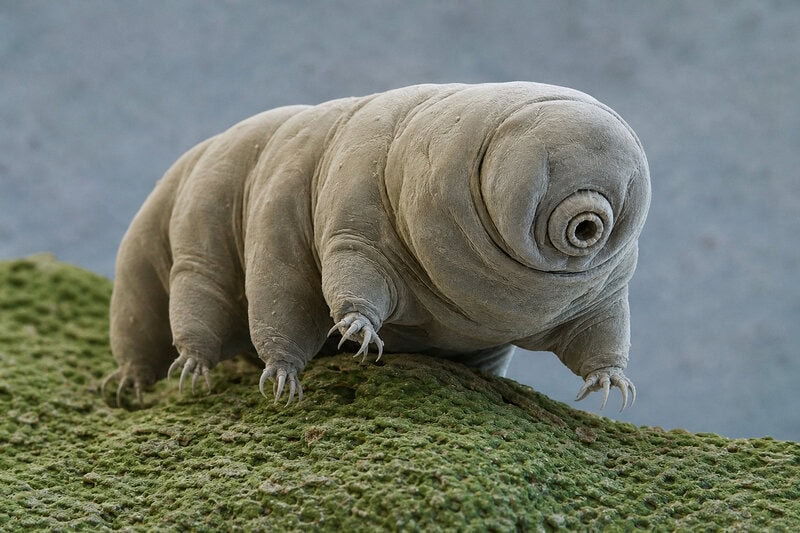
Water is not merely a medium in which biology happens — it is a structural component of life itself. Water stabilizes folded proteins, lubricates the machinery of DNA replication, and maintains the fluid architecture of cell membranes. Remove it too quickly and proteins misfold into nonfunctional clumps, DNA strands break under mechanical stress, and cell membranes fuse together into useless aggregates. Most animals die when they lose more than 15 percent of their body water. Tardigrades routinely survive losing more than 97 percent, a tolerance gap so extreme it demanded a molecular explanation that researchers spent decades hunting.
The early leading hypothesis centered on trehalose, a sugar that many desiccation-tolerant organisms — including brine shrimp and certain yeast species — use to form a glassy, protective matrix around vulnerable molecules during drying. Trehalose vitrification is well-documented and chemically elegant. The problem is that tardigrades produce surprisingly little trehalose, far less than would be needed to account for their extraordinary tolerance. That discrepancy pointed toward a fundamentally different primary protective strategy.
The resolution arrived in 2017, when a team at the University of North Carolina Chapel Hill led by Thomas Boothby published findings in Molecular Cell identifying a family of proteins unique to tardigrades as the principal molecular shield against desiccation damage. The discovery reframed how researchers think about tardigrade desiccation tolerance and opened a significant new line of biomedical inquiry.
Disordered Proteins and the Biological Glass That Preserves Life
Boothby’s team identified a class of molecules now called Tardigrade-Disordered Proteins, or TDPs — also referred to in the literature as CAHS, MAHS, and SAHS proteins, designations that reflect their location in different cellular compartments. The defining characteristic of TDPs is structural: they are intrinsically disordered, meaning they lack a fixed three-dimensional shape in water. Where a typical enzyme folds into a precise, rigid conformation to perform its function, TDPs behave more like loose, flexible chains without stable secondary structure. Under normal, hydrated conditions, they appear biologically unremarkable.
What happens as a tardigrade desiccates transforms those unremarkable chains into something with no close analogue in well-studied biology. As water leaves the cell, TDPs undergo a phase transition: the disordered chains entangle, interact, and solidify into an amorphous glassy solid — a biological glass — that physically encases sensitive molecules. DNA, enzymes, and membrane structures are suspended within this matrix, held immobile and separated from one another, preventing the aggregation and mechanical damage that would otherwise be lethal. The process operates on the same principle as industrial vitrification, but is executed by an evolved protein rather than a sugar or synthetic polymer.
When water returns, the glass dissolves. TDPs revert to their disordered state, the protected molecules resume their normal configurations, and the tardigrade resumes activity. The Boothby lab demonstrated this cycle’s transferability by engineering human cells and yeast to express tardigrade TDP genes; both cell types gained measurable desiccation tolerance they do not naturally possess. A subsequent 2020 study published in PLOS Genetics by Boothby and colleagues showed that TDP genes are among the most highly expressed in the tardigrade genome during desiccation stress, and that silencing them using RNA interference dramatically reduced survival rates — establishing causality, not merely association.
Beyond Drying: Radiation, Space, and the Dsup Protein
Tardigrade resilience to ionizing radiation represents a partially separate story with its own molecular protagonist. Research published in Nature Communications in 2016 by Hashimoto and colleagues, examining the species Ramazzottius varieornatus, identified a nuclear protein called Dsup — Damage Suppressor — which physically binds to chromatin and reduces X-ray-induced DNA strand breaks by approximately 40 percent, even in animals that are fully active and not in a cryptobiotic state. Dsup appears to function as a physical shield around the DNA double helix, absorbing or deflecting radiation-induced damage before it reaches the genetic material itself.
The radiation tolerance documented across tardigrade species is remarkable in scale. Research published in Current Biology has documented that tardigrades can tolerate radiation doses approaching 570,000 rads. For context, a dose of approximately 500 rads is lethal to humans. That gap is not a matter of degree — it is a difference in kind, reflecting layers of protective mechanisms operating simultaneously.
The 2007 ESA space mission, formally reported by Jönsson and colleagues in Astrobiology in 2008, added an important clarification: tardigrades that had entered the tun state before exposure to vacuum and radiation survived at substantially higher rates than those exposed while still active. The protective value of cryptobiosis, and of the TDP glass matrix specifically, appears to be the dominant factor in space survival. The tun is not merely a shape — it is a molecular fortress, and the biology of how water bears survive extreme conditions involves multiple overlapping protective systems working in concert.
Temperature tolerance deserves a careful qualifier. Some tardigrade species in tun form can survive brief exposure to temperatures exceeding 100°C, and the TDP glass matrix is thought to slow heat-induced protein unfolding by the same mechanism it prevents desiccation damage. However, researchers are explicit that this tolerance varies significantly by species and by the duration and rate of temperature change. Describing tardigrades as simply surviving boiling water overstates a nuanced and species-dependent finding.
Why This Matters for Medicine, Agriculture, and Technology
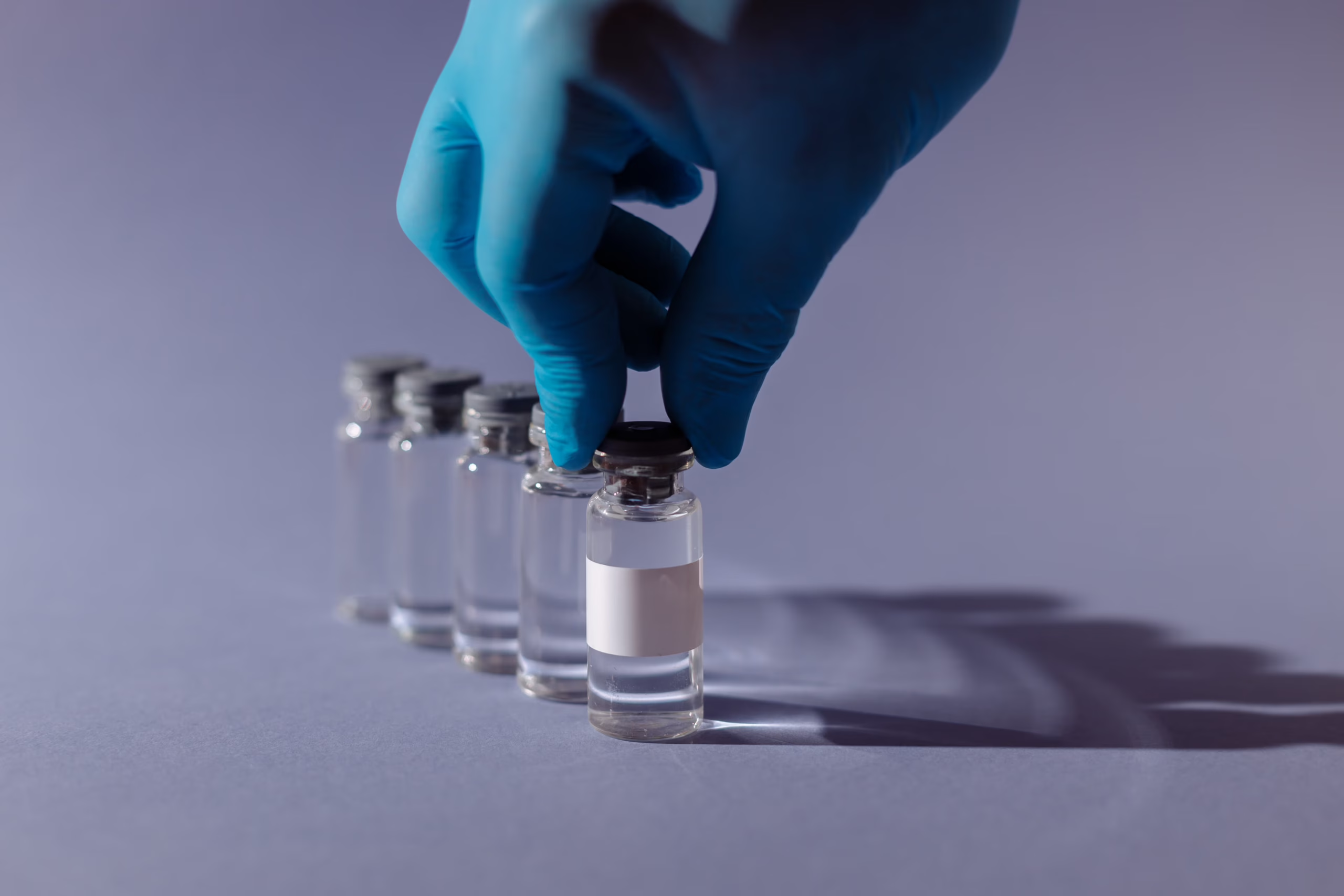
The most immediately consequential application of TDP biology lies in pharmaceutical preservation. Biological drugs — vaccines, monoclonal antibodies, clotting factors — are notoriously fragile and require continuous refrigeration from production through administration. Cold-chain logistics represent billions of dollars in annual cost and are a significant barrier to vaccine distribution in low-resource settings. If TDP-based coatings could stabilize dried biologics at room temperature, the logistical and humanitarian implications would be substantial.
Boothby’s lab has demonstrated proof-of-concept: TDP expression has been used experimentally to stabilize dried human clotting factors. A 2021 paper in Science Advances showed that TDP-inspired synthetic polymers partially replicated the glass-forming protection in cell-free systems, moving the concept from biological curiosity toward material science application. No approved product yet exists, and researchers are appropriately cautious about timeline. Challenges including immunogenicity — the risk that foreign proteins trigger an immune response — along with delivery and manufacturing scalability, remain unsolved. The science is promising; it is not mature.
In agriculture, the tardigrade’s osmobiosis and chemobiosis responses — its ability to survive extreme salt concentrations and toxic chemical environments — may offer molecular templates for engineering drought- and salinity-tolerant crops. As climate change expands arid regions and soil salinity increases through irrigation-driven mineral accumulation, the urgency of that goal is rising. Tardigrades did not evolve their protective mechanisms to solve human agricultural problems, but evolution occasionally produces tools that generalize well beyond their original context.
Open Questions and What Comes Next
Not everything about tardigrade resilience is resolved, and honesty about those gaps matters. Why, for instance, does Ramazzottius varieornatus survive desiccation within hours while the closely related Hypsibius exemplaris requires days of slow, gradual drying to survive the same process? The difference implies a regulatory layer — perhaps in how rapidly TDP expression is induced, or in upstream signaling pathways — that remains poorly characterized.
The evolutionary origin of TDPs is itself contested. Some researchers argue they evolved entirely within the tardigrade lineage, a de novo innovation. Others point to evidence of horizontal gene transfer — the acquisition of protective genes from bacteria or fungi through mechanisms other than conventional inheritance — as a contributor to tardigrade genomic novelty. A 2015 paper in Proceedings of the National Academy of Sciences by Boothby and colleagues raised the horizontal transfer hypothesis and was subsequently challenged by other research groups, and the debate has not been fully resolved. It is an important reminder that even foundational claims in tardigrade biology involve ongoing scientific negotiation.
New imaging technologies are beginning to supply answers that biochemistry alone cannot. Cryo-electron microscopy and single-molecule fluorescence techniques are capturing TDP glass formation at nanometer resolution. Early results presented at the 2023 International Symposium on Tardigrada suggest the glass matrix may be more structurally heterogeneous than the original model proposed — not a uniform solid, but a complex, dynamic material with internal architecture that likely contributes to its protective properties in ways not yet fully understood.
The broader lesson tardigrades offer is both molecular and philosophical. Life’s boundary conditions are wider than intuition, or most of evolutionary history, suggests. The proteins that push those boundaries — disordered, structureless chains that become protective glass precisely because they lack rigid form — challenge basic assumptions about what a functional protein needs to look like. And they may ultimately prove more useful to human medicine than the animals themselves are strange, which, given the animals in question, is saying something considerable.