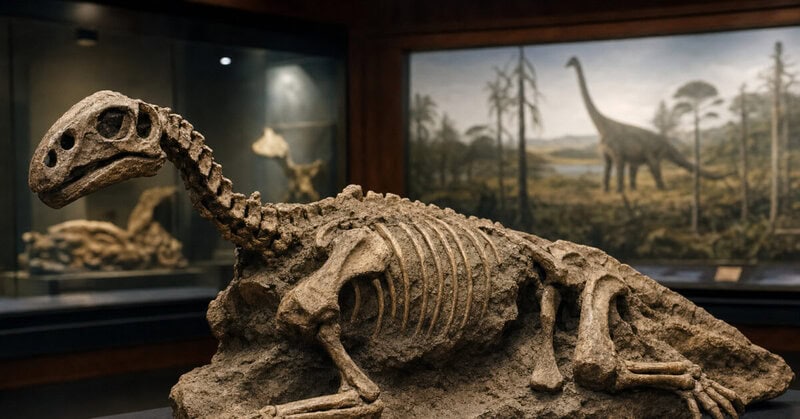
A fossil the size of a medium dog — sitting quietly in a South African museum collection since 1978 — has just rewritten a chapter of dinosaur evolution. The creature it belonged to weighed roughly 75 kilograms, moved through a Jurassic world unrecognizable to modern eyes, and belonged to a lineage that would eventually produce the largest land animals Earth has ever known.
A Small Animal With an Outsized Evolutionary Story
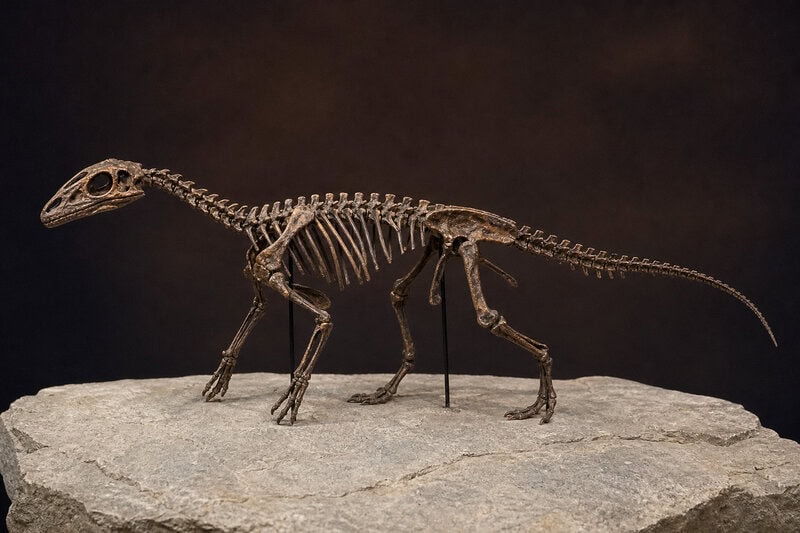
The specimen represents a newly identified species of early sauropodomorph — the broader group of dinosaurs that gave rise to the colossal long-necked giants of the Jurassic and Cretaceous periods. At approximately 75 kg, it ranks among the smallest known Jurassic members of its lineage, a distinction that makes it scientifically extraordinary. Its distant descendants would eventually include animals exceeding 70 tonnes, creatures so large they strained the physical limits of terrestrial life.
The gulf between this modest animal and those titans is precisely what makes the discovery compelling. Every fossil that occupies that developmental gap narrows the evolutionary mystery of how sauropods achieved such extraordinary size. This one, despite its humble dimensions, fills a gap researchers have been trying to close for decades — and it does so from one of the most geologically important corners of the planet for early dinosaur science.
Excavated in 1978, Decoded Decades Later
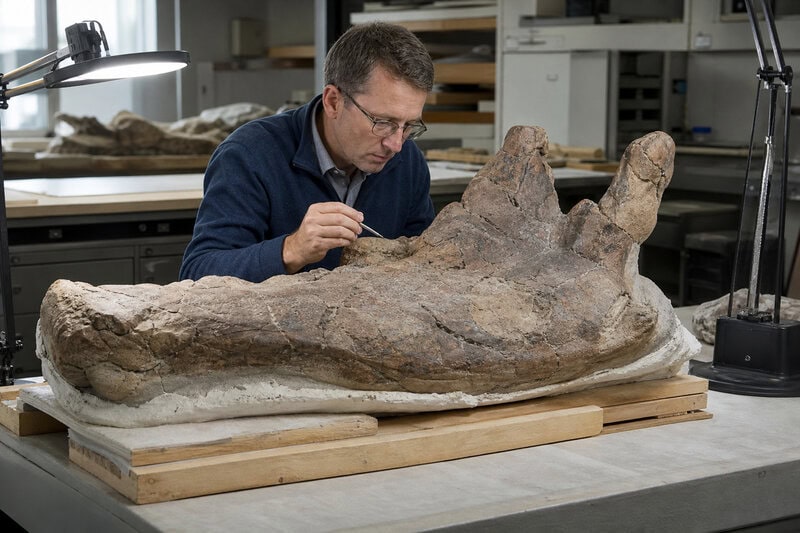
The fossil was first unearthed in South Africa in 1978, then catalogued and housed in a museum collection where it waited, largely overlooked, for the analytical tools capable of revealing its true significance. Modern reanalysis — drawing on updated comparative anatomy and phylogenetic methods — ultimately established that the specimen represented a previously unknown species rather than a known one.
The rocks from which it was recovered date to the Lower Jurassic, a period spanning roughly 201 to 174 million years ago. That window is critical: it sits immediately after the end-Triassic mass extinction, a moment when dinosaurs began diversifying rapidly into ecological niches left vacant by the crisis. A fossil from this interval is not merely old; it is a direct witness to one of the most consequential reshufflings in vertebrate history.
This kind of cold-case paleontology is increasingly common. Museum collections worldwide hold specimens that older tools — limited microscopy, pre-digital comparative databases, no CT scanning — simply could not fully interpret. The reanalysis that identified this new dinosaur species from South Africa is a textbook example of how legacy collections continue to yield landmark discoveries long after the excavation ends.
What Makes It a Sauropodomorph — and Why That Matters
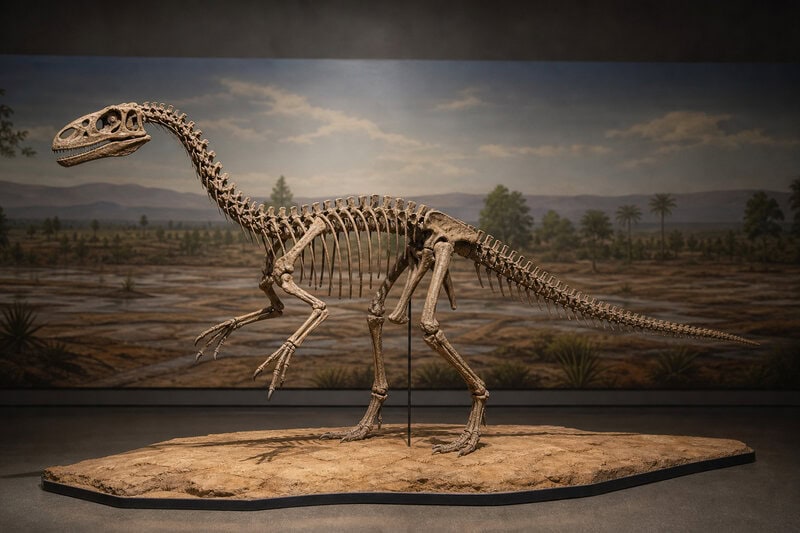
Sauropodomorphs are the evolutionary branch that eventually produced true sauropods: the four-legged, pillar-limbed, long-necked animals like Brachiosaurus and Patagotitan that dominate popular imagination. But the group’s early members looked nothing like those giants. They were smaller, mostly bipedal, and occupied a behavioral spectrum somewhere between agile omnivores and committed plant-eaters.
At roughly 75 kg, this new species sits at a pivotal size range — a point in the lineage’s history when it was, in a sense, still experimenting with body plans before committing to the extreme herbivory and eventual gigantism that would define its descendants. Its skeleton already shows transitional features: hints of elongating neck vertebrae and shifting limb proportions that foreshadow the full sauropod blueprint without yet having locked into it.
Understanding these smaller ancestors helps paleontologists map the evolutionary pressures that pushed body size toward extremes. Was gigantism a gradual drift or a relatively rapid shift? Did it evolve once or multiple times across different branches of the family tree? Each new early-lineage fossil like this one helps researchers test competing hypotheses with harder evidence.
South Africa’s Unique Window Into Dinosaur Origins
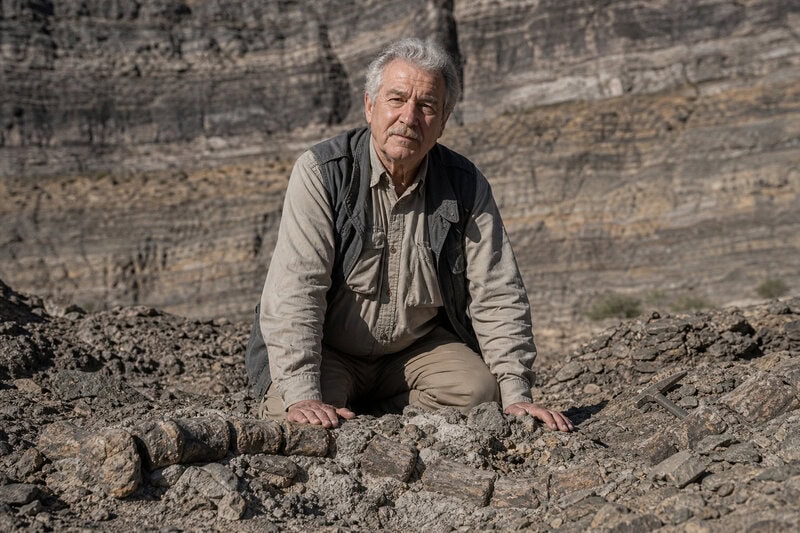
Southern Africa is one of the planet’s most important regions for early dinosaur fossils. Its sedimentary basins preserve a near-continuous stratigraphic record across the Triassic-Jurassic boundary, offering a geological archive that few other places on Earth can match. For paleontologists studying early sauropodomorph fossils and the origins of sauropod ancestors, the region is essential territory.
Yet the record has significant gaps. In southern Africa, only two Late Triassic species preserve cranial elements — Mbiresaurus and Kholumolumo — and both are represented by limited material. That scarcity means every new specimen dramatically shifts scientists’ understanding of what early sauropodomorphs looked like, how they moved, and how they related to one another on the family tree.
The new find adds a valuable data point in the Lower Jurassic, helping bridge the narrative between the Triassic pioneers and the more familiar giants that came later. It also signals something important about the region’s potential: the Lower Jurassic of southern Africa remains incompletely sampled, and more undescribed species almost certainly await discovery both in the field and within existing collections.
How Sauropods Went From Dog-Sized to City-Bus-Sized
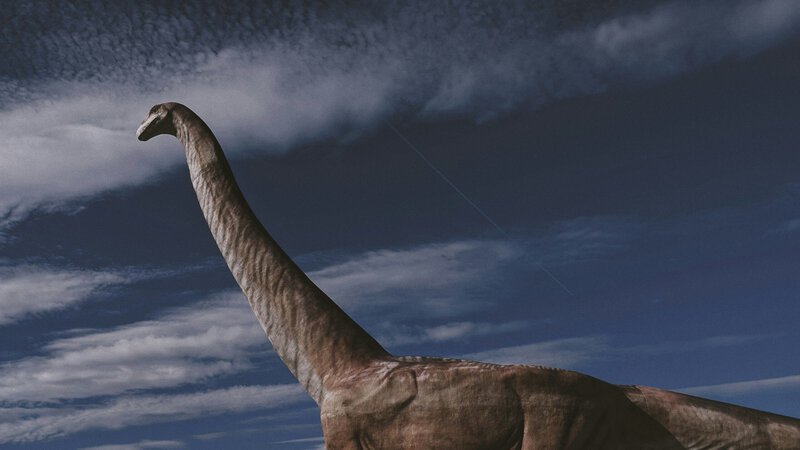
The evolution of sauropod gigantism remains one of paleontology’s great open questions. No other land animal lineage ever came close to achieving the body sizes these creatures reached — the nearest competitors, like large elephants or giant rhinoceroses, are dwarfed by comparison. Understanding why sauropods broke through the apparent size ceiling that constrained every other terrestrial vertebrate is a problem that cuts to the heart of evolutionary biology.
Current evidence points to a linked package of adaptations rather than any single cause:
- Bird-like air sac systems that reduced the metabolic cost of maintaining a massive body, keeping bones lightweight despite enormous overall mass.
- Exceptionally rapid growth rates, allowing individuals to reach large sizes quickly and reducing the time spent as vulnerable juveniles susceptible to predation.
- High-fiber plant diets that fueled bulk without requiring the energetically expensive chewing that limited the size of mammalian herbivores.
Early sauropodomorphs like this newly identified species show the skeletal precursors to all of these traits — in nascent, transitional form. Identifying those precursors in a 75 kg animal that predates the size explosion by millions of years is exactly the kind of comparative evidence researchers need to reconstruct the sequence of events that produced Earth’s largest land animals.
Why Old Bones Keep Telling New Stories
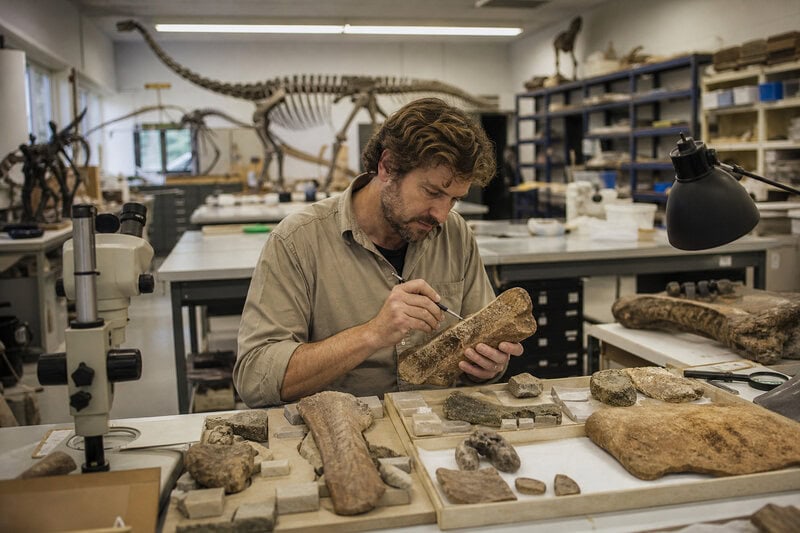
The gap between the 1978 excavation and the eventual formal description of this new species is a reminder that paleontology’s bottleneck is rarely the fieldwork. It is the slow, meticulous labor of comparative analysis — matching bones against global databases, re-examining suture lines, running phylogenetic calculations that place a specimen precisely within an evolutionary tree containing hundreds of other taxa.
Advances in CT scanning, three-dimensional digital modeling, and open-access fossil databases now allow researchers to detect anatomical distinctions that earlier generations physically could not. A feature that looked like individual variation to a 1980s anatomist might be revealed by modern analysis as a diagnostic characteristic of an entirely new species. South Africa’s paleontological institutions hold vast legacy collections that are only beginning to be systematically re-examined through this lens.
For anyone captivated by the question of how sauropod ancestors evolved during the Triassic and early Jurassic, the broader message of this discovery is both humbling and thrilling: the next landmark find in South African paleontology may not require a single swing of a pickaxe. It may already be sitting on a museum shelf, correctly labeled, patiently waiting for the right question to be asked of it.