4. Yew (Taxus spp.)
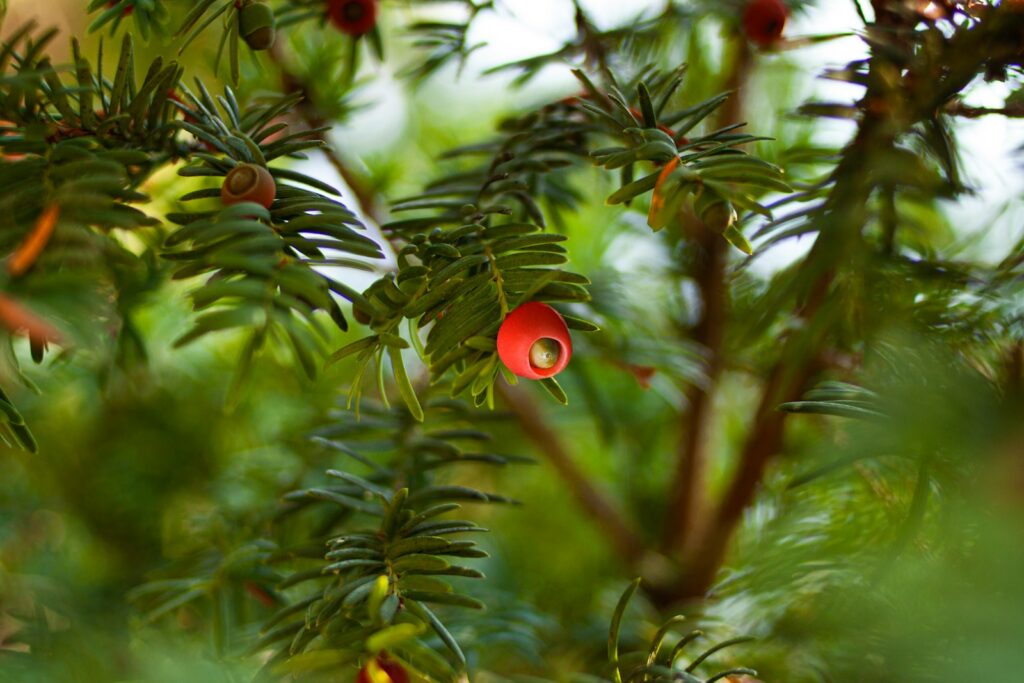
Ancient Europeans called it the “Tree of Death” for good reason. Every part except the fleshy red aril contains taxine alkaloids. These poisons are so potent they can cause cardiac arrest within hours of ingestion. Winter poses the greatest risk, as the needles contain higher toxin concentrations. The tree’s most sinister trait? Its needles remain toxic even when dried, and livestock have died from eating year-old clippings. Celtic warriors once used its wood for weapons, knowing that arrows would poison as well as pierce. Modern chemotherapy drugs derive from its compounds.