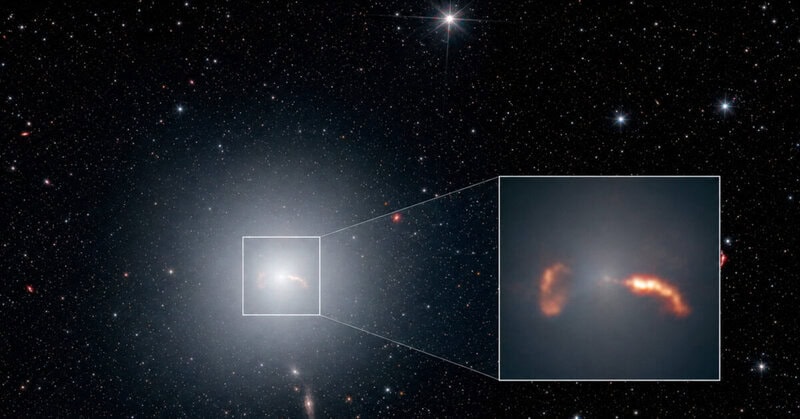
A team of just four Australian researchers, using a machine learning algorithm never employed by the original collaboration, has independently reproduced the same glowing ring structure seen in the most famous astronomical photograph ever taken — and the two results match in both diameter and overall orientation. That finding directly answers one of the most persistent questions in modern astrophysics: is the black hole image accurate, or could it be a mathematical mirage produced by the specific software choices of the team that created it?
The Same Ring, Confirmed Again — 55 Million Light-Years Away
When the Event Horizon Telescope (EHT) collaboration unveiled the first image of M87* in 2019, it showed a bright, asymmetric ring of glowing plasma surrounding a darker central depression. The subject of that image is a supermassive black hole — a black hole millions or billions of times more massive than the Sun — sitting at the centre of the giant elliptical galaxy Messier 87, approximately 55 million light-years from Earth. According to the EHT collaboration’s original papers, published in The Astrophysical Journal Letters, M87* contains roughly 6.5 billion times the mass of the Sun, making it one of the most massive objects in the nearby universe.
The new independent analysis, conducted by four Australian researchers and described in detail by The Conversation, applied a machine learning-based image reconstruction algorithm to the same raw EHT observational data. The algorithm produced the same ring-like shape as the 2019 original. In science, this kind of result — the same answer reached by a different route from the same starting evidence — is called an independent result, and it is precisely what elevates a finding from promising to robustly established.
Why Photographing a Black Hole Is Extraordinarily Difficult
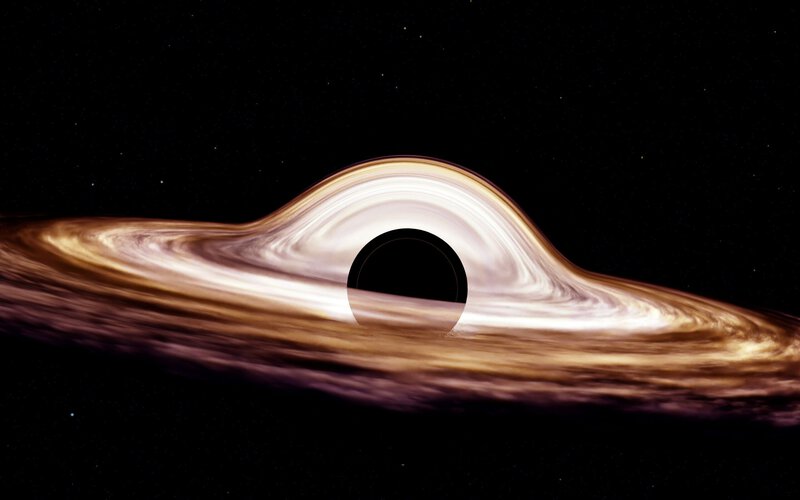
No light can escape a black hole’s event horizon, the boundary of no return beyond which gravity is so extreme that even photons are trapped. Astronomers therefore cannot image the black hole itself; instead, they photograph the bright ring of superheated gas and plasma swirling around it, which is bent and amplified into a characteristic halo by the black hole’s immense gravity. That ring, seen from 55 million light-years away, subtends an angle so vanishingly small that resolving it requires a virtual telescope the size of Earth itself.
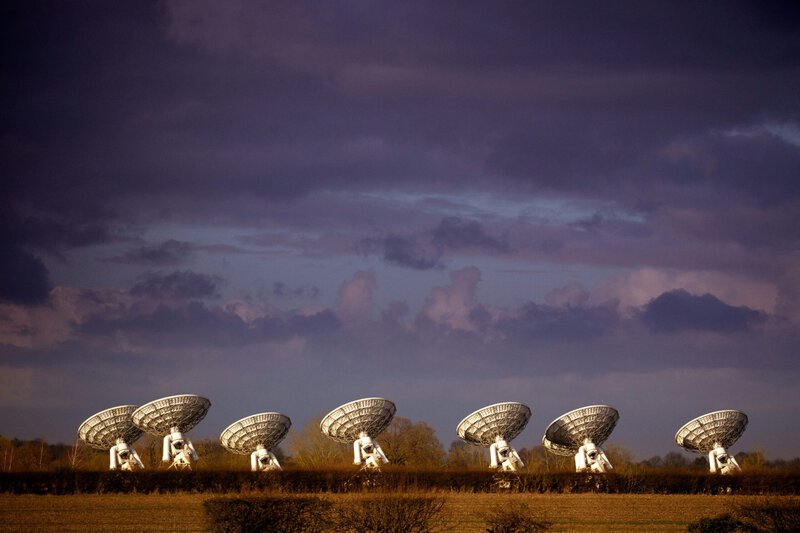
The EHT achieved that resolution through a technique called Very Long Baseline Interferometry, or VLBI — a method that links distant radio observatories so their combined resolving power mimics a single dish spanning the distance between them. In 2019, the network comprised eight observatories spread across four continents. The trade-off is significant: an Earth-sized array has enormous gaps between its component dishes, meaning the raw data it collects is sparse and incomplete. The final image is not a direct photograph but a mathematical reconstruction — and that reconstruction step is precisely what the new study independently re-examined.
To put the angular challenge in concrete terms: imaging M87* from Earth is comparable to reading the date on a coin placed on the surface of the Moon. The EHT’s VLBI technique achieves angular resolution of around 20 microarcseconds — finer than any other astronomical instrument ever built. That precision is what makes the reconstruction step so consequential, and so worth checking by an independent team.
The 2019 Image: Historic, but Not Above Scrutiny
The original EHT image was immediately recognised as a historic confirmation of Einstein’s general theory of relativity: the bright asymmetric ring with a darker central shadow matched theoretical predictions with striking precision. The collaboration itself ran multiple independent imaging pipelines internally, all producing consistent results. But those pipelines were developed within the same large collaboration, by researchers who shared institutional knowledge, common assumptions, and overlapping algorithmic frameworks — a fact that some scientists noted as a limitation for truly independent verification of the black hole image.
A 2023 reanalysis by the EHT collaboration, which introduced additional data and produced a refined image, continued to reinforce the ring structure. Yet the question of a fully external, methodologically distinct confirmation remained open. The concern was not fraud or deliberate error, but reproducibility: complex data reconstruction can, in principle, introduce preferred structures, and the field requires that different algorithmic choices converge on the same picture before a result is considered unambiguously established. Nature has reported that the new study represents a meaningful step toward closing that gap.
Four Researchers, One Machine Learning Algorithm
The new confirming work was produced by a small team of four Australian researchers who approached the original EHT data with a machine learning-based image reconstruction algorithm developed entirely outside the EHT collaboration’s own software suite. Machine learning in this context means training a computational model to find the most statistically consistent image that explains the sparse radio-wave measurements the telescope network recorded — without being pre-programmed with assumptions about what a black hole should look like. The algorithm learns patterns from the data itself, rather than following hand-coded imaging rules.
The result was the same ring-like structure seen in the 2019 original, consistent in both the diameter of the bright ring and its overall orientation. CSIRO, Australia’s national science agency, highlighted the significance of the methodological separation involved: a small external team, a novel algorithm, and no institutional overlap with the EHT collaboration — the combination that makes the confirmation scientifically meaningful rather than simply confirmatory paperwork.
The study also illustrates how open data policies enable this kind of scrutiny. The EHT collaboration made its observational data publicly available, which is precisely what allowed an independent group to conduct this verification without needing access to proprietary instruments or internal software. As The Register noted in its coverage, this is the scientific process functioning as designed: one team does the work, another team checks it using different tools.
What Independent Verification Actually Means in Science
In observational astronomy, where you cannot repeat an experiment under controlled laboratory conditions, independent verification typically takes two forms: re-analysing existing data with different methods, or making new observations that should produce a consistent result. The Australian team’s study is an example of the former, and it carries genuine scientific weight. The fact that a machine learning algorithm — which learns structure from data rather than imposing it — converges on the same ring significantly reduces the probability that the original image was an artifact of the EHT collaboration’s specific reconstruction choices.
Scientists draw a careful distinction between “confirmed” and “verified.” The new result makes the M87* ring structure more robustly verified, but scientific confirmation in its strongest sense accumulates across many independent efforts over time, not from a single study. This kind of methodological cross-checking is standard practice in high-stakes science: gravitational wave detections by the LIGO observatory, for instance, are only announced when multiple independent detector sites record consistent signals. Black hole image reconstruction demands the same rigour, and this study applies it.
It is also worth being precise about what “independent” means here. The Australian team used the same underlying observational data as the original EHT collaboration — the radio-wave measurements recorded by the telescope network in April 2017. What differed entirely was the mathematical method used to convert those measurements into an image. That methodological separation is what gives the result its scientific significance: the data alone did not force a particular picture, yet two very different approaches to interpreting that data arrived at the same answer.
What the Result Does — and Does Not — Tell Us
The new study validates that the bright ring seen in the M87* black hole image is a real astrophysical feature and not a computational artifact. It strengthens confidence that astronomers are genuinely seeing light bent around one of the most massive objects in the nearby universe, and it reinforces the broader scientific case that general relativity holds even in the extreme gravity conditions near a supermassive black hole’s event horizon — a regime no Earth-based laboratory can replicate.
What the study does not resolve is every open question about M87*. The precise brightness asymmetry of the ring, which carries information about the black hole’s spin and the physics of its relativistic jets — narrow beams of plasma ejected at near-light speed — remains an area of active research and ongoing discussion within the astrophysics community. The new machine learning approach confirms the ring’s existence and basic geometry; it does not settle the finer questions of black hole physics that the ring’s detailed structure is expected to encode. And no single image, however well verified, can deliver a complete physical model of M87*’s environment. That understanding will deepen as the EHT adds new stations, expands its wavelength coverage, and conducts future observing campaigns.
Why This Matters Beyond One Black Hole
The M87* image became one of the most widely reproduced scientific photographs in history, making it a cultural touchstone as well as a scientific data product. Its accuracy carries unusual public weight, which means independent confirmation has an importance that extends well beyond specialist astrophysics journals. When the public asks whether the black hole picture is real, the new study provides a clear and evidence-based answer: yes, and here is the independent evidence supporting it.
The machine learning pipeline demonstrated by the Australian team could also become a standard cross-check tool for future black hole imaging efforts, including planned observations of Sagittarius A*, the supermassive black hole at the centre of our own Milky Way galaxy. Sagittarius A* presents different and more complex imaging challenges than M87* — its environment changes on timescales of minutes during observation, compared with the more stable conditions around M87* — making robust, independent reconstruction methods even more valuable for that work. A methodology validated on M87* is a methodology ready to be tested on a harder problem.
Ultimately, the new study adds another carefully constructed layer to a growing body of evidence. The glowing ring around M87*, first revealed to the world in 2019, is consistent across methods, consistent across teams, and consistent with the predictions of a century-old theory of gravity. It is one of the most directly observed consequences of extreme gravity that humanity has ever recorded — and it has now been checked by researchers who had every reason, and every tool, to find something different. They did not.