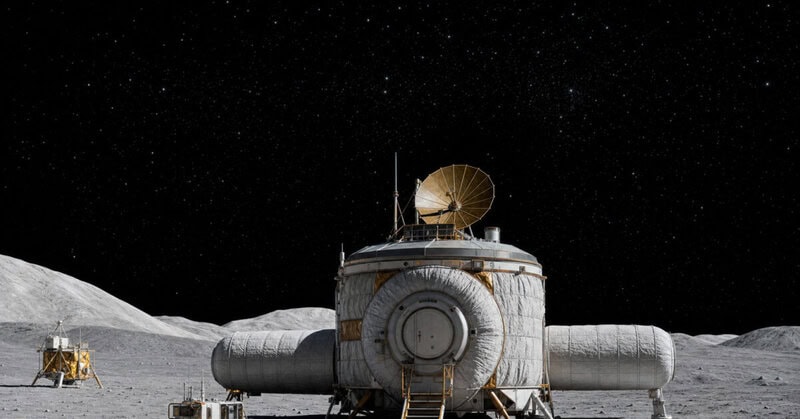
On Saturday, November 7, 2026, NASA committed up to $10 billion in a single day toward building a permanent human outpost on the Moon — the largest contractual step toward lunar habitation in the agency’s history, and a signal that the Artemis moon base plans have moved decisively from concept art into signed agreements with named companies and a hard deadline of 2032.
The MAX POWER Awards: What NASA Actually Announced
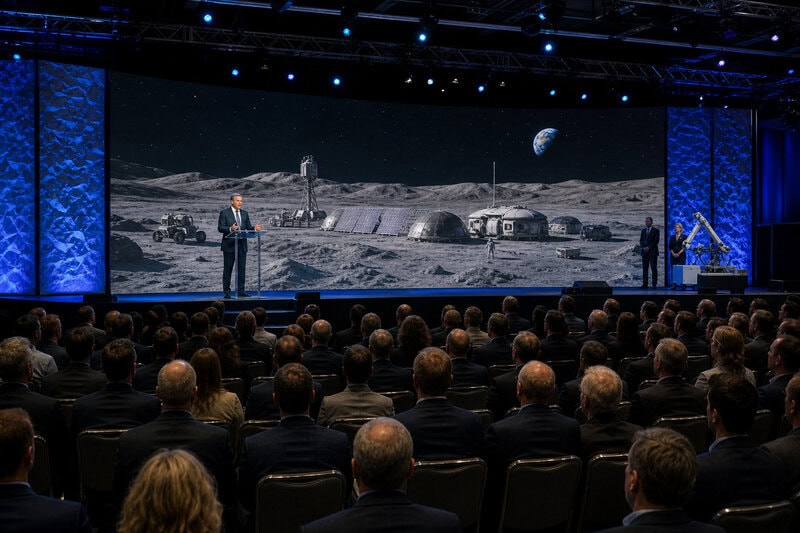
The announcements came at the MAX POWER event held at Kennedy Space Center, structured to consolidate and publicize the agency’s lunar surface strategy in one high-visibility setting. Three mission awards focused specifically on Moon Base transportation and technology, with Arrow Science and Technology, Blue Origin, and Impulse Space each receiving contracts to integrate and deliver cargo to the lunar surface. The awards spanned the full logistics chain — from new lander contracts to a recycled Mars rover repurposed for lunar surface operations — reflecting a pragmatic “build with what works” philosophy that marks a cultural shift for an agency historically associated with bespoke, mission-specific hardware.
According to NASA’s official release on the Moon Base transportation and technology awards, the $10 billion figure represents ceiling value across multiple contracts, meaning actual expenditure is tied to milestone completions rather than guaranteed up front. NASA has used this performance-based structure successfully in its Commercial Crew program, where it drove down cost per seat to the International Space Station while accelerating development timelines. The inclusion of Blue Origin links the Moon Base program directly to that company’s existing Human Landing System contract under the broader Artemis program, creating a vertically integrated supply chain from Earth orbit to the surface.
The recycled Mars rover award deserves closer examination. Repurposing existing flight-heritage hardware for lunar surface work is unusual in a program of this scale, but it signals that speed and cost discipline are now genuine constraints rather than aspirational talking points. A rover already designed for planetary surface operations — dust management, thermal cycling, power management — translates more efficiently to lunar conditions than a clean-sheet design, even where the two environments differ in important ways. The Moon lacks Mars’s thin atmosphere, so dust behavior and thermal profiles diverge; engineers will need to validate which subsystems transfer cleanly and which require redesign.
Alongside the cargo and transportation awards, NASA announced a $1 million Moon Base Student Challenge, inviting the next generation of engineers to help build humanity’s future on the Moon.
Why Building on the Moon Would Humble a Skyscraper Architect
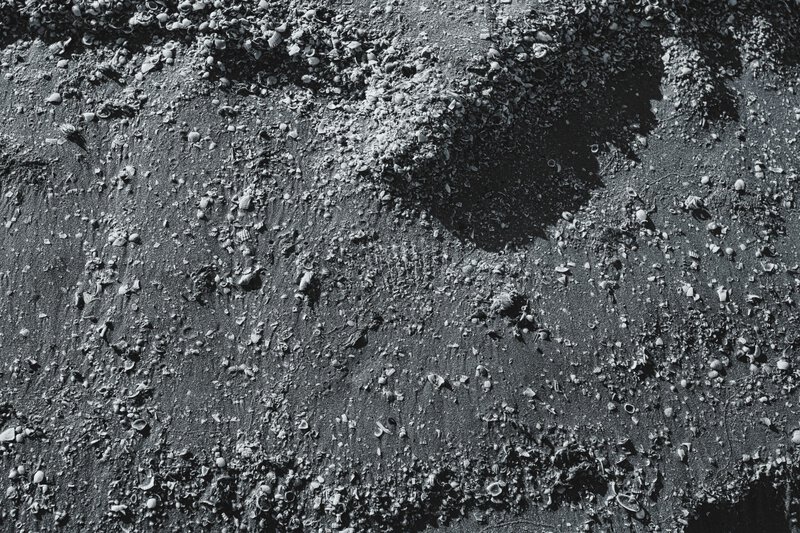
Understanding the scale of the lunar habitat engineering challenge requires setting aside almost every assumption that governs construction on Earth. The problems begin at the surface level — literally — and compound from there.
Regolith: The Dust That Never Dulls
Lunar regolith, the fine particulate layer covering the Moon’s surface, is microscopically sharp in a way that terrestrial soil never is. On Earth, wind, water, and geological activity round the edges of mineral particles over millions of years. The Moon has experienced none of those weathering processes, so regolith grains remain jagged at the microscopic scale — a persistent threat to mechanical seals, suit joints, solar panels, and any moving part exposed to the surface environment. Managing regolith contamination is not a secondary concern in lunar habitat engineering; it is a primary design driver.
Thermal Extremes That Would Crack Conventional Materials
Data from NASA’s Lunar Reconnaissance Orbiter documents surface temperatures ranging from approximately 127°C (260°F) in direct sunlight to -173°C (-280°F) in shadow. That 300-degree-Celsius swing subjects any structure to relentless expansion and contraction cycles. Most conventional building materials, including standard aluminum alloys and polymer sealants, would develop fatigue fractures within months under such cycling. Structural engineers designing for lunar habitation must select materials with extremely low coefficients of thermal expansion and design joints that can accommodate movement without breaching pressure integrity — a constraint with no meaningful parallel in terrestrial high-rise construction.
Radiation Without a Shield
The Moon has no global magnetic field and virtually no atmosphere, which means the surface receives unfiltered galactic cosmic radiation and intermittent solar particle events. Research from NASA’s Human Research Program indicates that effective long-term radiation shielding requires the equivalent of roughly 2.5 meters of water — or several meters of compacted regolith — surrounding habitable volumes. This single requirement shapes almost every other architectural decision: habitat burial depth, wall composition, emergency shelter design, and the trade-off between mass launched from Earth and mass processed locally.
Gravity That Changes the Rules of Structural Engineering
At one-sixth of Earth’s surface gravity, the Moon might seem to offer a structural engineer’s dream — lighter loads, easier assembly. The reality is more complicated. Reduced gravity changes how regolith compacts beneath a foundation, how habitat modules settle over time, and how vibration from micrometeorite strikes propagates through anchored structures. Anchoring systems designed for Earth’s gravitational environment do not transfer directly, and the long-term settlement behavior of lunar regolith under a loaded structure has not yet been characterized at the scale a permanent base would require.
Where the Moon Base Would Be Built — and Why Location Matters
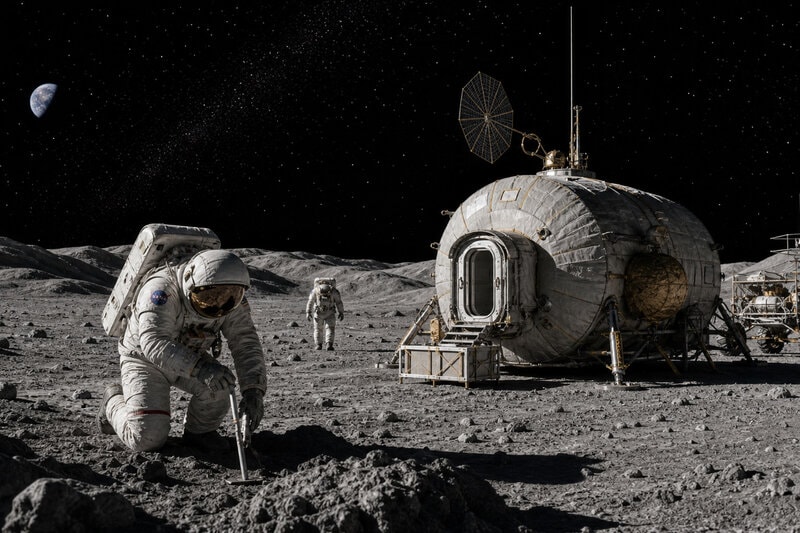
NASA’s Artemis architecture envisions a phased approach to lunar surface presence: early crewed surface stays in landed spacecraft, followed by pre-deployed pressurized rovers and habitat modules, culminating in a semi-permanent outpost most likely located near the lunar south pole. The south pole location is driven by both science and survival. Permanently shadowed craters in that region hold confirmed water ice deposits, first detected by instruments including NASA’s LCROSS mission. That ice is the central resource for in-situ resource utilization — the process of extracting and processing local materials rather than launching everything from Earth.
Water ice can be electrolyzed into hydrogen and oxygen, providing rocket propellant and breathable air. NASA’s MOXIE experiment aboard the Mars Perseverance rover demonstrated oxygen production from an extraterrestrial atmosphere in miniature form, establishing a proof of concept for the broader ISRU strategy. Whether water extraction from lunar south pole ice will prove technically and economically viable at the scale a permanent base requires remains one of the genuinely open questions in the program.
Habitat design itself is contested territory. Rigid aluminum pressure vessels, similar to International Space Station segments, offer well-characterized performance and radiation shielding properties, but they require expensive Earth launches at high mass. Inflatable structures — like Bigelow Aerospace’s BEAM module, tested on the ISS — offer greater pressurized volume per kilogram of launched mass but have a thinner long-term radiation shielding dataset. A third approach, 3D-printing structural elements directly from processed lunar regolith, is scientifically promising but has not yet been demonstrated at full scale in a vacuum environment. All three approaches remain active areas of engineering research, and NASA has not publicly committed to a single architecture.
The Human Factor: Keeping Astronauts Alive, Healthy, and Functional

NASA’s Human Research Program identifies five primary risk categories for long-duration lunar surface missions: radiation exposure, isolation and confinement, communication delays of up to 1.3 seconds one-way, the physiological demands of a hostile closed environment, and physical deconditioning caused by reduced gravity. Psychological research conducted during Antarctic winter-over missions and ISS expeditions, cited in NASA’s Evidence Reports on Human Space Flight Risks, consistently shows that crew cohesion and crew autonomy are critical mission variables — not soft factors to be addressed after the hardware is designed, but constraints that should shape the architecture from the outset.
Medical autonomy is non-negotiable at lunar distances. A surgical emergency cannot wait for meaningful back-and-forth consultation with Earth-based physicians, pushing NASA and partner agencies to develop AI-assisted diagnostic tools and crew medical training substantially beyond anything required for low-Earth orbit. Food security presents a parallel challenge: current ISS resupply cadence could not sustain a permanent Moon base at acceptable risk, yet the plant growth experiments conducted under NASA’s VEGGIE program, while successfully producing leafy greens on the ISS, remain far from providing caloric self-sufficiency for a crew.
The Student Challenge and the Talent Pipeline

The $1 million Moon Base Student Challenge announced at MAX POWER follows a model NASA has refined through its Centennial Challenges program and the Lunabotics Mining Competition. Prize-based competitions consistently surface unconventional solutions that internal engineering teams, constrained by institutional culture and procurement processes, tend not to generate. Analyses of NASA’s Centennial Challenges outcomes show that a relatively modest prize award generates hundreds of competing design submissions — a leverage ratio that contracted engineering studies rarely achieve.
The challenge also reflects a workforce reality. The engineers who will operate a 2032 moon base are most likely undergraduates or early-career professionals today. Building lunar thinking into their training now — rather than retraining Earth-centric engineers later — is a talent strategy as much as an innovation strategy.
What 2032 Would Actually Mean — and What Still Has to Go Right
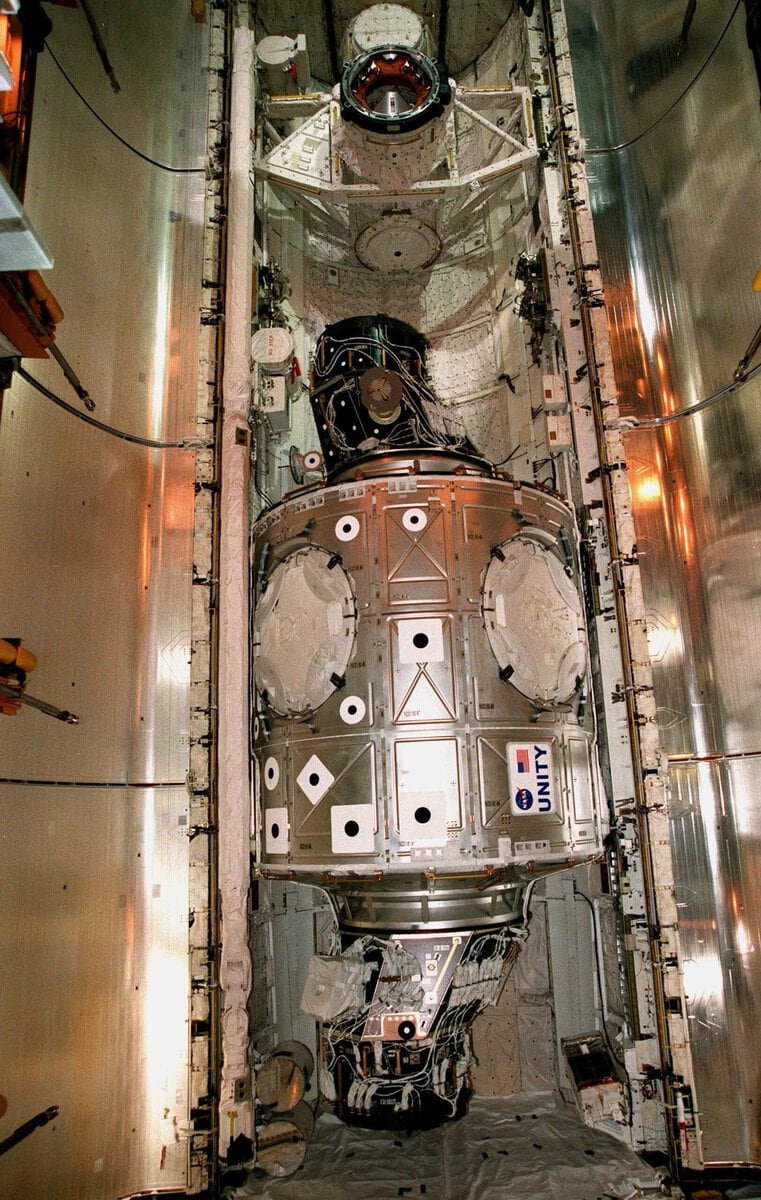
As reporting on the full scope of the MAX POWER awards has detailed, a functional astronaut-capable Moon base by 2032 would rank as the most complex sustained logistical achievement since the ISS’s first module launched in 1998. The ISS required 13 years and 42 assembly flights to reach its completed configuration, according to NASA historical records, and cost the United States alone approximately $150 billion over its operational lifetime, according to a 2018 NASA Inspector General report. The $10 billion announced at MAX POWER is substantial but almost certainly represents only the opening phase of total program investment.
Analysis of the full package of Moon Base announcements points to several critical uncertainties that will determine whether 2032 is an achievable deadline or an aspirational marker: whether ISRU water extraction scales to operational viability, whether international partners under the Artemis Accords deliver committed hardware on schedule, and whether U.S. Congressional appropriations remain stable across the multiple election cycles that separate today’s contracts from a crewed surface outpost. Budget continuity has historically been the variable most likely to compress or collapse ambitious NASA timelines — the Constellation program’s cancellation in 2010 after six years of development is the most recent cautionary example.
What the MAX POWER awards have done — unambiguously — is convert the question of how would a moon base be built from an engineering thought experiment into a set of contractual obligations with named performers, defined deliverables, and a date that companies and engineers must now be prepared to defend. For anyone who has followed the long arc of NASA moon base planning from Apollo-era proposals through decades of paper studies, that is not a small thing.