
Ferns, river deltas, lung tissue, and snowflakes share a secret that evolution has been refining for hundreds of millions of years: a self-repeating geometric logic that moves fluid — air, water, blood — with extraordinary efficiency. NASA has announced it is finally ready to fly that secret.
NASA Unveils the X-70 Fractal at Kennedy Space Center
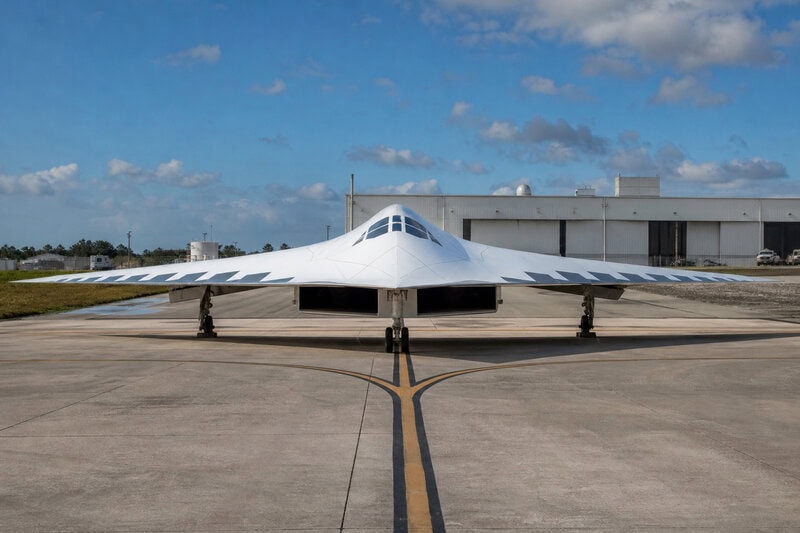
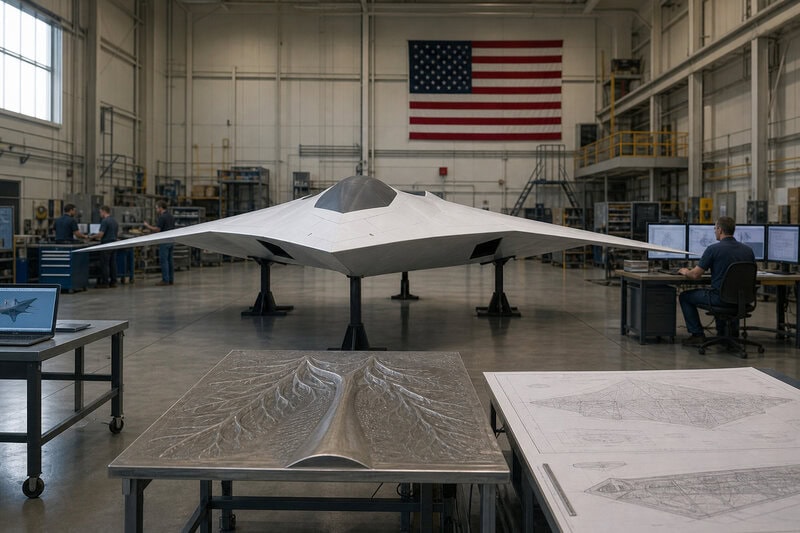
At the UP.Summit held at Kennedy Space Center in Florida, NASA unveiled the X-70 Fractal experimental aircraft on Wednesday, November 4. The enthusiasm surrounding the announcement reflects just how different this aircraft’s underlying concept is from anything that has carried a NASA designation before.
The central question the X-70 is built to answer is deceptively simple: what does fractal geometry actually do to airflow when you put it on a real, crewed, flying aircraft — and why has it taken this long to find out?
What the X-70 Fractal Actually Is
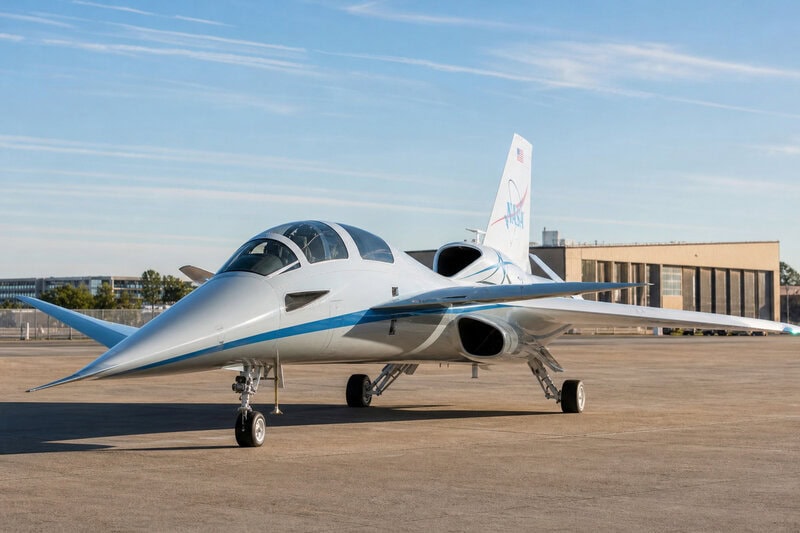
The X-70 Fractal is a crewed, modular experimental aircraft and the newest addition to NASA’s fleet of X-planes — a lineage that includes the X-1, which broke the sound barrier in 1947, and the X-57 Maxwell, which demonstrated all-electric propulsion. Each X-plane in that history was designed to shatter one specific barrier. The X-70 targets something more fundamental: the geometry of the wing itself.
Its most significant engineering feature is a modular architecture that allows NASA engineers to rapidly swap out wings, control surfaces, and propulsion components between test flights. Rather than committing a single fixed airframe to one unproven design, the X-70 functions as a flying laboratory that can be reconfigured into dozens of research variants over its operational life. It is explicitly not a prototype for a production aircraft — it is infrastructure for discovery.
The aircraft is designed to test new flight control capabilities and push the boundaries of maneuverability in ways that conventionally designed aircraft cannot. Its maximum take-off weight is reported at approximately 10,000 lbs, placing it in a category agile enough for experimental flight regimes while substantial enough to carry meaningful instrumentation and a research crew.
Fractal Geometry: Why Nature Keeps Returning to the Same Pattern
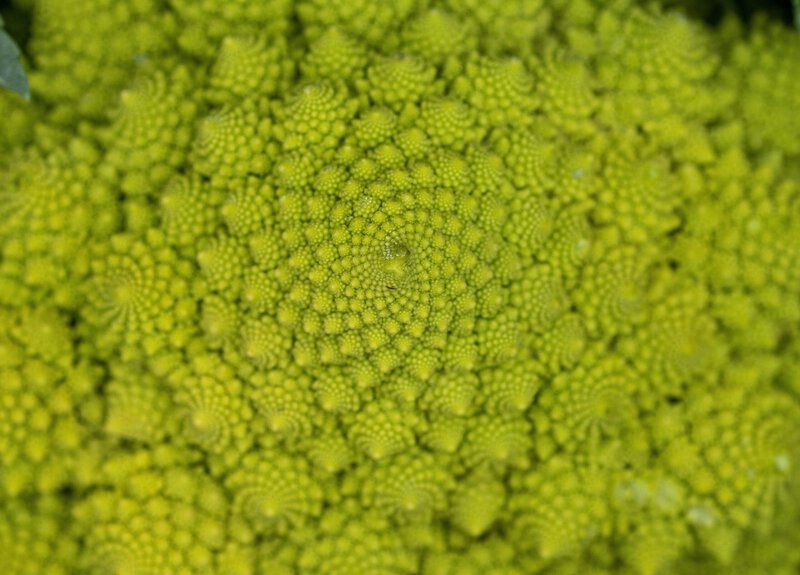
A fractal is a structure that repeats its own geometry at progressively smaller scales. Zoom into a coastline, a head of Romanesco broccoli, or a human bronchial tree, and the pattern at the small scale looks statistically similar to the pattern at the large scale. This self-similarity is not decorative — it is a highly efficient solution to the problem of distributing or moving something (nutrients, water, air) across a surface or volume.
In aerodynamics, this matters because turbulence itself is fractal in character. When air flows over a wing and breaks into turbulence, large eddies spawn smaller eddies in a cascading hierarchy — a phenomenon the mathematician Lewis Fry Richardson described as “big whirls have little whirls that feed on their velocity, and little whirls have lesser whirls, and so on to viscosity.” A wing surface that mirrors this cascade may interact with turbulent airflow more cooperatively than a smooth, conventionally shaped surface, potentially reducing the energy lost to drag.
The concept is not without precedent in aerospace biomimicry. Owl-feather serrations have informed quieter drone designs. The bumps on a humpback whale’s pectoral fins — called tubercles — improve stall resistance and have been applied to wind turbine blades. Sharkskin-inspired riblets reduce skin-friction drag and have been tested on commercial aircraft fuselages. The X-70 extends this logic from surface texture to overall wing geometry: not just adding fractal features to a conventional wing, but potentially deriving the wing’s planform and edge profile from fractal mathematics.
The core physics promise is that fractal-edged wings may distribute vortex shedding across many scales simultaneously. In conventional wings, vortices shed from the trailing edge and wingtip in concentrated, energetic structures that contribute significantly to induced drag. A fractal edge, by introducing self-similar irregularities, may spread that vortex energy across a wider frequency spectrum — reducing peak drag, delaying stall onset, and improving the lift-to-drag ratio, potentially without any moving parts or active flow-control systems.
The Engineering Gap Between Beautiful Math and a Flying Wing
If fractal aerodynamics is so promising, the obvious question is why a crewed test aircraft is only now arriving. The answer lies in two technologies that have only recently matured enough to make the concept tractable.
First, additive manufacturing — industrial 3D metal printing — can now produce complex, organically curved geometries that would have been prohibitively expensive or structurally unreliable when machined from billets or laid up from composite sheets. Fractal surfaces introduce many stress concentration points; printing allows those features to be built with internal lattice structures that distribute load in ways conventional fabrication cannot replicate.
Second, computational fluid dynamics has advanced to the point where engineers can simulate the interaction between fractal geometry and turbulent airflow with reasonable confidence before cutting any hardware. That simulation capability reduces the risk of discovering, expensively and in midair, that a theoretically elegant geometry produces an unexpected aerodynamic behavior.
Even so, flight control software presents a distinct challenge. Fractal surfaces may alter how control surface inputs translate into aerodynamic response in ways that conventional fly-by-wire tuning algorithms do not anticipate. The X-70’s modular design directly addresses this: test a fractal wing configuration, capture the flight data, update the aerodynamic model and control laws, swap in the next iteration, and repeat. This compresses what might otherwise be a decade of incremental wind-tunnel research into a series of flight-test seasons.
Where the X-70 Fits in NASA’s Broader Aeronautics Vision
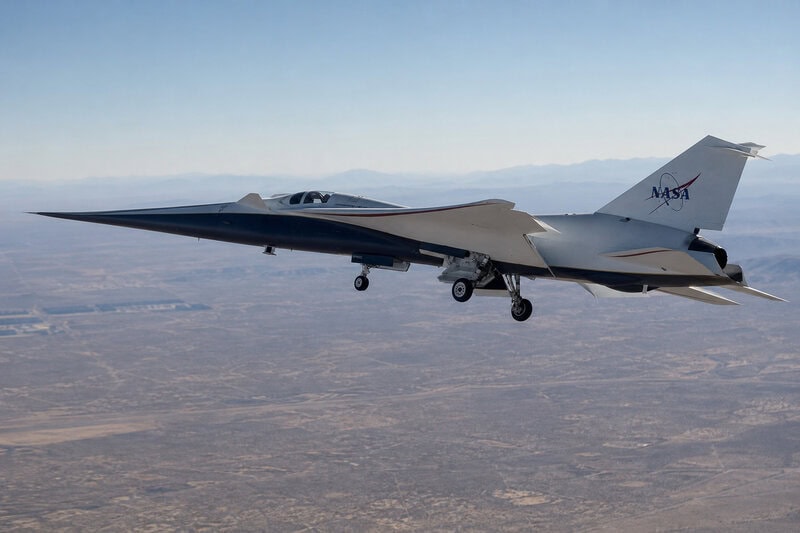
The X-70 does not exist in isolation. NASA Aeronautics has been systematically rebuilding its X-plane portfolio after a relatively quiet period in the 2000s and 2010s. The X-57 Maxwell explored all-electric distributed propulsion. The X-59 QueSST is investigating whether supersonic flight over land can be made quiet enough for commercial use. Each aircraft targets a distinct barrier; together they represent a coordinated effort to reshape aviation across multiple dimensions simultaneously.
The adaptable research platform model the X-70 represents also reflects a deliberate philosophical shift at the agency. Rather than building single-purpose demonstrators that are retired once their primary experiment concludes, NASA is investing in modular airframes that can serve multiple research campaigns over years. The X-70 is designed from the outset to be reconfigured — meaning the investment in qualifying the basic airframe pays dividends across every wing geometry or propulsion concept that is subsequently bolted onto it.
The commercial aviation industry is the long-term downstream beneficiary. Technologies validated on X-planes historically migrate into regional jets, then narrow-body transports, then wide-body aircraft over a 15-to-25-year cycle. If fractal wing concepts prove out on the X-70, the findings could influence the design of passenger aircraft entering service in the 2040s — aircraft that will then fly for another 30 years beyond that.
The choice of Kennedy Space Center as the announcement venue was itself communicative. NASA is framing the X-70 as part of a “new era” narrative, connecting aeronautics innovation to the same cultural energy and institutional momentum surrounding the agency’s space exploration programs.
What NASA Has Not Yet Disclosed — And Why That Is Normal
Key specifications remain officially unconfirmed at this stage of the program. Maximum airspeed, altitude ceiling, engine type, and the specific mathematical framework used to derive the wing geometry have not been released — standard practice for a program at the announcement milestone, before full technical documentation is published.
No first flight date has been disclosed. X-plane programs typically require 18 to 36 months of ground testing, structural qualification, and systems integration between public announcement and first flight. Independent aerospace engineers will reasonably want to see wind-tunnel correlation data comparing computational fluid dynamics predictions to measured lift and drag before drawing performance conclusions; that data is likely years away from public release.
NASA’s emphasis on “maneuverability” in the program language also leaves an interesting question open: whether the X-70 is being evaluated for defense-adjacent applications alongside civil aviation efficiency research. The agency has not specified, and the modular architecture would accommodate either research direction.
Why the Announcement Itself Already Changes Things
Even before the X-70 flies a single test sortie, its announcement performs a function that academic papers and wind-tunnel models cannot: it moves fractal aerodynamics across a legitimacy threshold. A crewed, funded, government-backed flight program signals to private aerospace companies, university research departments, and venture-funded startups that this concept is worth serious engineering investment — not in the abstract future, but now.
Aviation is under sustained and growing pressure to reduce fuel burn and carbon emissions. A drag reduction of even a few percent at cruise altitude, compounded across tens of thousands of commercial flights per day worldwide, translates into enormous fuel savings over the life of a fleet. The X-70 is the mechanism by which that potential either gets confirmed and commercialized, or gets ruled out definitively so the industry can focus its resources elsewhere. Either outcome is valuable.
Humanity has been studying fractal patterns in nature for a very long time — from Leonardo da Vinci’s meticulous sketches of water vortices in the fifteenth century to Benoit Mandelbrot’s formal mathematics of fractal geometry in the twentieth century. With the X-70 Fractal, NASA is attempting to do something that centuries of observation only made possible in this decade: build one, and fly it.