
On November 4, 2026, NASA Administrator Jared Isaacman unveiled an aircraft designation that few aviation watchers had ever heard whispered: the X-70, callsign Fractal. With that single announcement, the agency signaled its belief that aviation’s next era will be too unpredictable for any ordinary research aircraft to navigate alone.
A Silence Broken
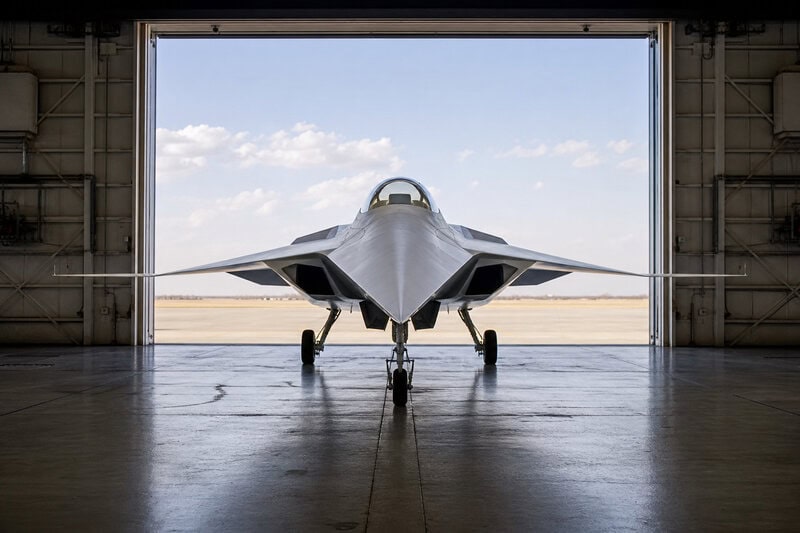
Unlike a production aircraft reveal, the NASA X-70 announcement was not about showing the world a finished plane. It was about introducing a machine built to ask questions nobody has thought to ask yet. That distinction matters enormously in aerospace research, where the most consequential discoveries tend to arrive at the edges of what engineers assumed was already understood.
The X-70 Fractal joins a lineage stretching back to Chuck Yeager’s Bell X-1 in 1947 — a roster of deliberately unconventional aircraft designed to push past the boundaries of what aerospace engineers believe is possible. Each aircraft in that lineage carried a specific mission: break a barrier, map an unknown, generate data that the rest of the aviation world would spend decades absorbing. With a first flight expected within two years of the announcement, NASA describes the X-70 as one of the most versatile crewed research aircraft it has ever commissioned.
What the X-Plane Program Does — and Why It Matters
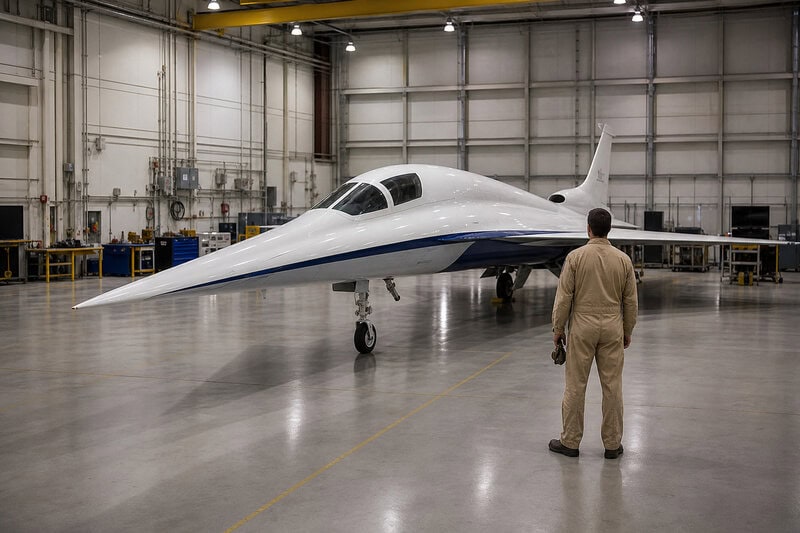
NASA’s X-plane program is not about building jets for the Air Force or selling seats to airlines. It is a federally funded laboratory that uses flying aircraft as its test instruments, generating data that eventually filters into commercial cockpits and military hangars. Each X-designation marks an experimental aircraft whose primary job is to explore a specific unknown — aerodynamics, propulsion, materials, control systems — under real flight conditions that no wind tunnel or computer simulation can fully replicate.
The historical returns on that investment have been substantial. Swept-wing data from the X-5 influenced the geometry of modern commercial airliners. Research into the radically forward-swept wings of the X-29 demonstrated that extreme aerodynamic instability could be managed by computers reacting faster than any human pilot. Lessons embedded in those programs now fly anonymously inside aircraft that carry millions of passengers every day.
The X-70 arrives at a moment when autonomous flight, advanced air mobility, and next-generation aircraft concepts are all converging simultaneously — each demanding real-world flight data that simply does not yet exist. As The Aviationist notes in its coverage, the aircraft’s timing is deliberate, not coincidental.
Meet the Fractal: What Makes the X-70 Different
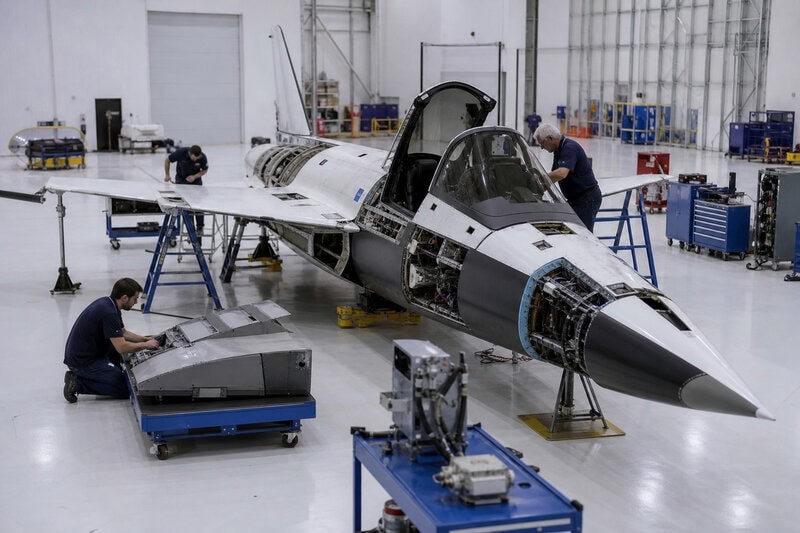
The defining characteristic of the X-70 Fractal is rapid reconfigurability. It is explicitly designed so that its flight-control surfaces, sensor suites, and experimental payloads can be swapped, restructured, or replaced between research campaigns without rebuilding the aircraft from scratch. That single design principle separates it from most research platforms, which are optimized for one experiment and then retired or repurposed at significant cost.
The core specifications place it in a productive and commercially relevant research regime:
- A 10,000-pound takeoff weight, keeping it nimble enough for high-performance maneuver testing
- A cruise speed of Mach 0.75, targeting the high-subsonic and transonic range where the most commercially significant aerodynamic challenges currently reside
- A service ceiling of 45,000 feet, placing it above commercial traffic and weather in the altitude band used by surveillance platforms and emerging supersonic business jets
- A 2,000-pound experimental payload capacity, accommodating hardware both internally and on external hard points
The name Fractal is itself a signal. Fractals are geometric structures that reveal new detail at every scale of observation, never resolving into simplicity no matter how closely you look. As a metaphor for a research aircraft whose value multiplies every time it is reconfigured for a new question, the name is unusually apt.
The Engineering Logic Behind the Numbers
Mach 0.75 cruise is not a limitation — it is deliberate targeting. Transonic flight is the speed range where airflow over a wing simultaneously exhibits subsonic and supersonic behavior, producing the most complex and commercially important aerodynamic phenomena in modern aviation. Every wide-body airliner cruises in this regime. Understanding it more completely has direct implications for fuel efficiency, structural loading, and noise reduction across the commercial fleet.
The 45,000-foot service ceiling amplifies that relevance. At that altitude, the X-70 operates in the same airspace occupied by high-altitude intelligence platforms, early supersonic business jet routes, and the upper reaches of the emerging advanced air mobility sector. Data gathered there carries potential value for defense planners, commercial aviation engineers, and urban air mobility developers simultaneously — a rare efficiency in research spending.
The 2,000-pound payload capacity is as much a research-budget argument as an engineering one. Flying two thousand pounds of instrumentation means multiple experiments can share a single sortie, compressing what might otherwise be years of sequential test programs into shared flight hours. Detailed coverage of the X-70 Fractal identifies that swappable architecture as central to the aircraft’s value proposition across its entire operational life.
Keeping the aircraft crewed rather than autonomous preserves a judgment layer that no pre-programmed system can replicate. When testing genuinely unknown flight-control behaviors, a pilot can recognize and respond to anomalies that no abort algorithm anticipates — a capability that becomes more valuable, not less, the further research pushes into unexplored territory.
Why Advanced Flight-Control Systems Are the Real Target

The X-70 Fractal is specifically built to test advanced flight-control systems and maneuverability — a research priority that has grown urgent because modern aircraft increasingly depend on software-defined control laws rather than mechanical linkages. Every fly-by-wire airliner, every autonomous air taxi prototype, and every next-generation fighter concept relies on control algorithms whose behavior at the edges of the flight envelope must be validated through real-world data of precisely the kind the X-70 is designed to generate.
Reconfigurability amplifies this mission in a specific way. By physically changing the aircraft’s control surfaces between research campaigns, NASA engineers can isolate variables that a fixed-geometry testbed cannot separate — producing cleaner, more actionable data about how shape and software interact under real aerodynamic loads. Coverage of the X-70’s flight-control research mission at SOFX highlights this as the aircraft’s most significant departure from previous experimental platforms.
The broader implication is considerable: the X-70’s research output will likely influence aircraft designs that haven’t been finalized yet, potentially including autonomous cargo drones, urban air mobility vehicles, and military platforms whose specifications remain classified.
The Road to First Flight
NASA expects the X-70 Fractal to complete its first flight within two years of the November 4, 2026 announcement — a timeline consistent with a mature design rather than a speculative concept. Before that milestone, the aircraft will move through a standard X-plane validation sequence: ground systems checks, taxi tests, engine runs at operational power, and a progressive envelope expansion program once airborne.
NASA’s Armstrong Flight Research Center in Edwards, California — the historic home of X-plane operations — provides the instrumented range, restricted airspace, and institutional expertise the X-70 needs to operate safely during early test flights. AVweb’s coverage of the X-70 unveiling notes that Armstrong’s existing infrastructure makes it the natural base of operations for the program. Once the aircraft proves its baseline airworthiness, researchers from NASA, partner universities, and potentially defense and commercial contractors are expected to queue research campaigns, turning the Fractal into a time-shared laboratory in the sky.
NASA’s decision to invest in a rapidly reconfigurable crewed research aircraft at this moment is a direct acknowledgment that aviation’s next decade will be defined by competing unknowns. Too many emerging technologies, too many regulatory uncertainties, and too little real-world flight data exist to sort the promising from the impractical through theory alone. The X-70 Fractal is, in a precise sense, a hedge against that uncertainty: a platform flexible enough to test whatever question becomes most urgent, rather than one locked into answering a question that seemed pressing when the contract was signed. Its place in the X-plane lineage — alongside the X-1 that broke the sound barrier, the X-43 that reached Mach 9.6, and the X-57 Maxwell that pioneered electric propulsion — suggests NASA views this technological moment as genuinely comparable to the inflection points those aircraft were built to navigate.