
The moment a commercial aircraft reaches cruising altitude, the cabin air surrounding every passenger has already thinned to the equivalent of standing on a mountain more than a mile above Denver — and most people never feel it happening. A new study raising fresh questions about life at 30,000 feet has added urgency to what scientists have long suspected: the physiological changes that begin within minutes of takeoff are more consequential than the industry or passengers have fully reckoned with, particularly for the aviation workers who live this environment as a daily occupation. Understanding exactly what happens — and to whom, and at what cumulative dose — is no longer an academic exercise. It is an occupational health emergency that is only now receiving the serious scientific attention it warrants.
Pressure Drop: Why Your Ears Pop and Your Blood Quietly Struggles
Commercial aircraft cabins are pressurized to simulate an altitude of roughly 6,000 to 8,000 feet above sea level — not the full 30,000-plus feet outside the fuselage, but meaningfully higher than the sea-level environments most passengers come from. The practical consequence is a reduction in the partial pressure of oxygen, the physical force that pushes oxygen molecules across the lung membrane and into the bloodstream. In healthy adults, blood oxygen saturation typically sits at 98 to 99 percent at sea level; at cabin altitude, that figure commonly drops to 93 to 95 percent, according to established aerospace medicine data.
The body responds automatically and immediately: heart rate rises slightly and blood vessels undergo mild constriction, compensating for the reduced oxygen load. The American Heart Association has noted that these cardiovascular adjustments, while negligible for most healthy travelers, can carry clinical significance for passengers managing pre-existing heart or lung conditions. The familiar ear-pop is a related but separate phenomenon — the Eustachian tube, a narrow canal connecting the middle ear to the back of the throat, must equalize pressure as the cabin pressurizes on ascent and depressurizes on descent, and when it fails to open promptly, the resulting pressure differential produces pain or temporary muffling of sound.
What science has firmly established is that reduced cabin oxygen affects passengers in measurable ways. What remains an active and open research question is whether repeated episodes of mild hypoxia — low blood oxygen — across hundreds or thousands of flights accumulate into any form of long-term cardiovascular wear in frequent flyers. That distinction between settled consensus and emerging inquiry matters enormously, and it runs through every aspect of what high-altitude flight does to the human body.
The Dehydration Chamber: How Cabin Air Strips Moisture From Every Passenger

Cabin relative humidity at cruising altitude typically falls to between 10 and 20 percent — drier than the ambient air over the Sahara Desert on a typical day. The cause is structural: outside air at 30,000 feet contains almost no moisture, and when that air is compressed and pumped into the cabin to maintain breathable pressure, it arrives nearly bone dry. The Aerospace Medical Association has cited these figures in guidance on passenger comfort and health.
The body loses moisture through three simultaneous channels under these conditions. Skin sheds water through transepidermal evaporation at an accelerated rate. Mucous membranes lining the nose and throat dry out, reducing their mechanical effectiveness as a first barrier against airborne pathogens. And at the cellular level, mild dehydration can incrementally thicken the blood — an effect researchers have identified as a contributing factor to deep-vein thrombosis risk on long flights.
Deep-vein thrombosis, or DVT, is the formation of a blood clot in a deep vein, most commonly in the legs. It is not a speculative risk. The World Health Organization classifies flights lasting more than four hours as a recognized DVT risk factor, with the combination of prolonged immobility and mild dehydration understood as the primary mechanism. For a healthy adult on a single short flight, the absolute risk remains low — but the physiological effect is real and measurable across virtually any passenger, not only those in clinically vulnerable populations.
Cosmic Radiation: The Invisible Exposure That a New Study Puts in Sharper Focus
At sea level, Earth’s atmosphere and magnetic field together absorb the vast majority of cosmic radiation — high-energy particles streaming from the sun and from sources deeper in space. At 30,000 to 40,000 feet, that atmospheric shielding is dramatically thinner, and every person on board receives a measurably higher dose of ionizing radiation for every hour of flight.
For a single transatlantic crossing, the U.S. Federal Aviation Administration estimates radiation exposure in the range of 0.03 to 0.05 millisieverts — roughly comparable to a chest X-ray. For a passenger taking one or two long-haul flights a year, that dose sits well below thresholds of established concern. The picture changes substantially for aviation workers. A flight attendant logging approximately 900 flight hours annually accumulates a radiation dose that the FAA itself classifies as occupationally significant, placing crew members in a category typically associated with workers in nuclear facilities or radiology departments.
A Harvard-led study published in JAMA Internal Medicine found that pilots and flight attendants show higher rates of radiation-related cancer deaths compared with the general population — elevating cosmic radiation exposure in aviation from a theoretical concern to a documented epidemiological signal. Researchers have been careful to note that confounding variables, including UV radiation exposure during layovers, occupational sleep disruption, and other workplace factors, have not been fully disentangled from the radiation signal. The finding demands further investigation; it does not, on its own, establish clean causation. But it is the kind of finding that moves a question from the margins of occupational health to its center, and it has arrived with enough statistical weight that researchers are no longer treating it as preliminary noise.
Your Senses at Altitude: Taste, Emotion, and the Sounds Nobody Talks About

The combined effects of reduced cabin pressure and extreme dryness alter sensory experience in ways that are quantifiable, not merely anecdotal. A study commissioned by Lufthansa and conducted in a pressurized chamber found that passengers’ perception of sweet and salty flavors drops by roughly 30 percent at simulated cabin altitude — a finding that explains why airline catering tends toward heavy seasoning and bold flavors that would register as excessive in a restaurant at ground level.
Some aviation researchers and psychologists have observed that passengers report heightened emotional sensitivity at altitude — a tendency to cry at films that would land as merely touching on the ground. A plausible hypothesis links this to mild hypoxia affecting prefrontal cortex function, which plays a role in emotional regulation. Robust peer-reviewed data specifically isolating this mechanism remain limited, however, and it should be understood as a reasonable hypothesis supported by physiological logic rather than a settled finding in its own right.
Cabin noise is an underappreciated physiological stressor that receives far less attention than oxygen levels or radiation. Ambient sound levels inside a cruising aircraft typically range from 80 to 85 decibels, a level the Centers for Disease Control and Prevention associates with fatigue and elevated stress hormone activity over prolonged exposure. Travelers who already manage anxiety, sleep disorders, or hypertension may find this chronic low-grade acoustic load more consequential than the industry has historically acknowledged.
Jet lag — the circadian disruption that follows long-haul travel — operates through a well-characterized mechanism: the suprachiasmatic nucleus, a cluster of neurons in the brain that governs the body’s internal clock, depends on light-dark cycles to stay synchronized. Long-haul flights scramble those cues, and the resulting misalignment between internal biological time and local time is associated in sleep research with short-term suppression of immune function. For a passenger taking two or three long-haul flights a month, these episodes of immune suppression stop being isolated events and start functioning as a recurring physiological tax.
Who Faces the Highest Risk — and What the Evidence Actually Supports
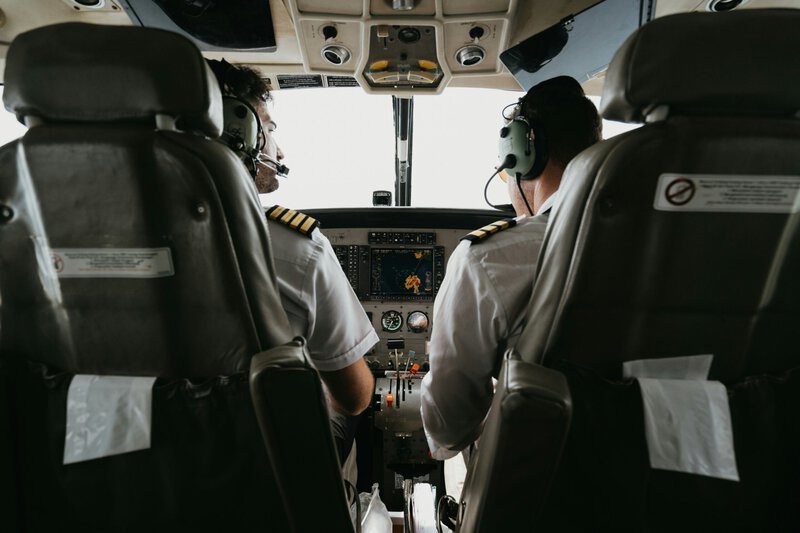
Aviation workers represent the most clearly established area of concern in current science. The Harvard-JAMA Internal Medicine findings place pilots and flight attendants in a radiation exposure category that the occupational health community is increasingly treating the way it treats other forms of regulated workplace radiation — not as background noise, but as a measurable professional hazard worthy of systematic monitoring and, potentially, binding regulatory limits.
For frequent business travelers — those logging tens of thousands of miles annually — the cumulative effects of radiation, circadian disruption, and dehydration begin to interact in ways that no single study has yet modeled comprehensively. No major public health authority has issued formal advisories for this group based solely on available evidence. The individual risk from any single mechanism, for a healthy person on any single flight, remains statistically modest. But the absence of a formal advisory should not be mistaken for a scientific finding that no risk exists; it reflects, more accurately, the absence of sufficient longitudinal data on this specific population.
Passengers with specific underlying conditions face a different risk calculation entirely. Those managing cardiovascular disease, clotting disorders, severe anemia, advanced pregnancy, or chronic respiratory illness are working with a narrower physiological margin at altitude. The British Cardiovascular Society and other bodies recommend pre-flight medical consultation for these groups as a standard precaution, not an overreaction. The evidence for that recommendation is solid, and it deserves wider dissemination than it currently receives at the point of ticket purchase.
The honest summary the current evidence supports is this: one flight poses minimal risk to a healthy adult. It is the cumulative, occupational dimension — thousands of hours at altitude, year after year — where the science has moved from inconclusive to genuinely concerning, and where the new findings land with the most force.
What Comes Next: Research Gaps and What Travelers Can Reasonably Do
The most significant unresolved question flagged by researchers is dose-response: scientists do not yet have a reliable model for how cosmic radiation risk scales with lifetime flight hours across the broader population of non-crew frequent flyers. Current cohort data are skewed toward crew members, because they are the workers whose exposure has been formally tracked. The new study’s findings are expected to accelerate calls for larger longitudinal studies that follow frequent business travelers over time — data that currently do not exist in sufficient depth to support firm conclusions.
On the regulatory front, the FAA already requires airlines to make radiation exposure data available to crew members who request it. Health advocates and some researchers have argued that this passive disclosure policy falls short of what the science now warrants, and that systematic, proactive monitoring for aviation workers should replace the current opt-in model. Whether that argument gains regulatory traction in the near term may depend on how quickly the follow-on research the new study is expected to catalyze can be designed, funded, and completed.
For travelers, the evidence points toward a short list of genuinely useful actions — none of which are speculative wellness advice:
- Stay hydrated deliberately. Drinking water consistently throughout a flight directly counters the measurable dehydration effect of low cabin humidity. Alcohol and caffeine accelerate fluid loss and are best consumed in moderation at altitude, where their dehydrating effects are compounded by an already dry environment.
- Move your legs regularly and consider compression socks. Both strategies address the DVT risk associated with prolonged immobility and mild blood thickening — an effect with clear peer-reviewed physiological rationale and enough clinical evidence behind it that major aviation medicine bodies have endorsed both measures without qualification.
- Manage light exposure deliberately after landing. Seeking bright light at the appropriate local time helps the suprachiasmatic nucleus recalibrate faster, shortening the duration of circadian misalignment and the immune suppression that accompanies it. On westward flights, morning light at the destination accelerates adjustment; on eastward flights, evening light exposure is the more effective strategy.
- If you fly occupationally, ask about your radiation exposure data. The FAA requires airlines to provide this information on request. Knowing your annual dose is the first step toward any informed conversation with an occupational health physician about monitoring or risk management.
The body’s response to cruising altitude is not catastrophic — it is adaptive, measurable, and in most cases fully temporary. What the new research underscores is that “temporary” carries a different weight when the sky is effectively a workplace, and that the science tracking what that workplace costs the people inside it has, until recently, lagged badly behind the scale of the exposure. That gap is now closing, and the findings emerging from it are serious enough to deserve both public attention and a regulatory response that matches the evidence.