
Inside a sealed tomb in the mountains of Central Asia, archaeologists uncovered a set of wooden burning artifacts — and the molecular traces left inside them added a precise, chemically verified chapter to humanity’s oldest known relationship with cannabis.
A Wooden Bowl, a Sealed Tomb, and a 2,500-Year-Old Secret
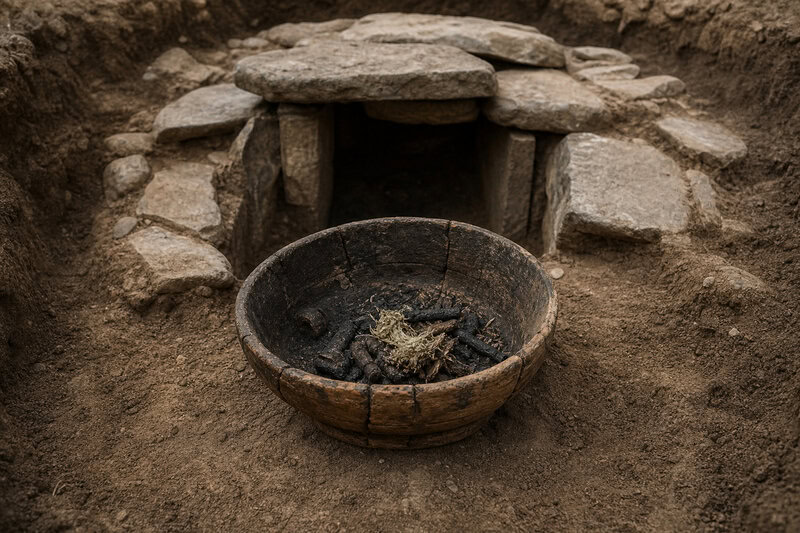
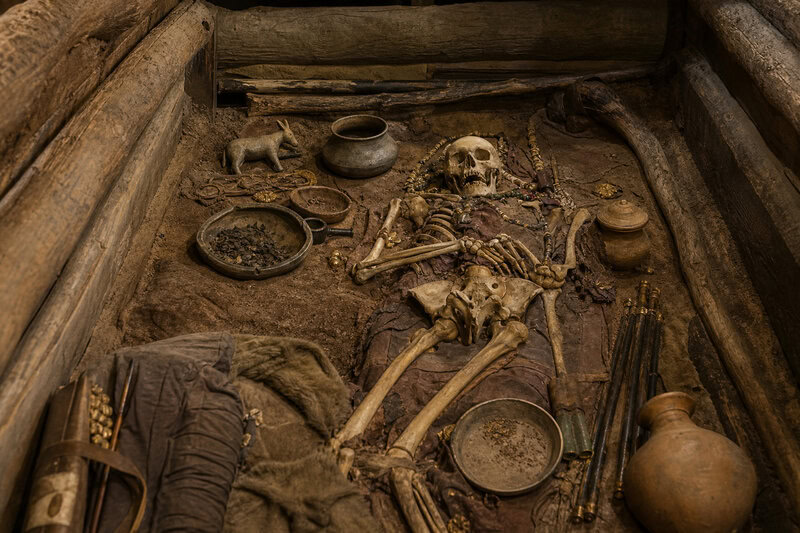
The discovery did not look dramatic at first. Excavations in the eastern Pamirs region — a high-altitude corridor where China, Tajikistan, and Afghanistan converge — turned up wooden braziers, the kind of small burning vessels that appear in ancient tombs across Central Asia. When scientists analyzed the chemical residue coating the insides of those vessels, they found the molecular fingerprint of burnt cannabis, preserved for roughly 2,500 years in the dry, sealed air of the grave.
The significance lies not simply in the fact that ancient people were using cannabis, but in what they appear to have been doing with it. The evidence points toward ceremony and death ritual rather than casual consumption. The people performing these rites may have understood the plant’s psychoactive properties not as a recreational pleasure but as a functional element of funerary practice — a means of engaging with the boundary between the living and the dead.
What distinguishes this find from earlier, more ambiguous discoveries is its scientific precision. This is not a case of charred seeds or uncertain plant fibers. It is direct chemical confirmation of ritual cannabis burning, anchoring the practice to the first millennium BCE, to a specific geography, and to a specific cultural context. Two questions sit at the center of it: who were these people, and what were they doing in those tombs?
What the Science Actually Found
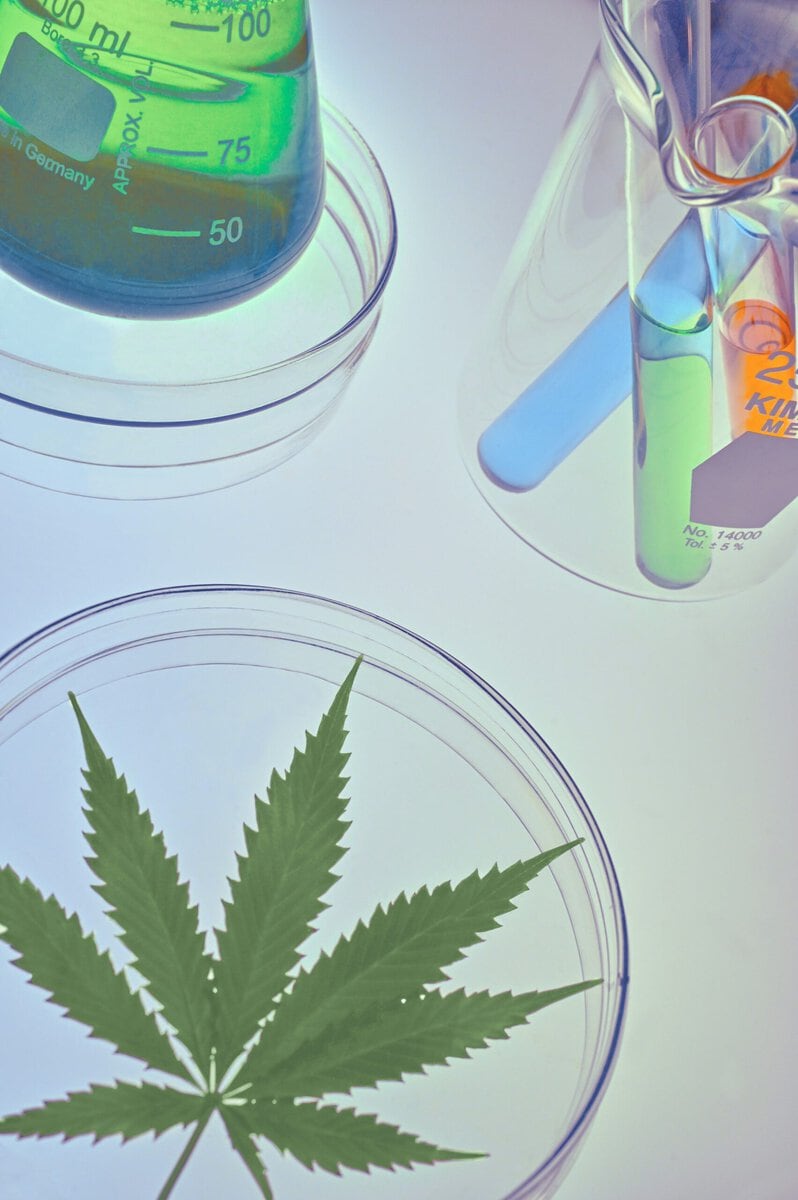
The key study came in 2019, when researcher M. Ren and colleagues published a landmark analysis of chemical residues found in wooden burning artifacts from tombs in the Pamirs region. The paper confirmed that cannabis had been deliberately burned in ritual contexts approximately 2,500 years ago, making it one of the most rigorously evidenced examples of ancient psychoactive plant use in the archaeological record.
To establish a reliable chemical baseline, the researchers used a reference specimen: an ancient cannabis plant recovered from tomb M231 at the Jiayi Cemetery, dated to approximately 790-520 BCE. That specimen provided a molecular anchor against which the residue evidence could be measured and confirmed.
For non-specialists, the method is worth pausing on. Chemical residue analysis does not require intact plant matter — no seeds, no leaves, no stems. Instead, it identifies the molecular fingerprint that burning leaves behind: specific compounds absorbed into wood or ceramic over centuries of use. In a sealed tomb, those molecules can survive for millennia. The result is a form of chemical testimony in which the artifacts themselves describe how they were used, long after every human witness has gone.
Critically, the cannabis detected in the Pamirs braziers was not low-potency. The residue pointed to plants with elevated levels of psychoactive compounds — a detail that matters for understanding intent. Someone, 2,500 years ago, appears to have been selecting high-potency cannabis and burning it in a funeral context. That is not the behavior of people encountering the plant by accident.
The Siberian Tomb That Added Another Layer
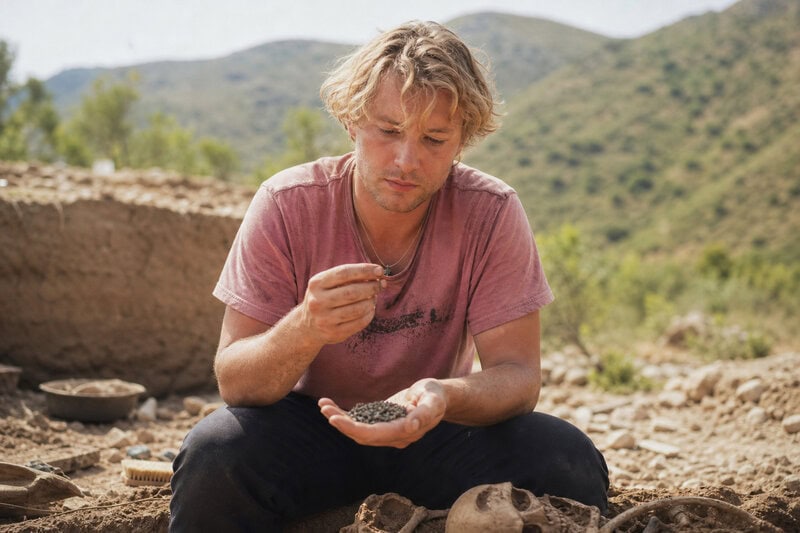
Separate from the Pamirs findings, a discovery in Siberia extended the timeline further back. A 2,800-year-old tomb yielded more than 1,000 cannabis seeds — one of the largest ancient caches ever recorded — alongside preserved human hair. Analysis of the seeds and hair pointed to psychoactive cannabis use at least 2,800 years ago, pushing the confirmed story of human cannabis consumption back by centuries beyond what documentary evidence alone could establish.
The two discoveries are distinct but complementary. Seeds in a tomb suggest ritual deposit or preparation — cannabis placed deliberately with the dead. Chemical residues in burning vessels confirm actual combustion and inhalation. Together, they form a coherent pattern: seeds in Siberia from 2,800 years ago, burned residue in the Pamirs from 2,500 years ago. Across the steppes and high mountain passes of Central Asia, a consistent picture emerges of a culture that treated cannabis as integral to its relationship with death and burial.
Meet the Scythians — and Why Their Reputation Has Been Misread
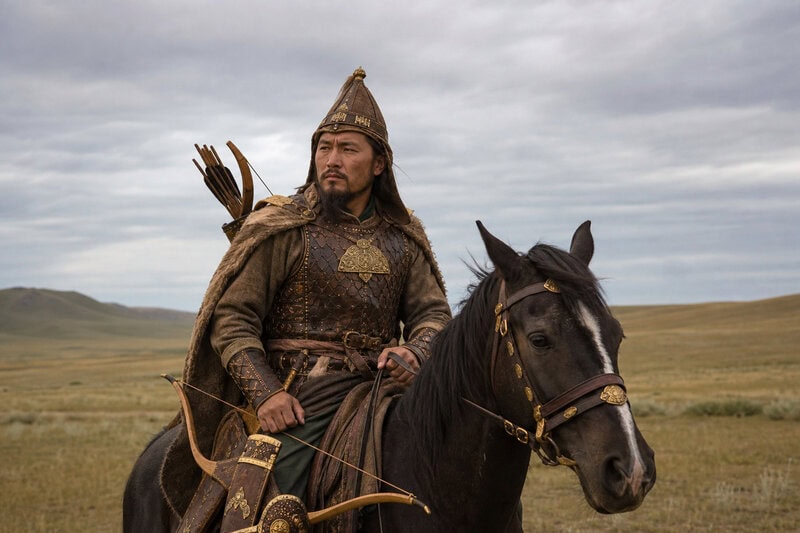
The culture most likely responsible for these practices was the Scythians: nomadic peoples who dominated the Eurasian steppes from roughly 900 to 200 BCE, ranging across a territory that closely overlaps with the tomb sites in question. They left no written records of their own, but they left tombs — elaborate burial mounds called kurgans — and those tombs have yielded evidence ever since.
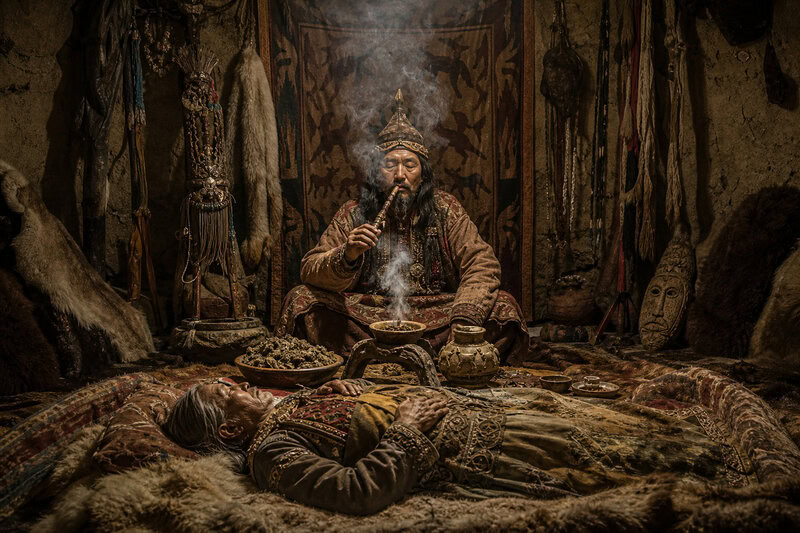
The Greek historian Herodotus, writing in the fifth century BCE, described Scythian funeral rites involving the inhalation of cannabis vapors inside tent-like enclosures. For much of modern history, that account was treated with skepticism — the kind of colorful detail ancient historians were sometimes prone to embellishing. The chemical residue evidence from the Pamirs now lends Herodotus unexpected credibility. His written description and the molecular evidence in the braziers appear to be describing the same practice.
In the Scythian ritual framework, cannabis appears linked to mourning, ancestor veneration, and shamanistic altered states. The dead were being honored, and the living were seeking contact with them. Cannabis was the medium through which that contact was attempted — not a peripheral detail but a functional component of the ceremony.
Why “Not for Getting High” Needs a Nuance Check
Coverage of this discovery often reaches for a tidy conclusion: ancient people weren’t using cannabis recreationally, therefore it wasn’t about getting high. That framing is understandable but imprecise.
The more accurate point is that “recreational” and “ritual” are modern categories that may not translate cleanly onto ancient experience. For the Scythians and related cultures, the altered state was not a side effect of the ceremony — it was a mechanism of it. Accessing a changed state of consciousness was how the ritual functioned. The psychoactive effect was not incidental; it was the operational core.
What differed from modern recreational use was not the experience itself but the social meaning surrounding it. Cannabis was embedded in a framework of grief, spiritual belief, and communal obligation. It was used in specific contexts, by specific people, for purposes the community understood and sanctioned. That represents a fundamentally different social structure than individual consumption for pleasure — but it is not the same as claiming the psychoactive effect was absent or irrelevant.
This distinction matters for understanding cannabis history accurately. The plant functioned as a sacred technology long before it became a commodity, and collapsing that distinction produces a simpler but less truthful story.
What This Means for the Broader History of Cannabis
Cannabis cultivation is widely believed to have originated in Central Asia, and the tomb sites in Siberia and the Pamirs sit at both the geographic and chronological heart of that origin story. Each new study from these regions pushes the confirmed timeline of human cannabis use further back, as archaeochemistry — the chemical analysis of ancient artifacts — becomes more sensitive and more widely applied.
The oldest confirmed evidence of cannabis keeps being revised earlier, with discoveries from ancient tombs in Siberia, the Pamirs, and western China each contributing new data points. The Ren et al. study has become a benchmark reference because it combined botanical specimens, chemical residue analysis, and tomb archaeology into a single, methodologically rigorous framework — an approach that subsequent researchers are building on and extending.
What remains unknown is equally significant. How widespread was ritual cannabis use across Scythian and related cultures? Was access to high-potency cannabis restricted to elites, to shamans, or to specific funerary roles? Were more psychoactive plants cultivated intentionally, or selected from wild populations that varied naturally in potency? The tombs have answered some questions and opened several more that current evidence cannot yet resolve.
Ancient Tombs Are Rewriting Drug History
The story of human intoxicant use is older, more deliberate, and more culturally layered than popular history has assumed. The sealed tombs of Siberia and the Pamirs have preserved molecular evidence that no written record could have provided on its own — not because writing didn’t exist in neighboring civilizations, but because no one recorded the chemical composition of what was burning in the funeral bowl.
What survives instead is the residue: the molecular echo of rituals performed 2,500 years ago by people who apparently believed that burning potent cannabis beside the body of the dead was a necessary act. And 2,800 years ago, someone placed more than a thousand cannabis seeds into a grave in Siberia with equal deliberateness.
As archaeochemistry continues to advance — as researchers develop finer tools for reading the molecular signatures left in ancient vessels, textiles, and human remains — the confirmed timeline of cannabis use in human history will almost certainly be revised again. The tomb findings keep accumulating, and each one points toward the same underlying reality: intentional, purposeful engagement with psychoactive plants stretches far deeper into the human past than documentary sources alone could ever reveal.