
Every year, the world’s governments gather under the banner of climate action, armed with increasingly dire science — and every year, the final agreements emerge softer, vaguer, and less binding than the moment demands. At COP31 in Antalya, Türkiye, that pattern is being tested again. Understanding why it keeps repeating requires looking past the press conferences and into the architecture of influence that shapes what negotiators can and cannot say.
The Science Has Never Been the Problem
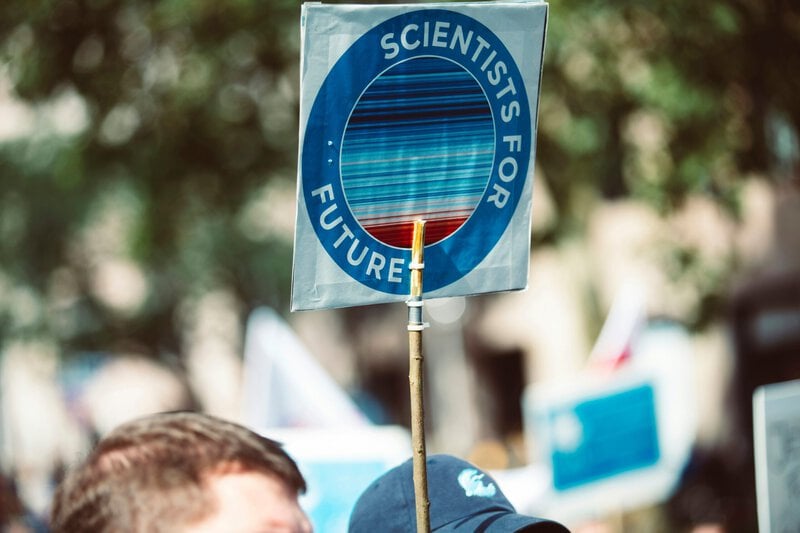
The Intergovernmental Panel on Climate Change has been unambiguous for years: limiting global warming to 1.5°C requires phasing out fossil fuels rapidly, cutting global emissions roughly in half by 2030 and reaching net zero by mid-century. The carbon budget — the total amount of greenhouse gas humanity can still emit while keeping within safe limits — is not a political estimate. It is a physical constraint, and every delayed agreement spends down what little remains of it.
The public health dimension of that constraint is no longer a matter of projection. Physicians, nurses, and health and medical leaders have called for a life-saving transition away from fossil fuels, making explicit what the data had long implied: the continued fossil fuel economy is a present-tense public health emergency, costing lives in real time through air pollution, heat stress, and climate-driven disease. The Nature Conservancy identifies phasing out fossil fuels and accelerating an equitable transition to net zero by 2050 or sooner as one of the defining issues at COP31 — not a fringe demand, but a mainstream scientific and policy consensus.
The science, in other words, is settled. What remains unsettled is whether governments will act on it — and why, repeatedly, they have not.
How Fossil Fuel Lobbying Works Inside Climate Negotiations

Fossil fuel lobbying at climate negotiations is not a conspiracy conducted in dark corridors. It is a well-resourced, legally sanctioned form of regulatory capture, operating across multiple layers simultaneously and largely in plain sight.
Research tracking COP attendees has repeatedly found fossil fuel industry representatives among the largest bloc of non-state actors at the summits — often outnumbering delegations from the world’s most climate-vulnerable nations. Industry-affiliated representatives gain access through national delegations, trade association credentials, and observer status, giving them proximity to the drafting rooms where language is made and unmade.
The lobbying playbook, documented by policy researchers, relies on a handful of durable tactics: pushing for “phase-down” language instead of “phase-out,” promoting carbon capture and storage as a substitute for actual emissions reductions, exploiting procedural rules that require full consensus to slow or block progress, and funding think tanks and consultancies that seed doubt in policy corridors long before delegates arrive. Industry influence on climate policy is therefore not just a summit phenomenon — it shapes national negotiating positions before leaders ever board their flights to Antalya.
Health advocates have drawn a pointed analogy: tobacco lobbyists are excluded from World Health Organization health talks because their financial interest in the outcome constitutes an irreconcilable conflict of interest. No equivalent rule governs fossil fuel representatives at COP. Until it does, critics argue, the structural outcome is likely to keep repeating itself.
The Psychology and Economics of Durable Industry Influence
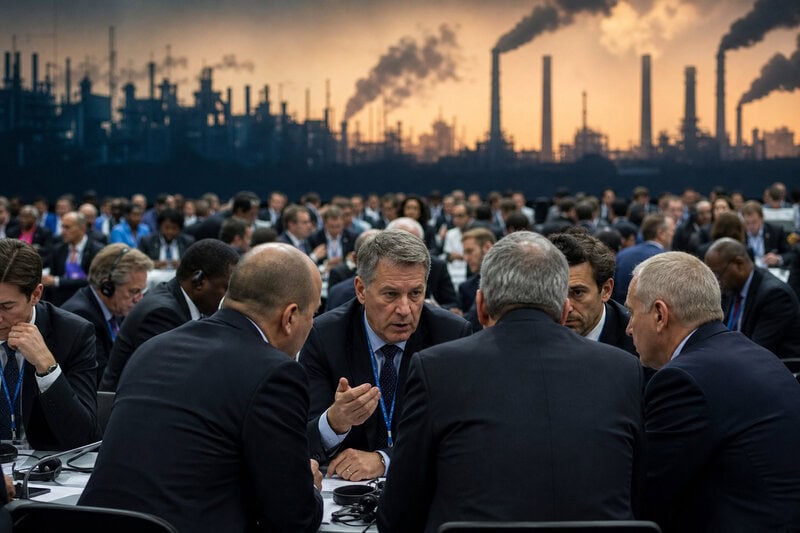
Understanding why fossil fuel industry influence at COP proves so persistent requires a brief detour into behavioral economics. Researchers describe a principle called loss aversion: people and institutions experience a concrete, immediate loss far more acutely than they value a diffuse, delayed, or shared benefit. For fossil fuel companies and petrostates, a phase-out represents exactly that — a tangible, near-term loss of revenue, assets, and political power. The benefits of a stable climate, meanwhile, are spread across billions of people and decades of future time.
This asymmetry has a direct consequence: industry actors are willing to spend vastly more per unit of political outcome than climate advocates, making their presence and influence structurally durable across negotiating rounds. Studies in political science consistently show that concentrated interests — a relatively small number of powerful companies and producer states — tend to outmaneuver diffuse interests — billions of future people with no seat at the table — in regulatory settings. COP is the ultimate expression of this dynamic, scaled to the entire planet.
COP’s consensus-based architecture compounds the problem. A single obstructive party can water down or block an agreement, which means that well-lobbied holdout nations function as effective veto players. The incentive to hold out — and to be courted for abandoning that position in exchange for weakened language — is built into the process itself.
Why Climate Agreements Keep Falling Short
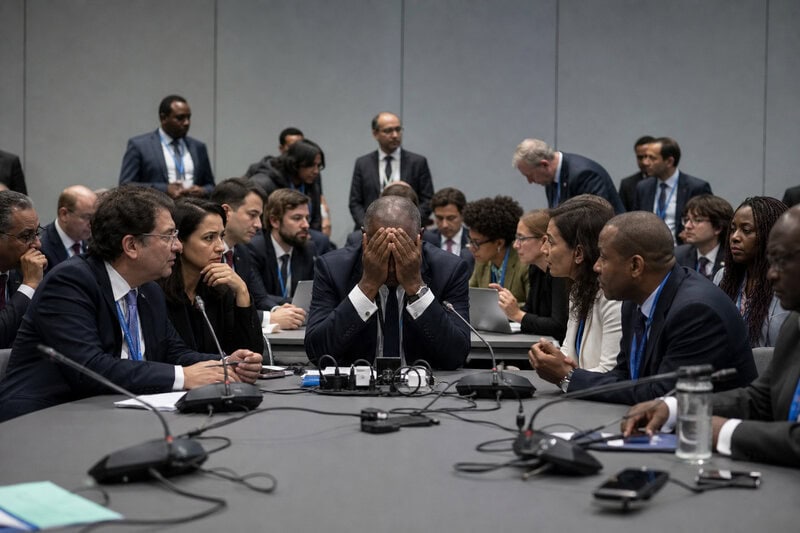
The gap between ambition and outcome at COP summits follows a recognizable pattern. More than 80 parties at a previous COP called for a clear roadmap to transition away from fossil fuels — a substantial coalition by any measure. The final text that emerged was notably weaker, a case study in how fossil fuel interests shape outcomes at the drafting table, where industry-friendly language consistently replaces binding commitments.
Experts point to three recurring mechanisms that explain why climate agreements fail to deliver on their stated ambitions. First, vague language: “phase-down” versus “phase-out” is not a semantic quibble but a legal distinction that determines whether existing fossil fuel infrastructure can keep operating for decades. Second, unenforceable commitments: pledges without penalties are expressions of intent, not obligations. Third, the absence of financial consequences for non-compliance means there is no real cost to promising more than a government delivers.
The COP31 President of negotiations has stated plainly that “We do need to get off fossil fuels – but for this to work we need planned, government-led transitions that build economic resilience, energy…” That framing is not wrong in itself, but industry interests have historically used exactly this kind of conditionality to extend timelines indefinitely, turning “planned transitions” into perpetual planning with no binding endpoint.
What an Equitable Transition Actually Requires
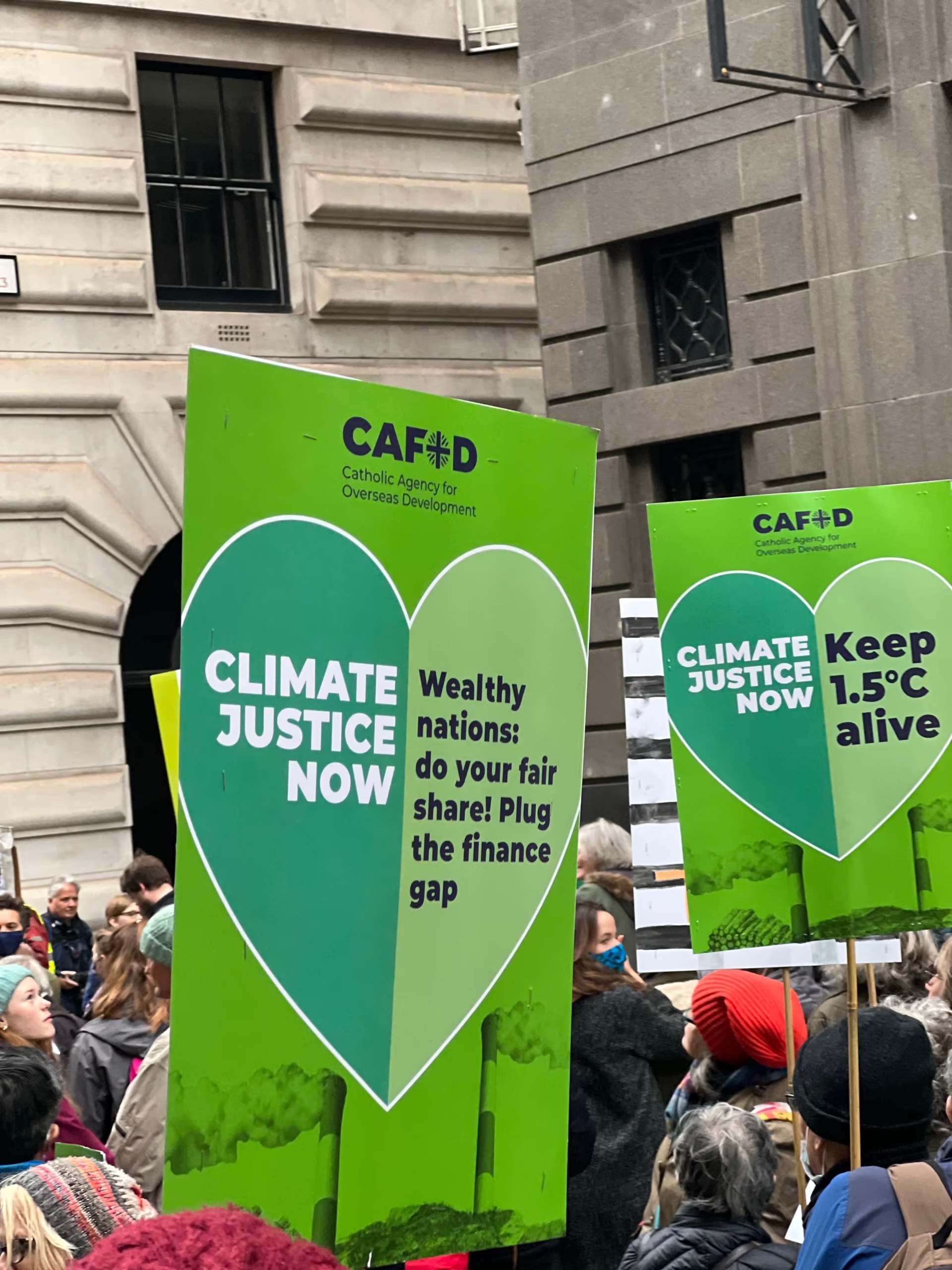
Amnesty International’s demand at COP31 is specific in a way that generic calls for climate action often are not: a phase-out that is both rapid and equitable, meaning wealthy, high-emitting nations bear more of the cost and face tighter timelines, while developing nations receive guaranteed financial support for their transitions.
This distinction matters because it addresses a core vulnerability in climate diplomacy. Nations that depend on fossil fuel revenues have rational economic reasons to resist phase-out commitments — not necessarily because their leaders are indifferent to climate risk, but because no credible economic alternative has been secured. The influence problem at COP is therefore also a finance problem. Robust, accessible climate funding — including a fully operational loss-and-damage mechanism for the most vulnerable nations — could remove the economic lever that industry interests use to keep producer states resistant to binding language.
In Antalya, health and medical communities, environmental organizations, and coalitions representing over 80 countries are aligned on the direction of travel. Civil society groups are pressing to ensure that the voices of the most affected communities — not just the best-resourced lobbies — shape what happens inside the negotiating rooms. The gap is not between science and advocacy, but between that broad coalition and the structural power of incumbent energy interests who have decades of practice, deep pockets, and procedural sophistication on their side.
What COP31 Could Actually Change
Concrete proposals on the table in Antalya include stricter conflict-of-interest rules governing COP accreditation, binding phase-out language tied to enforceable national timelines, and a fully funded loss-and-damage mechanism that gives developing nations the financial foundation to say yes to transition commitments. Each of these addresses a specific mechanism of failure rather than simply calling for more ambition in the abstract.
History offers a reason for cautious optimism alongside the frustration. The Paris Agreement demonstrated that the COP architecture can produce meaningful breakthroughs when political pressure, shifting economics, and sustained public scrutiny converge at the right moment. The agreement’s limits and implementation gaps are real and well-documented, but its existence proved that consensus is not impossible — only difficult to achieve against entrenched opposition.
COP31 in Antalya is not, by any mathematical reckoning, humanity’s absolute last chance to act on climate. But it may be the last summit at which acting within the 1.5°C limit remains achievable without heroic technological assumptions or catastrophic overshoot of safe warming thresholds. That is precisely why the lobbying pressure in those negotiating rooms will be fiercer than ever — and precisely why understanding how fossil fuel lobbying in climate negotiations actually works is not an academic exercise, but a prerequisite for demanding something better from the leaders who enter that room on the public’s behalf.