13. Scientists Camp on Moving Ice
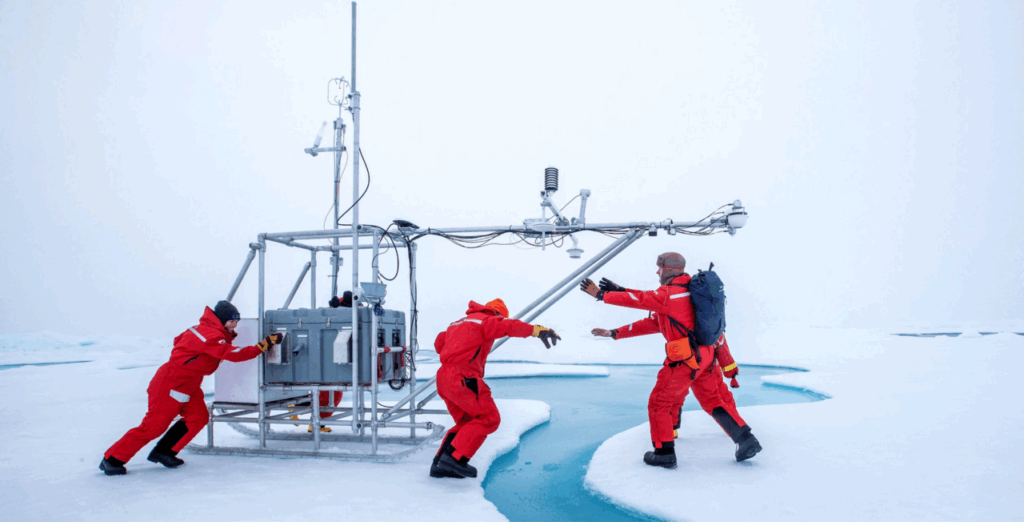
Scientific expeditions at the North Pole often establish research stations on drifting sea ice, facing unique challenges due to the ice’s constant movement. For instance, the MOSAiC expedition (2019-2020) involved the German research icebreaker Polarstern becoming trapped in the Arctic sea ice, allowing scientists to study the Arctic climate system over a full annual cycle. (en.wikipedia.org) Similarly, the Fram-2014/15 project saw a two-man crew set up a hovercraft-based ice station, spending over a year adrift on the ice to collect ocean sediments for geological studies. (eos.org) These endeavors require meticulous planning and adaptability, as researchers must contend with extreme cold, isolation, and the unpredictability of ice floe movements. Such studies are crucial for understanding Arctic processes and their global implications.