7. Rather than sleeping for many hours at night, penguins tend to take short naps during the day and evening.

Penguins have the unique ability to sleep while standing up or in the water. On occasion, they will also sleep with their bills tucked under their wings to maintain their body heat. Unlike humans, penguins never really fall asleep. Since they are often prey for predators such as leopard seals and sharks, they have to remain alert and on guard to some extent. Therefore, rather than going into a deep slumber like many other animals, they take several short naps throughout the day. On average, each nap lasts a few minutes. To provide additional protection from their predators, experts can find penguins sleeping in groups. The close arrangements offer not only security but also add warmth. People have observed penguins resting on land. However, since they are often at sea for periods of up to nine months, it is assumed that penguins also nap while they are in the ocean.
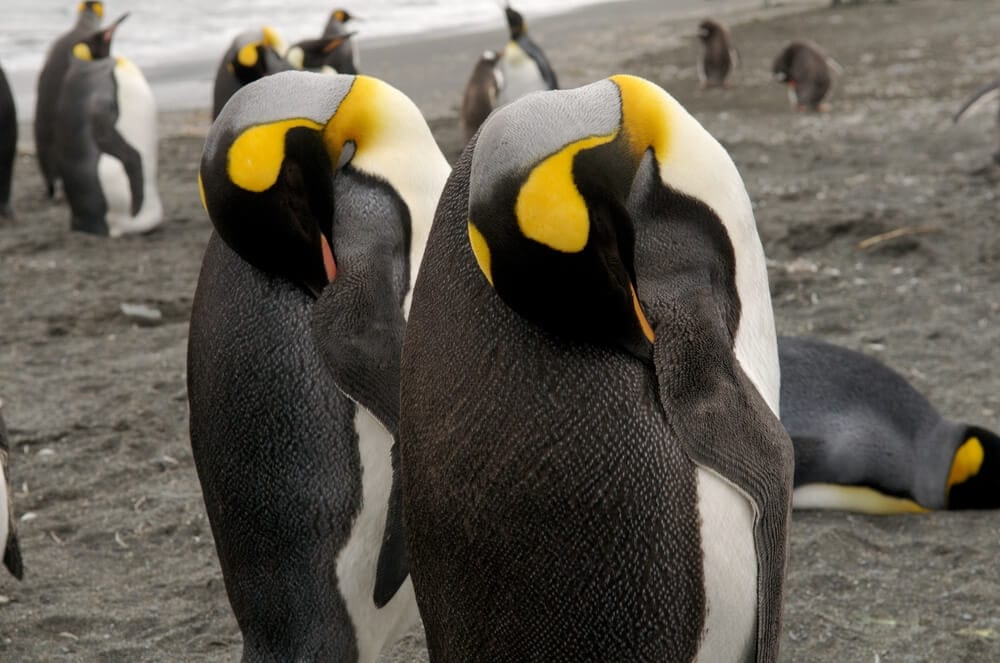
Similar to humans, penguins appear to enjoy a more restful nap if their stomachs are full. Some penguins, such as Emperor penguins, are frequently found sleeping standing up. While this sleeping position does not sound comfortable to humans, there is a very logical reason. By standing up, the penguin does not come in contact with the cold ground. Only its well-insulated feet are subject to the harsh cold. You can find other penguins such as King penguins sleeping on their stomachs. Like humans, each penguin sleeps in a safe, comfortable, and warm position.