The real conundrum of theoretical physics is black holes.
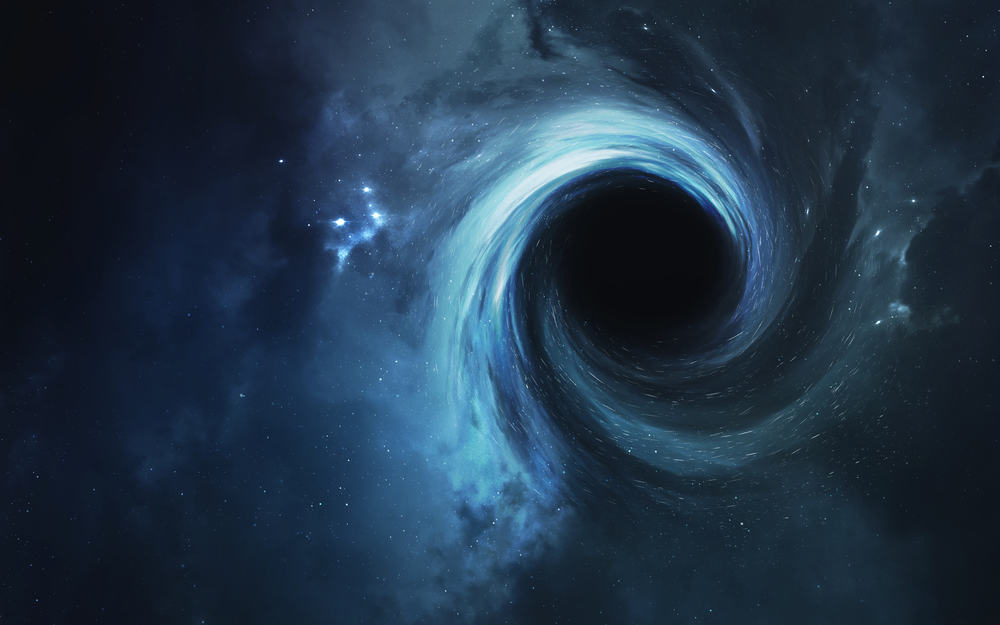
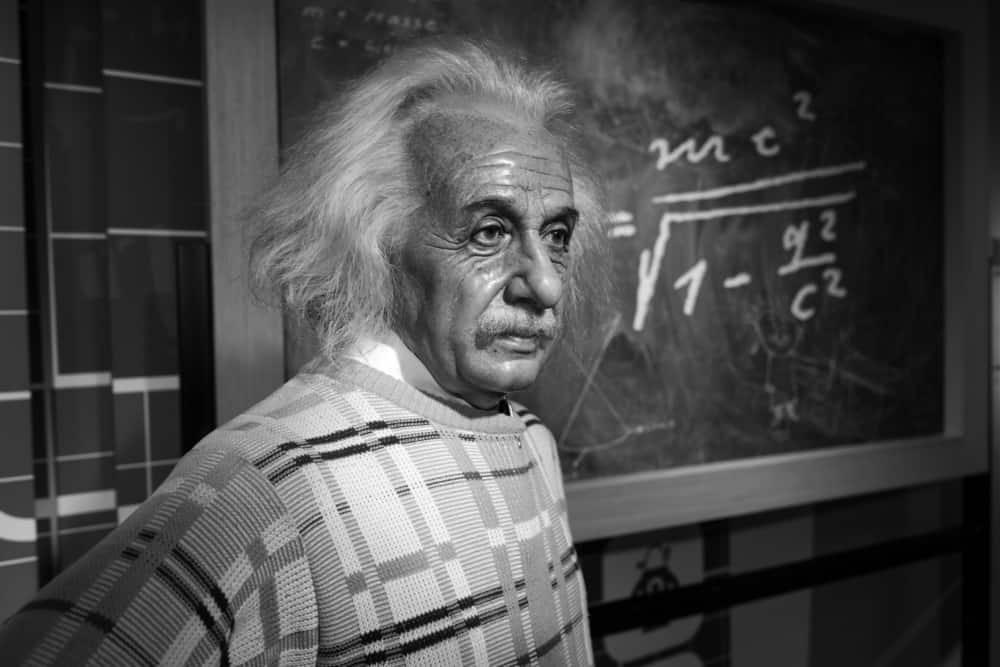
When Albert Einstein constructed his theories of relativity in the early twentieth century, he posited the existence of immense gravitational wells that are so dense that nothing, not even light, can escape them. These gravitational wells are now known as black holes, and they have moved from a hypothesis to fact because scientists have seen them. They occur when dying stars collapse in on themselves, and all of the star’s mass becomes contained in a tiny point. These points are so dense, containing so much matter in such a small space, that they have an infinite amount of gravity that turns them into cosmic vacuum cleaners. When something comes too close, the black hole sucks it in, and it is never seen again.
While black holes follow the laws of physics – so well that Einstein predicted their existence – they also break physics laws. Black holes have so much gravity that they cause time itself to stop. Moreover, they have absolutely no interaction with the universe that exists outside of their event horizon (the boundary within which the black hole can suck in matter and light). Black holes are kind of the ultimate guardians of the galaxy. One idea that many theoretical physicists generally accept is that as the universe decays and stars burn out – many of them collapsing into black holes – much of the information that had once been contained in our universe will be inside of black holes. In this sense, they are sort of like libraries. However, all of the pages have been torn out of the books, and the information is completely scrambled.