13. Horse Chestnut (Aesculus hippocastanum)
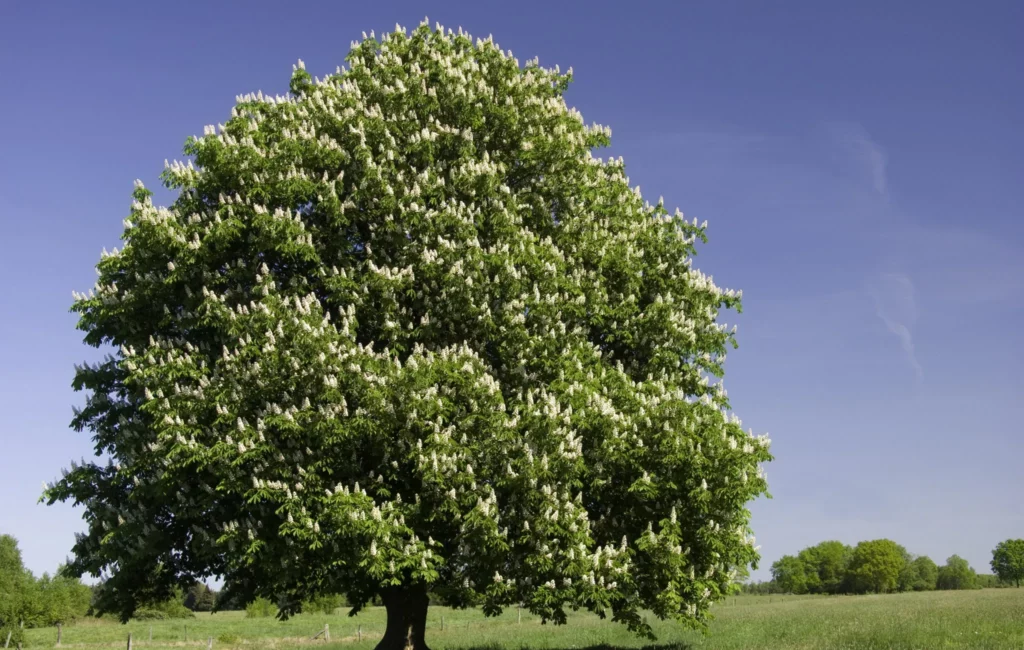
Children collecting conkers rarely suspect they’re handling potential poison. Every autumn, these glossy brown seeds tempt collectors, but their high concentration of aesculin tells a different story. Ingesting just a few raw seeds can trigger severe gastrointestinal havoc. The tree’s creative chemistry doesn’t stop there. Its flowers and leaves contain additional compounds that can cause paralysis in livestock. Most intriguing is its method of toxin distribution: younger trees actually contain higher concentrations, possibly as an evolutionary defense mechanism.