St.Augustine Sea Monster
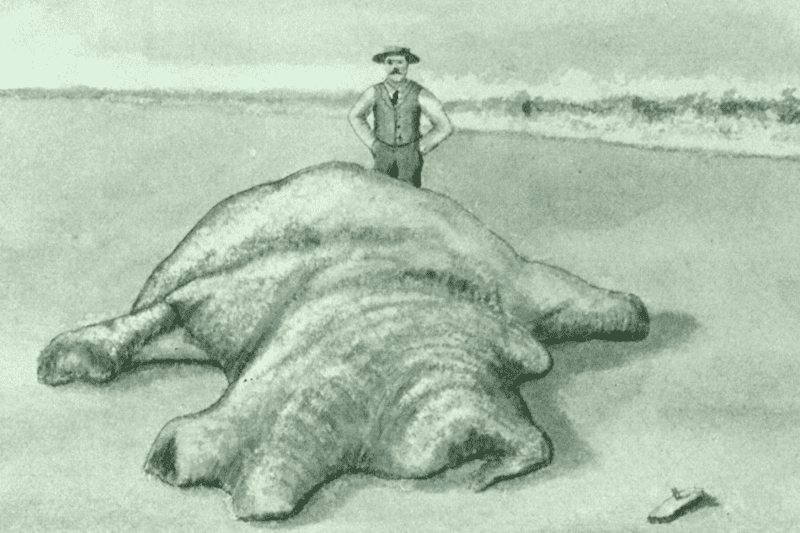
St. Augustine, with its rich history, harbors captivating tales, and among the most intriguing is the legend of the St. Augustine Sea Monster, also known as the St. Augustine Blob. In 1896, two boys stumbled upon a massive fleshy mass on Anastasia Island’s beach, sparking curiosity and a series of events that would puzzle scientists for years. Local physician and founder of the St. Augustine Historical Society, Dr. DeWitt Webb, examined the remains, speculating it to be an enormous cephalopod.
This sparked a correspondence with Professor A. E. Verrill of Yale University, initially suggesting a new species of giant octopus. However, subsequent analysis, including electron microscopy and DNA testing, debunked this notion, confirming the mass as long-decomposed whale remains. Despite scientific consensus, the mystery persists among some who still entertain the idea of an undiscovered ocean giant.
The St. Augustine Monster’s saga is a testament to the enduring allure of maritime mysteries and the complexities of scientific discovery. Despite the initial excitement over the possibility of a colossal cephalopod, meticulous analysis and advancements in technology eventually revealed the truth – the remains were those of a deceased whale. This revelation, supported by DNA evidence, debunked the kraken-like theories that persisted for decades. Yet, the story endures, capturing the imagination of those intrigued by the unknown depths of the ocean.