The Sea Serpent of Gloucester
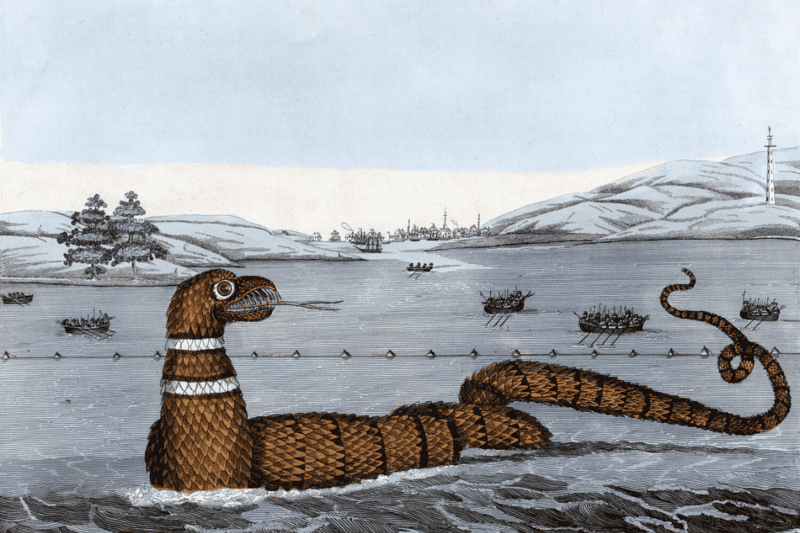
Two centuries ago, reports surfaced of an elusive sea serpent captivating the residents of Gloucester Harbor in Massachusetts. Initially dismissed, the sightings gained momentum, with descriptions becoming increasingly dramatic throughout August 1817. The serpent was said to have a humped back, long neck, and tail, with a body ranging from 10 to 42 feet in length.
Witnesses observed peculiar movements, comparing it to a caterpillar or a snake slithering sideways. The Linnean Society of New England, comprised of amateur naturalists, took interest in the phenomenon, conducting a detailed examination and concluding that a sea serpent had indeed visited Gloucester Harbor.
This extraordinary event unfolded during a turbulent period in American history, marked by the aftermath of the War of 1812 and the global disruptions caused by Mount Tambora’s eruption in 1815, leading to the infamous “year without a summer” in 1816. Amidst such uncertainties and limited scientific understanding, the sea serpent sightings found resonance, and the Linnean Society embraced the challenge, even identifying a purported new genus, Scoliophis Atlanticus.
However, the society’s aspirations for international acclaim came crashing down when, in 1818, Captain Richard Rich successfully harpooned the supposed sea serpent, revealing it to be a large horse mackerel, later identified as an Atlantic bluefin tuna. A subsequent dissection of the so-called “baby sea serpent” exposed it as a common black snake with tumors. The Linnean Society, chastened by these revelations, disbanded in 1822, leaving behind a tale of fascination and misinterpretation.