The Aspidochelone
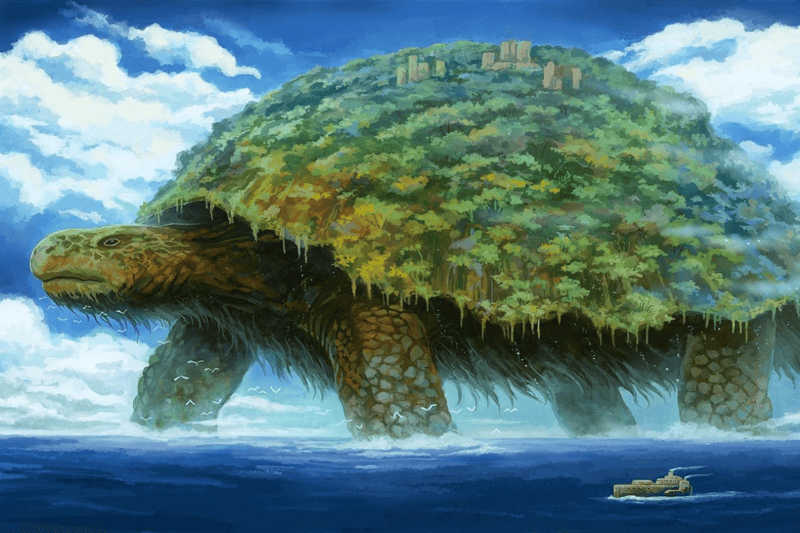
Islands, those stationary wonders in the vast ocean, evoke images of serene getaways or the foundations of nations. However, the legendary aspidochelone challenges the idea of immobility, presenting a colossal turtle said to lure unsuspecting sailors to a watery grave. The name, derived from Greek, translates to “shielded turtle,” emphasizing its purported protective shell.
Described alternatively as a giant whale in some tales, the aspidochelone is renowned for its deceptive allure—rising to the surface, resembling an enticing landform, and ultimately submerging, drowning those who dared to step onto its back. This maritime myth has deep historical roots, surfacing in Old English poems, religious texts, and even influencing renowned authors like J. R. R. Tolkien.
Originating in the 7th century with Saint Isidore of Seville, who envisioned sea monsters emitting water, the myth gained momentum through subsequent writings by Guillaume de Clerc and Bartholomaeus Anglicus. The Legend of Saint Brendan and stories from Greenland, Chile, Asia, and beyond further embellished the tale.
Astonishingly, parallel versions of the aspidochelone myth emerged globally, transcending cultural boundaries. Not confined to ancient lore, this colossal turtle has infiltrated popular culture, making appearances in video games like The Legend of Zelda and manga such as Naruto. So, whether in the pages of ancient texts or the pixels of contemporary entertainment, the enduring saga of the aspidochelone persists, cautioning sailors and captivating imaginations across time and cultures.