
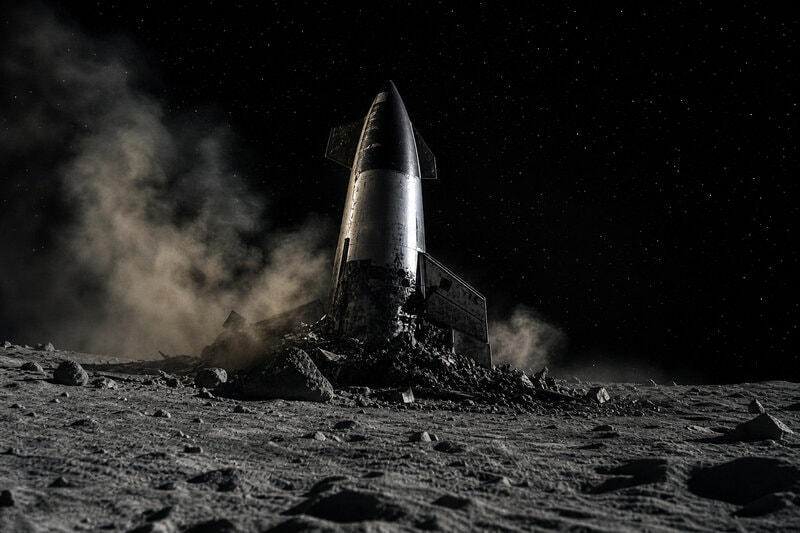
On August 5, a spent SpaceX Falcon 9 upper stage — weighing approximately 4.5 tons, roughly the mass of a large African elephant — slammed into the lunar surface near Einstein Crater, carving a fresh scar into the moon and forcing a long-overdue conversation about a hazard that engineers and policymakers have so far treated as a distant problem. It is not distant. Experts now describe what happened as illustrating “a tangible operational risk” of lunar settlement — one that will intensify in direct proportion to how quickly humanity accelerates its return to the moon.
A 4.5-Ton Wake-Up Call from Einstein Crater
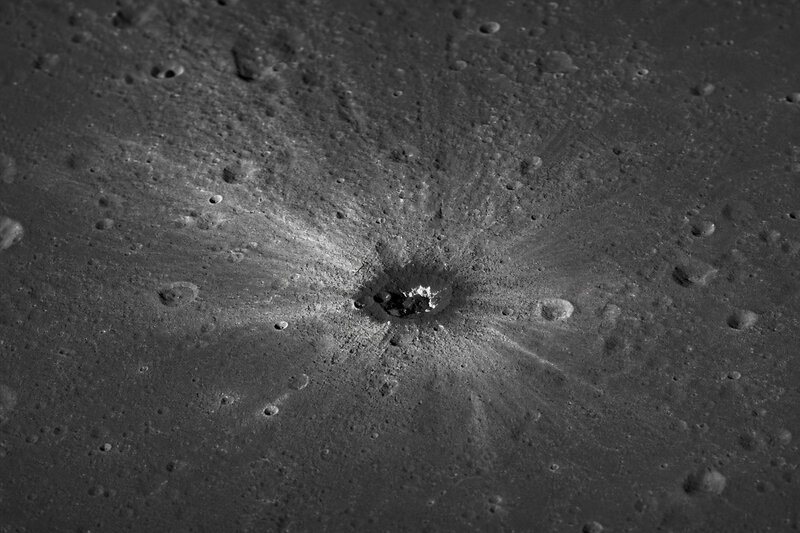
The uncontrolled impact was not a surprise to astronomers. Orbital-mechanics analysts identified the errant rocket body months in advance, calculated its eventual intersection with the lunar surface, and gave observatories worldwide enough lead time to train their telescopes on the moon’s far northwestern limb with a specific goal: capturing the dust plume the crash would generate. What began as an embarrassing piece of unmanaged space hardware became, by necessity, an accidental scientific experiment. That scientists had to improvise a research opportunity from a mishap is itself instructive about the current state of cislunar debris governance.
Einstein Crater is a large and ancient impact basin. It now hosts a new, human-made crater alongside billions of years of naturally formed ones. That juxtaposition is more than symbolic — it is a data point in a pattern that planetary scientists and space-policy researchers say will become increasingly common as lunar missions multiply through the 2020s and 2030s under programs including NASA’s Artemis, international government initiatives, and a growing roster of commercial operators.
What Actually Hit the Moon — and Why No One Steered It Away
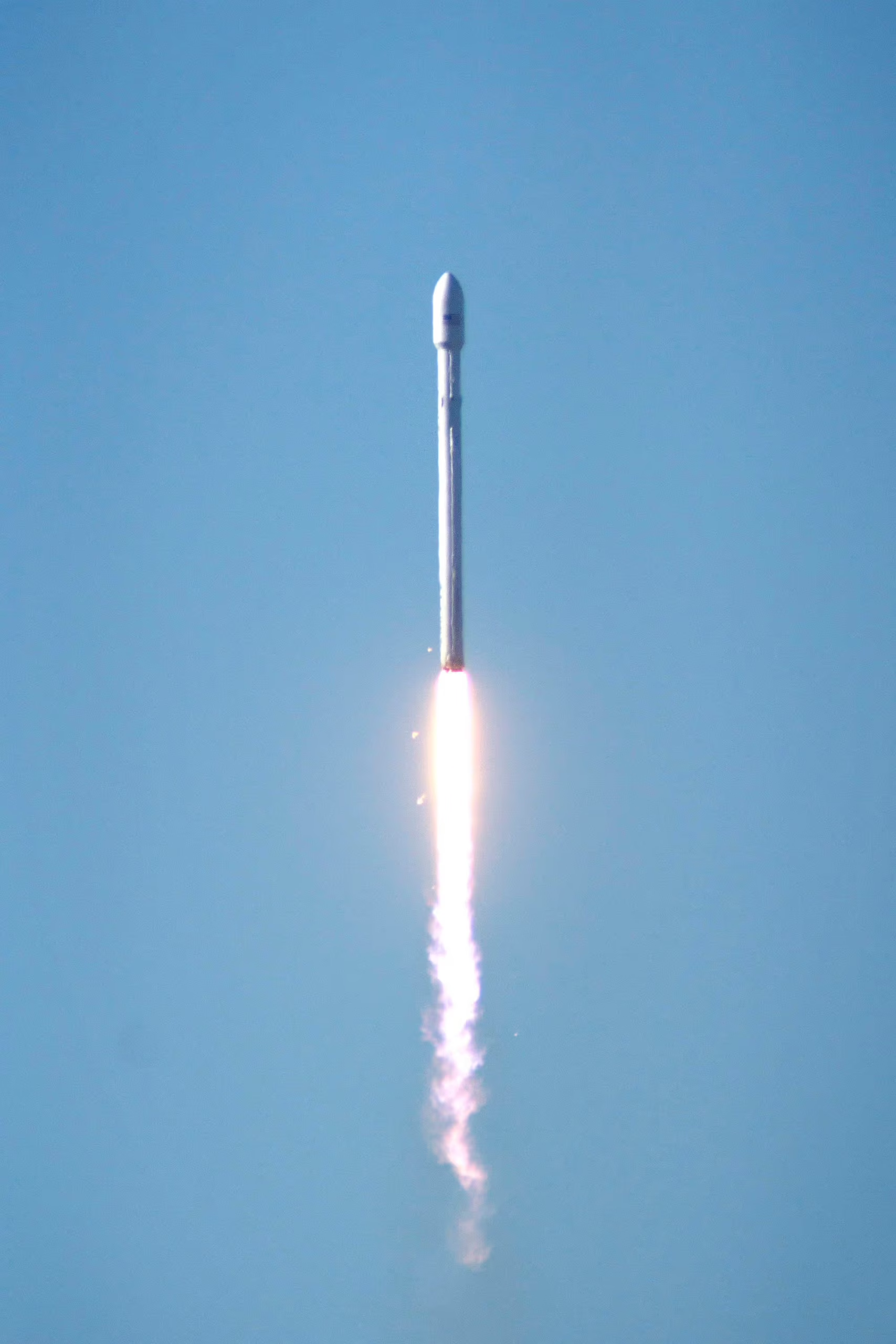
The object was the second stage of a Falcon 9 rocket — the upper-stage booster that separates from its payload after delivering a spacecraft to orbit and is then abandoned because it carries no remaining propellant for a controlled deorbit burn. This is a routine outcome of current launch architecture, not an anomaly. Unlike the Falcon 9’s first stage, which SpaceX has made famous for its propulsive return landings on Earth, upper stages are typically left on high-energy trajectories where Earth’s gravity cannot reliably draw them back for atmospheric reentry. They wander for years or decades under the competing gravitational influence of the Earth, Moon, and Sun — a dynamic orbital environment in which small perturbations compound over time into large, hard-to-predict trajectory changes.
Once hardware is stranded on these deep-space trajectories, the window for intervention closes quickly. Without onboard propulsion or a deorbit plan built into the mission from the start, the rocket body becomes a passive object subject entirely to celestial mechanics. The implications of that reality for future lunar infrastructure are significant and underappreciated, according to analysts who have studied the incident. Predicting exactly when and where such an object will hit is difficult; preventing it from hitting at all, after the fact, is essentially impossible with current technology.
The Accidental Experiment: Reading the Ejecta
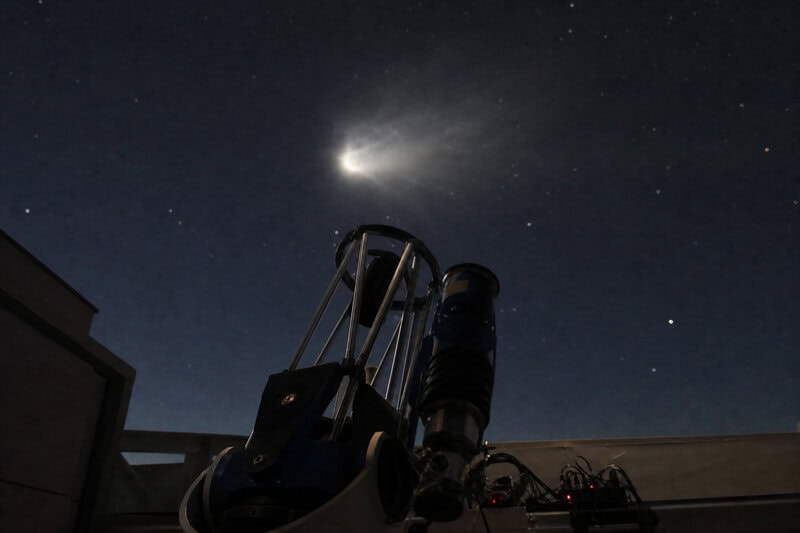
Because the impact time and location were calculated in advance, astronomers were able to observe the collision with deliberate scientific intent. Their primary target was ejecta — the material blasted outward from the surface by the force of impact. Measuring how much ejecta a strike produces, and characterizing the size and distribution of its particles, reveals information about lunar regolith: the layer of fine, fragmented rock and dust that blankets the moon’s solid bedrock to depths of several meters.
Regolith behaves in ways that differ markedly from Earth soil. It is electrostatically charged, extraordinarily fine-grained, and — in the absence of any atmosphere — subject to no aerodynamic drag whatsoever. A particle lofted by an impact on the moon travels in a pure ballistic arc, covering extraordinary distances before settling back to the surface. Understanding how regolith responds to high-energy strikes is directly relevant to engineers designing the foundations, landing pads, and pressurized habitats of a future moon base, because every rocket that lands on or near such a facility will itself be a smaller-scale impactor.
NASA’s Lunar Reconnaissance Orbiter (LRO), which has documented numerous natural and artificial impact sites, represents one institutional node of the scientific infrastructure capable of extracting data from such events. The broader point on which planetary scientists agree is this: opportunistic observation of accidental impacts can generate useful science, but it is not a substitute for prevention. Studying ejecta tells researchers how damaging an impact is — not how to stop one from occurring beside a crewed outpost.
Why the Moon Has No Natural Defense
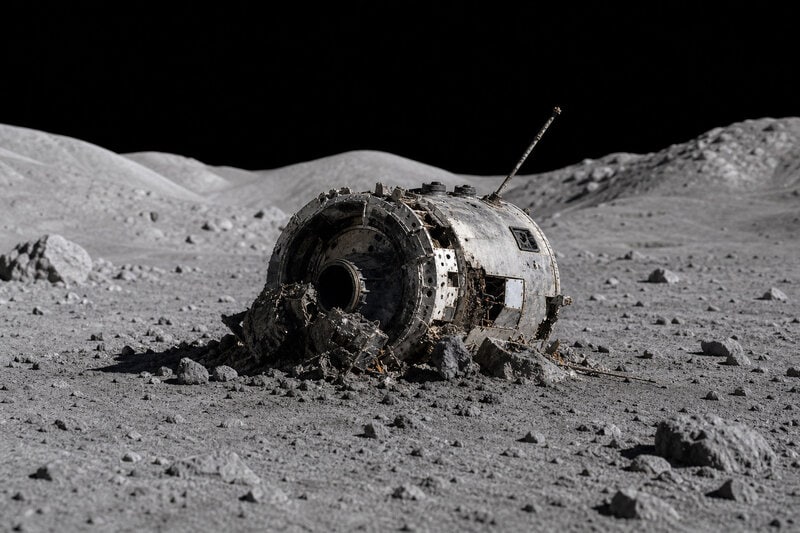
Earth’s thick atmosphere is a highly effective shield. It burns up the vast majority of space debris — from micrometeorites to much larger objects — before they reach the ground. The moon has virtually no atmosphere. Every piece of hardware on an intersecting trajectory strikes the surface at full velocity, without thermal ablation or aerodynamic deceleration to reduce the energy of the strike.
Typical impact velocities for debris moving through cislunar space — the region between Earth and the Moon — range from roughly 2 to 8 kilometers per second. At those speeds, even a relatively modest object carries enough kinetic energy to excavate a crater tens of meters wide and spray sharp regolith fragments across a broad radius. The 4.5-ton Falcon 9 upper stage is not a modest object. Before the impact occurred, scientists had already flagged the collision as a case study in the risks that accompany expanding lunar activity, precisely because the energy involved is orders of magnitude beyond what any near-term habitat shielding is designed to absorb.
Experts are careful to note that a single uncontrolled rocket body does not pose an existential threat to isolated infrastructure — no lunar base was present near Einstein Crater to be damaged. But that framing misses the structural point. The cumulative operational risk from debris, spent stages, and discarded mission hardware rises nonlinearly as the volume of lunar traffic increases. A hazard that is manageable when there are a handful of missions per decade becomes a serious engineering constraint when there are dozens per year.
What “Tangible Operational Risk” Actually Means
The phrase “tangible operational risk,” which experts have used in connection with this crash, carries a specific meaning in safety engineering. It describes a hazard that is not merely theoretical, has a calculable probability of recurrence, and demands active mitigation rather than passive acceptance. It is the language of engineering disciplines that have learned — often through costly incidents — that systemic vulnerabilities must be addressed before the stakes rise, not after.
Current international space law is poorly equipped to address this hazard at the lunar surface. The 1967 Outer Space Treaty and the 1972 Liability Convention — the foundational legal instruments governing human activity in space — do not include specific provisions for lunar debris management or impact-risk mitigation around surface infrastructure. The UN Committee on the Peaceful Uses of Outer Space (COPUOS) has developed guidance suggesting that responsible cislunar operators should plan for controlled disposal of high-energy upper stages, but binding enforcement mechanisms do not currently exist. Space-policy researchers have flagged this legal gap as increasingly urgent as mission traffic grows.
- No atmospheric protection: Unlike Earth, the moon offers zero natural defense against incoming debris of any size.
- High impact velocities: Cislunar debris typically strikes at 2 to 8 kilometers per second, generating craters and high-velocity ejecta fields.
- Electrostatically charged regolith: Lofted dust travels ballistically across vast distances, threatening equipment and pressure suits far from an impact site.
- No binding debris law: Existing international frameworks do not regulate cislunar debris disposal or impose impact-risk mitigation requirements on mission operators.
- Accelerating traffic: The number of cislunar objects capable of becoming uncontrolled impactors will grow proportionally with mission volume through this decade and the next.
What a Lunar Base Would Actually Face
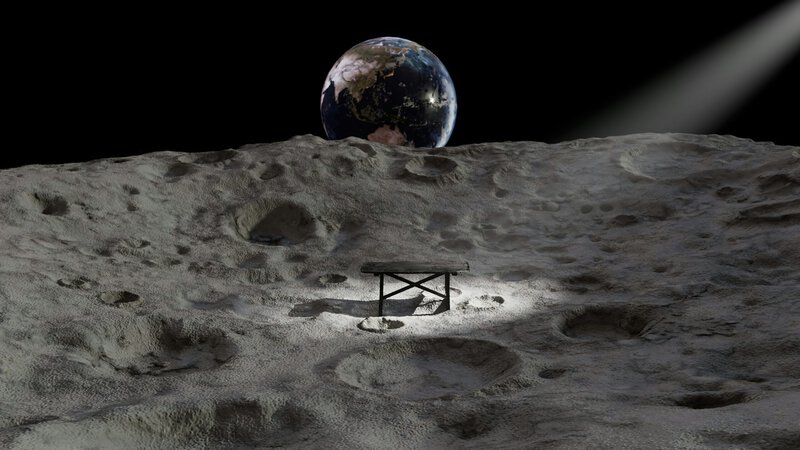
A permanent lunar settlement — most likely sited at the south pole, where water ice locked in permanently shadowed craters makes it the leading candidate location for a sustainable human presence — would need to account for two distinct but related hazards. The first is the direct blast radius of an impact: the crater itself, the pressure wave transmitted through the regolith, and the immediate ejecta field. The second, and in some ways more insidious, is the secondary hazard of fine regolith particles traveling ballistically across the surface after being lofted by the strike — particles that can travel kilometers before resettling, abrading solar panels, clogging seals, and contaminating optical instruments.
Engineers designing lunar habitats have historically focused their shielding specifications on micrometeorites — naturally occurring debris smaller than one centimeter — because that is the dominant threat in the statistical baseline of natural bombardment. The threat spectrum now broadens to include artificial macro-debris: rocket bodies, defunct spacecraft, and hardware discarded during surface operations, all of which can strike with far greater energy than any micrometeorite. Existing shielding standards were not written with that expanded threat in mind.
Mitigation strategies under active discussion in the aerospace engineering community include siting critical habitat modules in natural depressions or lava tubes to exploit passive geological shielding, establishing formal exclusion zones around surface infrastructure analogous to maritime safety corridors, and developing real-time cislunar tracking networks capable of detecting threats too small for current Earth-based radar to resolve. None of these approaches is technically trivial, none is currently funded at scale, and none is mandated by any international agreement.
Risk analysts would describe the Falcon 9 upper-stage impact near Einstein Crater as a sentinel event — an incident that, while not catastrophic in isolation, reveals a systemic vulnerability in planning assumptions. The canonical lesson of sentinel events in safety-critical industries is that they must be taken seriously precisely because they occur before the stakes are maximized, while there is still time to act. The lunar debris risk exposed by this crash is a warning with a clear expiration date on the window to address it.
The Broader Lesson: Managing the Moon’s New Traffic Problem
The SpaceX rocket’s uncontrolled lunar impact is a concrete data point in a larger and accelerating pattern. As humanity’s footprint on and around the moon expands — through crewed missions, commercial landers, scientific probes, and the permanent infrastructure of settlement — the probability that hardware will reach the lunar surface uncontrolled will increase unless governance frameworks are deliberately designed to prevent it. Debris management, currently an afterthought in most lunar mission planning, must become a first-order safety consideration before crewed outposts are in place to bear the consequences.
The incident has renewed calls among space-policy researchers for an international lunar debris registry, standardized end-of-life disposal requirements for cislunar hardware, and coordinated tracking infrastructure that goes meaningfully beyond frameworks currently applied to Earth orbit. Those frameworks, imperfect as they are in low Earth orbit, at least exist in codified form and carry some institutional enforcement weight. In cislunar space, that architecture is largely absent — and the missions that will test its absence are already being planned and funded.
What the 4.5-ton Falcon 9 upper stage left behind near Einstein Crater is more than a fresh impact scar. It is an empirical argument — written in regolith — that the dangers of lunar settlement are not hypothetical futures to be addressed in some later phase of planning, but operational realities that must be engineered around, regulated, and respected today. The moon does not forgive negligence, and it does not offer second chances.