British Aerospace HOTOL
Concept Led By: N/A
Companies Involved: British Aerospace & Rolls-Royce
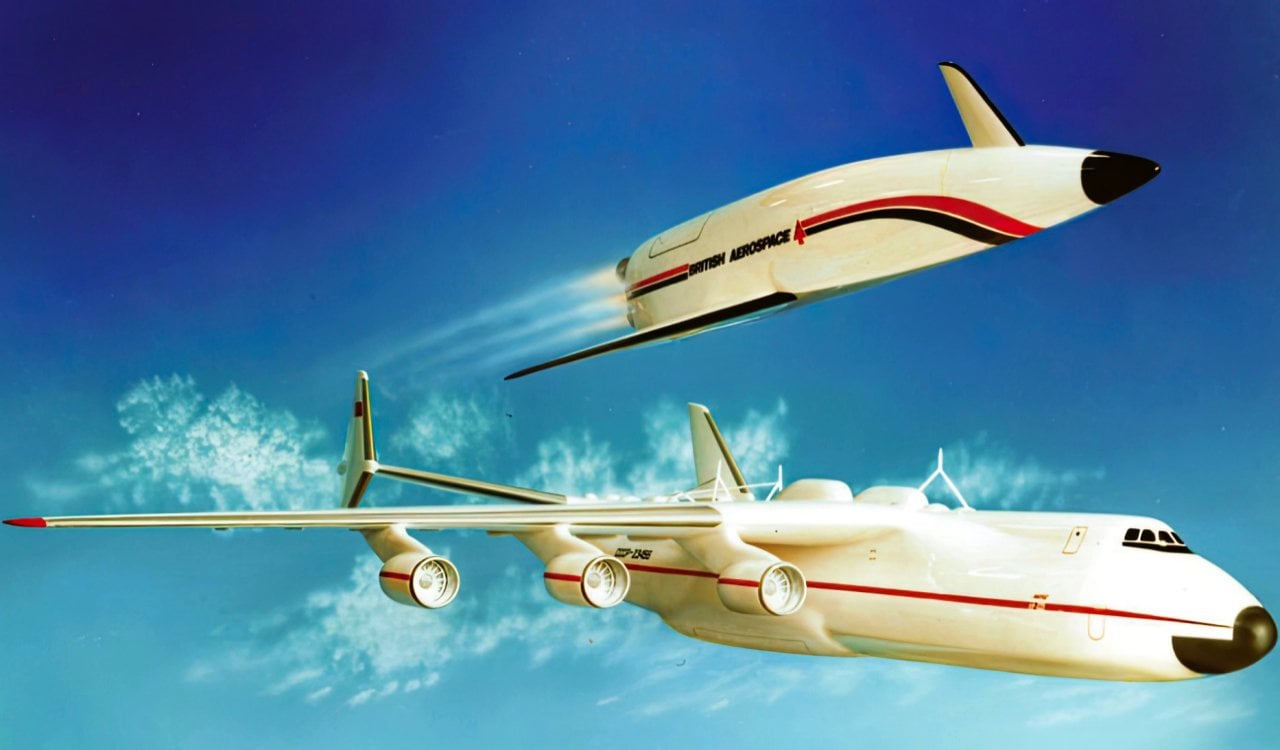
In the 1980s, the British government as well as several British companies wanted to get involved in space. That led to an explosion of spacecraft designs being seen by the British Government. That included one design by British Aerospace and their unique partner in the venture, Rolls-Royce. Known mostly for their high-priced luxury automobiles, people forget that they have been involved in the aerospace industry for a long time. This joint design was a single-stage-to-orbit spaceplane powered by an airbreathing jet engine. This was a reusable, winged launch vehicle which they named HOTOL. An RB545 or Swallow jet engine would be used, but they needed proper fueling. This led to the decision to use a combo of liquid hydrogen and liquid oxygen.
Yet they also wanted to dramatically reduce the amount of oxidizer needed to be carried on board. To do this, their plan was to use atmospheric oxygen as the spacecraft climbed through the low-Earth atmosphere. Oxidizers do tend to be the main source of takeoff weight, so HOTOL would be much smaller than a normal rocket. In fact, the design made it no larger than a medium-haul airliner. There was proof of concept studies done with some positive results, but the issue was getting a space program to be interested. NASA had some interest but not enough to move forward. The relatively new, low-budget European Space Agency seemed to lack any real interest either. Since the British Government did not want to split from the ESA, the HOTOL design never moved forward. This was on top of considerable technical issues.