
SpaceX is preparing to attempt something that has never been done in the history of spaceflight: catching two massive rocket stages — a Super Heavy booster and a Starship upper stage — with the same launch tower in a single mission. With Booster 22 now rolled out to the launch pad at Starbase, Texas, for a critical structural test, Starship Flight 15 is moving from ambition to reality.
The Squeeze Test: A Stress Exam for a Steel Giant
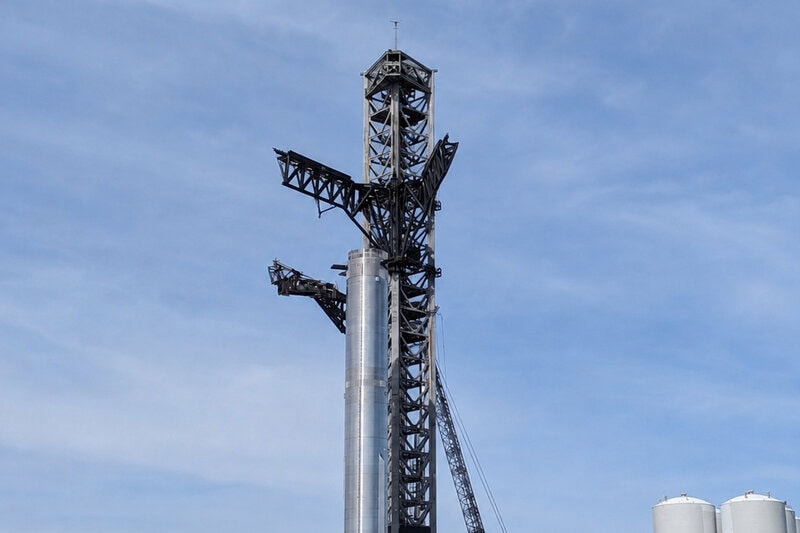
Before Booster 22 ever fires a single Raptor engine, it must prove it can handle the punishment of flight — without leaving the ground. That is exactly what the squeeze test is designed to verify. Technicians apply controlled lateral pressure to the booster’s outer shell, grid fins, and load-bearing joints, simulating the aerodynamic and mechanical forces the vehicle will experience during atmospheric re-entry and the final moments of a tower catch.
Engineers are looking for any weakness in the vehicle’s frame that could cause a failure when real stresses arrive — at several hundred kilometers per hour, with the entire mass of a 71-meter steel rocket bearing down on the launch tower’s mechanical arms. Only after passing this checkpoint will Booster 22 advance to full static fire testing, where all of its Raptor engines ignite simultaneously while the vehicle remains bolted to the ground.
Passing the squeeze test also clears the path toward stacking — placing the Starship upper stage on top of Booster 22 for integrated testing — and ultimately toward a launch attempt currently targeting November 13, 2026. That date remains subject to change depending on how each preceding milestone unfolds.
Mechazilla: The Chopstick Arms That Catch Skyscrapers
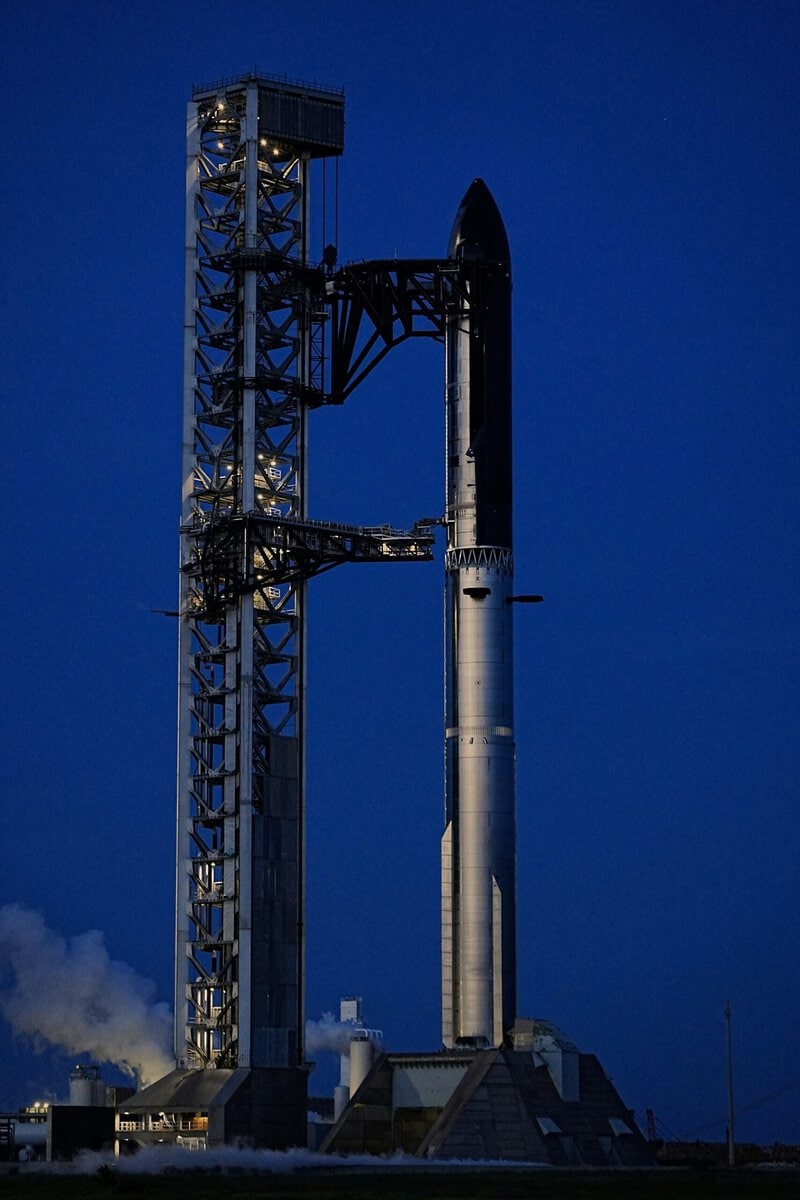
The launch tower at Starbase stands roughly 146 meters tall and features two enormous articulated steel arms that SpaceX has nicknamed “chopsticks.” Together, the tower and its arm system have been informally dubbed Mechazilla by the spaceflight community. On previous Starship flights, SpaceX already used this system to demonstrate single-booster catches — intercepting a returning Super Heavy with remarkable precision using real-time sensor data, software commands, and hydraulic arm control.
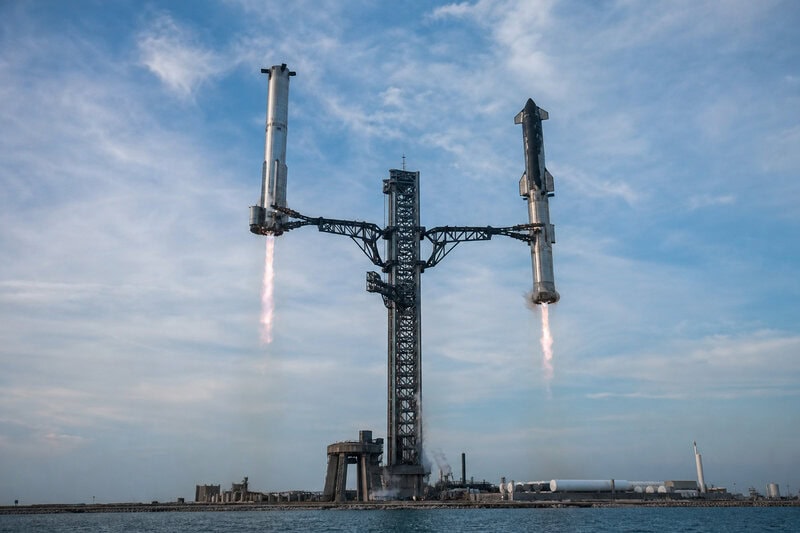
For Starship Flight 15, the same tower infrastructure must execute two sequential catch operations: first snagging the Super Heavy booster as it returns from downrange, then capturing the Starship upper stage as it completes its own re-entry. The arms do not simply stop a falling rocket — they absorb enormous kinetic energy through controlled hydraulic resistance, acting more like a catcher’s mitt than a rigid wall. At this scale, that distinction matters enormously.
The Physics of Catching a Falling Skyscraper — Twice
To appreciate why a double catch is so difficult, it helps to understand the physics governing each intercept. The governing principle is impulse: force equals the change in momentum divided by the time over which that change occurs. In plain terms, the longer the chopstick arms can extend the deceleration window as the booster arrives, the lower the peak stress on both the vehicle and the tower structure. Extending the catch by even fractions of a second meaningfully reduces the forces involved.
The Super Heavy booster performs a boostback burn to reverse its trajectory and return to the launch site, followed by a final landing burn to bleed off velocity before the arms close. Even with those burns complete, the arms must handle any residual lateral drift and downward momentum from a vehicle weighing hundreds of tonnes.
The Starship upper stage presents an entirely different challenge. It re-enters the atmosphere belly-first, using aerodynamic drag across its broad flap surfaces to dissipate energy — a technique sometimes called a “belly flop.” Only in the final moments does it flip to vertical for the catch. Its trajectory, timing, and mass distribution differ substantially from the booster’s return profile.
Coordinating two separate high-energy intercepts from one tower means SpaceX’s flight computers must manage two distinct re-entry profiles, two separate landing burn sequences, and two arm-closure events — all without the tower sustaining damage between the first and second catch. The engineering complexity of sequencing both recoveries is genuinely unprecedented in the history of rocketry.
Why Catching Both Stages Changes the Economics of Space Access
Rapid reusability is the entire economic engine behind Starship. If SpaceX can recover, inspect, and re-fly both the booster and the upper stage quickly — the way an airline turns around an aircraft — the marginal cost per launch drops dramatically compared to expendable rockets discarded in the ocean after a single use.
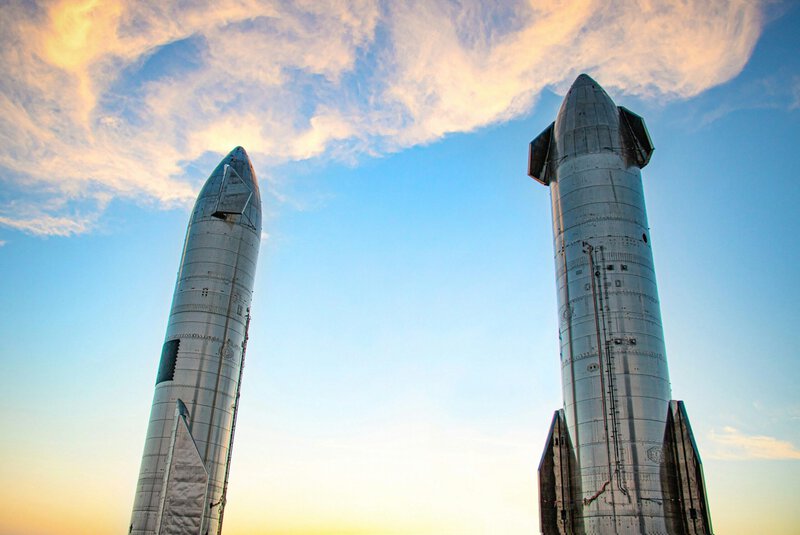
The Starship upper stage is especially valuable hardware. It houses the payload volume intended for satellites, cargo, and eventually crew, along with six Raptor vacuum engines optimized for operation in space. Losing that vehicle to the ocean on every flight would represent an enormous recurring expense and constrain the launch cadence SpaceX needs to make the system economically viable.
A successful double catch on Flight 15 would be the first operational proof that the full Starship system can be treated more like a reusable aircraft than a single-use rocket. SpaceX’s stated ambition of launching Starship multiple times per day from a single pad depends entirely on this architecture working as designed. Without consistent dual recovery, that goal remains theoretical.
The stakes extend beyond economics. Full reusability of both stages is a prerequisite — not a bonus — for the lunar and Mars mission architectures SpaceX has publicly outlined. Flight 15 is the first real-world test of whether that architecture can actually function end-to-end.
What Has to Go Right Before Launch Day
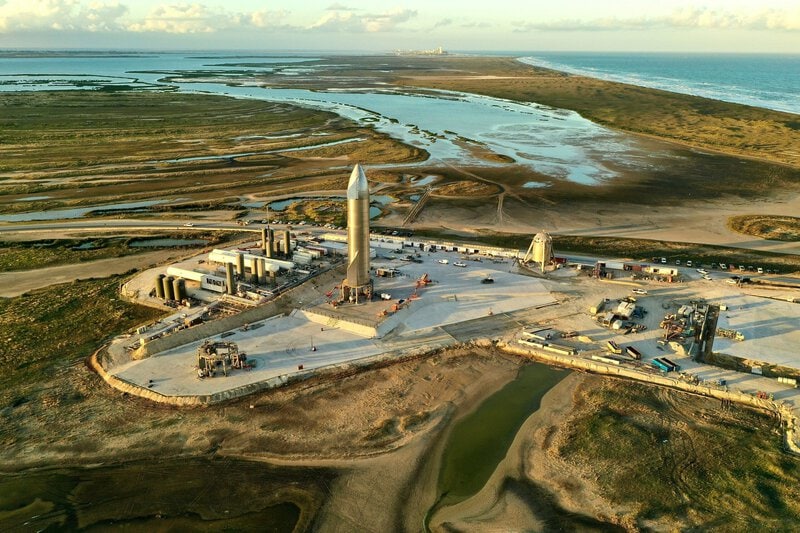
The path from squeeze test to launch involves several additional milestones, each of which must be completed successfully and in sequence.
- Static fire: Booster 22 must complete a full static fire of its Raptor engines at Starbase, confirming propulsion system readiness before any flight attempt.
- Stacking and integration: The Starship upper stage must complete its own ground testing and be positioned atop Booster 22 — a process that itself requires the chopstick arms to lift and carefully place the vehicle.
- FAA licensing: SpaceX must receive an updated launch license from the Federal Aviation Administration, which reviews safety and environmental compliance for each Starship mission independently.
- Software validation: The dual-catch sequencing software must be validated, as the flight computers will be managing an entirely new operational scenario with no direct precedent.
- Range and weather: As with any launch, weather conditions and range safety requirements at Starbase add variables that could shift the November 13 target date.
A Moment That Could Redefine What Is Possible
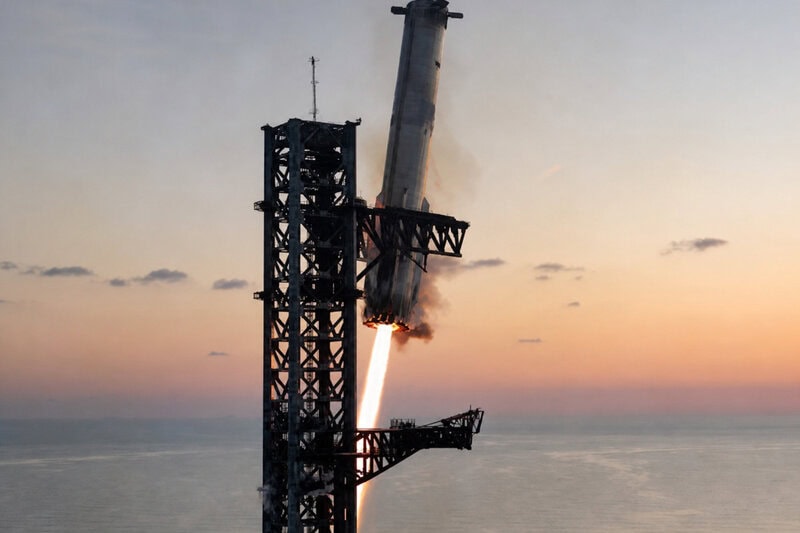
If everything goes according to plan on Flight 15, the moment the second vehicle settles into Mechazilla’s arms will mark a genuine inflection point — not just for SpaceX, but for the entire commercial space industry. Competitors and government space agencies around the world will be forced to reckon with a fully reusable heavy-lift system that has demonstrated its core capability in actual operation, not simulation.
For the engineering teams at Starbase, it would validate years of iterative testing, high-profile failures, and incremental progress. For the millions of people watching the livestream, it would be one of those rare engineering moments — comparable to the first Falcon 9 booster landing in December 2015 — where something that seemed audacious becomes, almost immediately, the new baseline expectation for what rocket programs must achieve.
The squeeze test is a single step in a long sequence. But it is the step happening right now, and it means the most ambitious double catch in the history of rocketry is closer than ever to leaving the drawing board and entering the sky.