
Before a single rocket clears the launchpad, two little-known officials quietly determine whether a NASA mission lives or dies. On November 10, 2026, the Senate Commerce Committee convened a nominations hearing to vet Joshua Shoemaker for NASA Chief Financial Officer and Robert Steinau for NASA Inspector General — two roles most Americans have never heard of, but whose influence touches every spacecraft, telescope, and astronaut program the agency operates.
A Senate Hearing Most People Missed
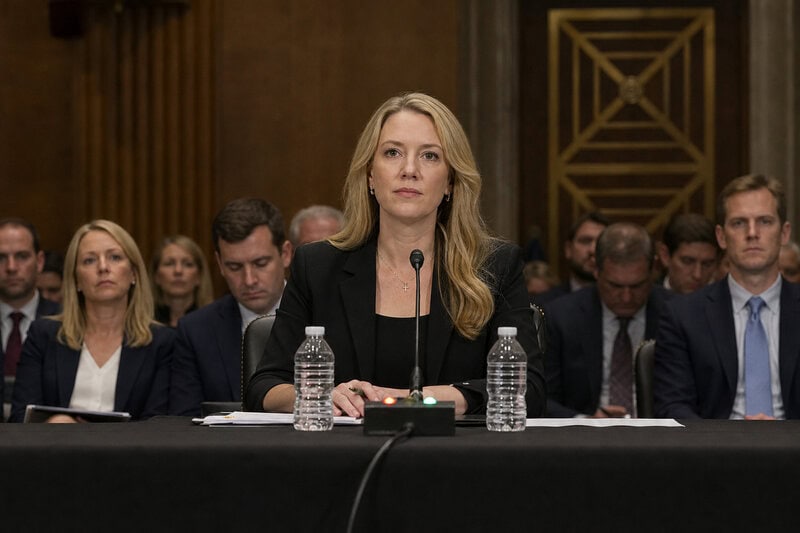
The November 10 hearing was a multi-agency event, covering four nominees across three separate federal bodies: the Department of Transportation, the Federal Communications Commission, and NASA. FCC nominee Danielle Thumann Severs was also among those considered. The procedural, low-profile setting — the kind of Washington event that rarely generates headlines — belied the enormous downstream consequences sitting quietly inside it.
As SpaceNews reported on the hearing, Shoemaker, of Virginia, was nominated for CFO while Steinau was tapped for Inspector General — both positions requiring Senate confirmation before either official can formally take charge of their respective responsibilities. The Senate Commerce Committee’s official meeting record confirms the scope and timing of the proceeding. Together, these two nominees represent the financial spine and the accountability watchdog of an agency managing one of the most complex mission portfolios in its history.
What Does NASA’s Chief Financial Officer Actually Do?

The NASA CFO oversees the agency’s entire financial operation — budget formulation, financial reporting, internal controls, and the multi-billion-dollar annual spending plan submitted to Congress each year. In practical terms, the CFO is responsible for how NASA’s budget request gets built from the ground up: which programs get prioritized, where cuts are absorbed, and how money moves between mission directorates when priorities shift mid-cycle.
The CFO also serves as the primary liaison between NASA leadership and congressional appropriators. That relationship matters enormously. The person in this role must credibly defend budget requests for programs like Artemis, the Mars Sample Return mission, and commercial crew partnerships — often in the face of competing congressional priorities and tight fiscal constraints. Without a confirmed CFO, NASA operates with an acting official who may lack the political capital or institutional authority to hold that line in high-stakes negotiations. The result can be delayed funding decisions, program instability, and missions that quietly lose ground before they ever reach the launch calendar.
Inside NASA, the CFO translates an appropriated total into mission-level budgets, allocating funds across the agency’s major directorates — Science, Space Operations, Exploration Systems, Space Technology, and Aeronautics. It is methodical, unglamorous work, but every rover, telescope, and deep-space probe ultimately traces its funding back to decisions made in the CFO’s office.
Why the Inspector General Is NASA’s Internal Sheriff

If the CFO builds and defends the budget, the Inspector General ensures it is spent as intended. The NASA IG operates independently of agency leadership, reporting directly to both the NASA Administrator and Congress — a watchdog structure specifically designed to prevent conflicts of interest from distorting oversight.
The IG’s office investigates fraud, waste, and abuse across NASA contracts, grants, and internal operations. Its findings can freeze funding, trigger congressional hearings, or force a program to restructure entirely. Past NASA IG investigations have surfaced significant cost overruns on major programs and irregularities in contractor billing — findings that reshape mission timelines and force difficult conversations about agency priorities.
A vacant or weakly staffed IG office creates a genuine governance blind spot. Without active, experienced oversight, cost overruns and mismanagement can compound undetected until they reach a scale that threatens an entire mission. As NASA’s contracting footprint with private aerospace companies has expanded dramatically in recent years, the demand for rigorous IG scrutiny has grown proportionally. The commercial space landscape introduces accountability complexities that require an experienced, independent watchdog to navigate.
How NASA Missions Actually Get Funded
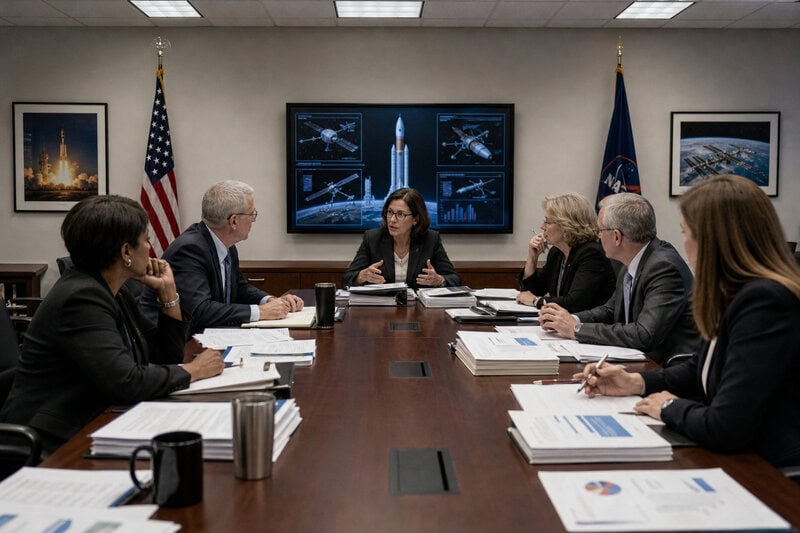
Understanding why these nominations matter requires a clear look at how NASA funding actually works. The process begins as a White House budget proposal, shaped heavily by the CFO’s office, which must then survive the full congressional appropriations cycle — moving through the House and Senate before returning as a signed funding law. That journey can take months, involve significant revision, and expose individual programs to political pressures far removed from their scientific merit.
Once Congress appropriates a total figure, the CFO’s office translates that number into mission-level allocations. Programs compete internally for resources, and the CFO’s office must balance near-term operational needs against long-horizon science and exploration investments. Throughout that execution phase, the Inspector General monitors whether money spent matches money authorized — auditing contractor performance, reviewing grant expenditures, and flagging inconsistencies before they become crises.
Together, the CFO and IG form a checks-and-balance system embedded in NASA’s institutional structure. One builds and defends the budget; the other ensures it reaches its intended purpose. Their coordination — or lack of it — has direct, tangible consequences for mission timelines and program survival.
Why These Specific Nominations Matter Right Now

NASA is navigating one of its most financially complex periods in decades. The Artemis lunar program, expanded commercial partnerships, and Mars Sample Return are all competing for resources under fiscal pressure from Congress, while the agency simultaneously manages ongoing science missions and technology development programs. This is precisely the moment when credible financial leadership and rigorous independent oversight are most essential — and most difficult to sustain without confirmed officials in place.
A confirmed CFO brings stability and authority to NASA’s financial leadership at a critical juncture, allowing the agency to present a coherent, defensible budget posture to appropriators. A confirmed IG closes a governance gap at a time when NASA’s expanding relationships with private contractors demand the kind of independent scrutiny that only a fully empowered Inspector General can provide.
As coverage of the multi-agency nominations hearing noted, the breadth of the November 10 proceeding reflects how many critical oversight positions across the federal government remain to be filled — and how consequential each confirmation can be in ways that rarely surface in public debate.
What Happens Next

Following the November 10 hearing, the Senate Commerce Committee will vote on whether to advance the nominations to the full Senate floor. That timeline could stretch from days to several months depending on political dynamics, committee holds, or unresolved questions about either nominee’s qualifications and prior government experience. Any senator placing a formal hold on either nomination would signal deeper scrutiny worth tracking closely.
The broader lesson embedded in this quiet hearing is worth holding onto: NASA’s most consequential decisions are rarely made by astronauts or rocket engineers. They are made by financial and oversight officials whose confirmation hearings rarely generate headlines — but whose presence, competence, and independence shape what the agency can actually accomplish in the decades ahead. When the full Senate votes on these nominees, the trajectory of NASA’s next chapter will shift, without fanfare, in ways that matter enormously.