10. The Scientific Revolution of Johannes Kepler (December 27th)
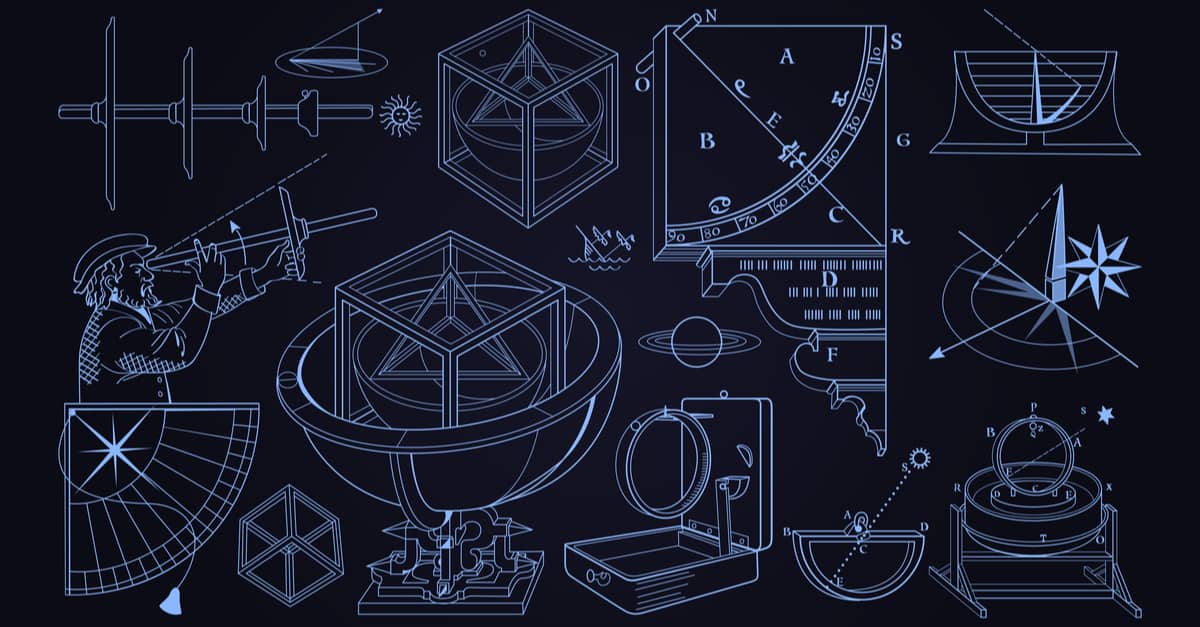
This German astronomer, mathematician, natural philosopher, astrologer, and music composer is vital in the 17th century Scientific Revolution. Kepler is better known for being the publisher of the laws of planetary motion. These laws describe the planets around the sun. He was the first to discover that Mercury and Venus would transit the sun in 1631. Kepler also wrote many influential books like Astronomia nova and Epitome Astronomiae Copernicanae. These books laid the foundations for Newton’s theory of universal gravitation. Interestingly enough, Kepler used religious arguments in all of his works. Kepler always mentions that God was the creator of everything with a plan accessible through the natural light of reason.
Johannes Kepler used to be a mathematics teacher at a seminary school, which later allowed him to become an associate of Prince Hans Ulrich von Eggenberg. That opened the door of opportunity to turn into an imperial mathematician to Emperor Rudolf II and other emperors of the time. During this time, he also did fundamental work in the optics field, improving a version of the refracting telescope, also known as a Keplerian telescope. Because of it, he was mentioned by his contemporary Galileo Galilei when writing about telescopic discoveries. Because of his achievements, his legacy in the astronomy world inspired many other scientists. That includes throughout history and even in the present.