
About 100 million years ago, in the shallow waters of an inland sea that once covered what is now outback Queensland, a 23-foot marine reptile swallowed a flying pterosaur — and before it could fully digest that meal, a 40-foot ocean predator swallowed the marine reptile in turn. That entire predation sequence is now locked inside a single fossil, making it one of the most complete and scientifically consequential predation records ever recovered from the Mesozoic era.
Three Ancient Giants, One Stone: What the Fossil Actually Preserves
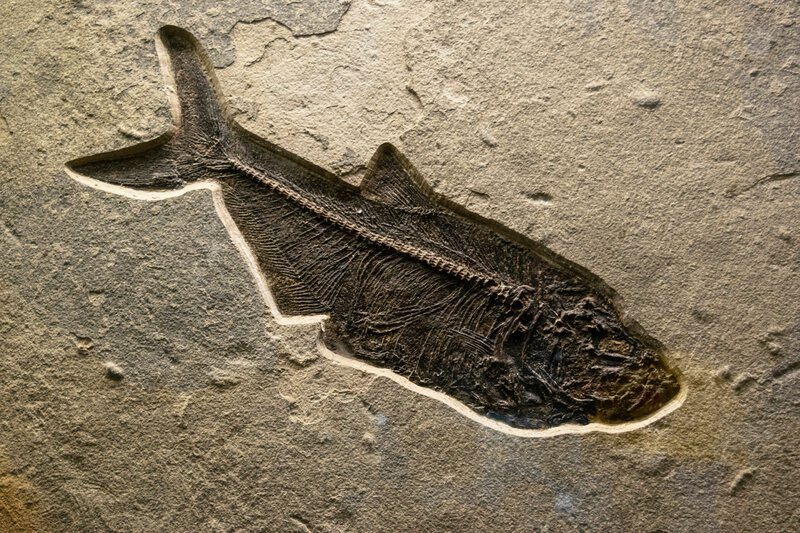
The specimen, discovered near Richmond in Queensland, Australia, preserves what scientists describe as the first definitive physical evidence of an ichthyosaur consuming a pterosaur. Crushing bite marks on the ichthyosaur’s exterior point to a Kronosaurus — one of the most powerful marine predators of the Cretaceous period — as the animal that closed the chain. The result is a complete three-tier food web, captured at the precise ecological moment it was still unfolding.
According to Popular Science, the Kronosaurus measured approximately 40 feet in length, and the ichthyosaur it consumed was roughly 23 feet long — a formidable predator in its own right that had no apparent warning it was already being hunted. The ichthyosaur, in turn, had recently swallowed a pterosaur whose bones were still identifiable inside the marine reptile’s body cavity when the fossil was examined.
Amateur fossil hunters in the Australian Outback contributed directly to the find, continuing a long and productive tradition of citizen science in a region so remote that professional excavations alone could never systematically survey it. Once the specimen’s significance became clear, professional paleontologists joined the recovery effort to document the stratigraphic context — the layered geological record confirming that all three animals were deposited at essentially the same moment in time.
What Is a Three-Tier Food Chain Fossil — and Why Is One Almost Impossible to Find?
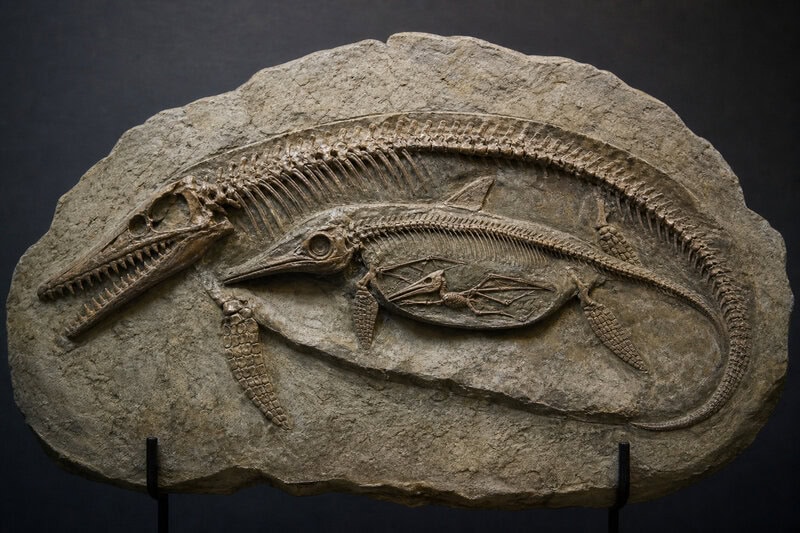
A three-tier food chain fossil preserves three distinct trophic levels — organisms linked by who eats whom — within a single specimen at the same moment in geological time. Each tier represents a separate biological event: a pterosaur being caught, an ichthyosaur being ambushed mid-digestion. For all three to survive as a unified record requires an almost improbable alignment of biological and geological circumstances.
Fossilization itself is statistically rare. Soft tissue, stomach contents, and gut material are among the least likely biological structures to survive the combined processes of decay, compression, and mineral replacement that transform organic remains into stone. Any gut-content fossil is considered extraordinary by paleontologists; a gut-content fossil nested inside another gut-content fossil, itself bearing the bite signature of a third predator, occupies a category of its own.
For three tiers to be captured simultaneously, the top predator must have died almost immediately after consuming the middle predator — leaving no time for digestion to erase the inner evidence. The Richmond specimen clears every hurdle: pterosaur bones identified inside the ichthyosaur’s body cavity, ichthyosaur bones bearing bite marks consistent with Kronosaurus dentition, all within a stratigraphic context confirming a single depositional event. Phys.org describes the specimen as a “bag of bones” that preserves this rare three-tier prehistoric meal in extraordinary detail.
The Three Predators: A Cretaceous Food Chain from Sky to Sea Floor
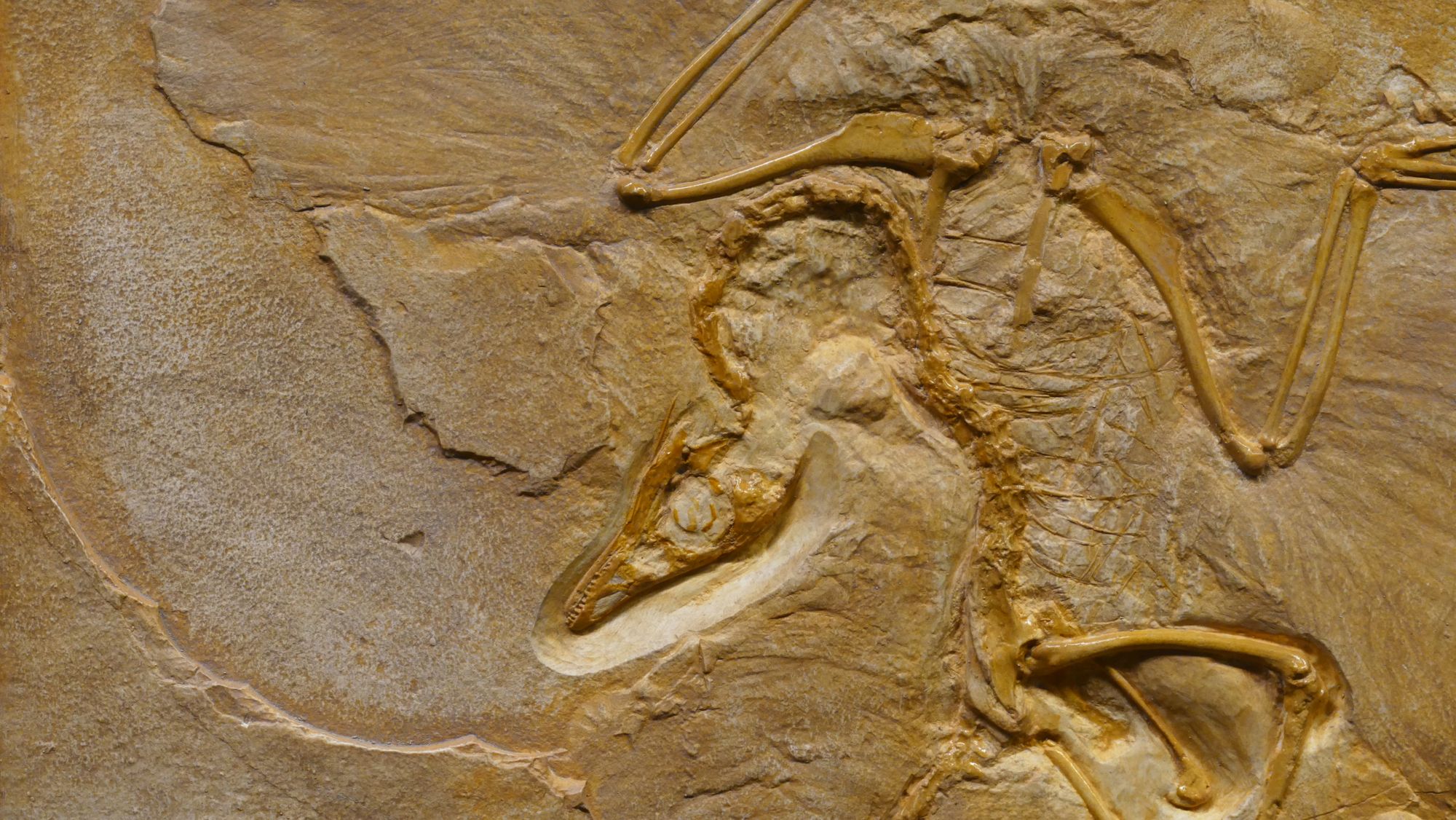
The pterosaur — a flying reptile, not a dinosaur, that typically hunted fish and small prey from the air — was the smallest player in this chain. Pterosaurs had thin-walled, hollow bones that reduced their weight for flight, a structural feature that also makes their remains distinctly identifiable in fossil assemblages. This individual was likely snatched from the water’s surface or intercepted near it by the ichthyosaur lunging upward.
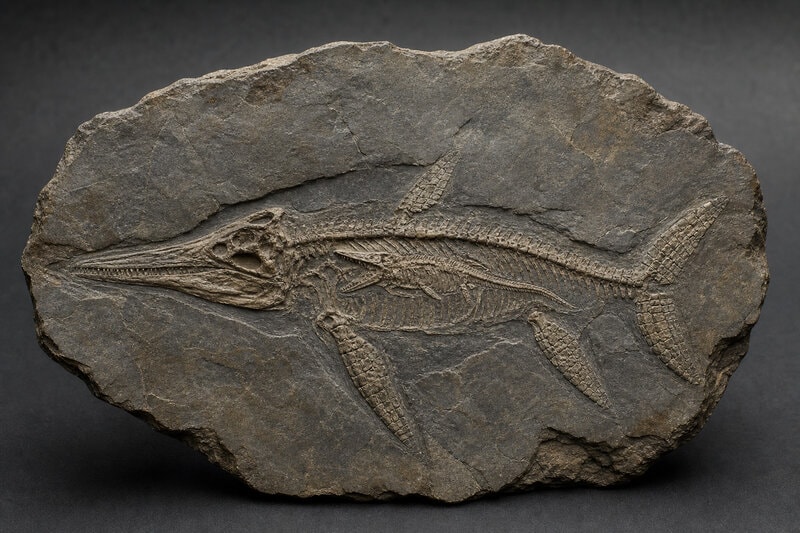
The ichthyosaur, whose name derives from the Greek for “fish lizard,” was a fully aquatic, dolphin-shaped marine reptile. At approximately 23 feet long, it was a capable hunter of fish and cephalopods — the squid-like mollusks abundant in Cretaceous seas — but it fell well within the size range a Kronosaurus could reasonably target. Fragments of both fish and cephalopod remains were recovered within the same body cavity as the pterosaur bones, indicating the ichthyosaur had been actively feeding across multiple prey types before its fatal encounter.
Kronosaurus, named for the titan of Greek myth who devoured his own children, was a short-necked pliosaur — a group of large-headed, four-flippered marine reptiles that occupied the apex of Cretaceous marine food webs. At roughly 40 feet in length, Kronosaurus possessed massive conical teeth capable of generating some of the highest bite forces of any Mesozoic predator, making it capable of overwhelming prey as large and robust as the ichthyosaur in this specimen.
How Amateur Fossil Hunters Made the Discovery of a Lifetime
The fossil was found near Richmond, Queensland, a region of the Australian Outback that 100 million years ago lay beneath the Eromanga Sea — a vast shallow inland sea that covered much of central Australia during the Early Cretaceous period. The Eromanga Sea has already yielded significant marine reptile finds, but this specimen stands apart from anything previously recovered there in terms of ecological completeness.
Amateur fossil hunters played a direct role in surfacing the specimen, a contribution that reflects an ongoing and productive dynamic in Australian paleontology. Remote outback terrain is simply too vast for professional teams to survey systematically, and citizen scientists regularly encounter material that would otherwise remain buried or erode unnoticed. Everything Dinosaur’s coverage of the find details how the ichthyosaur’s discovery yielded world-first evidence of a pterosaur within its stomach contents.
The involvement of non-professional collectors continues to prompt discussion within the paleontological community about the formal role of amateur discovery in generating peer-reviewed science. In this case, scientists describe the outcome as definitive — a word used carefully in the literature to distinguish findings supported by unambiguous physical evidence from those resting on inference or incomplete preservation.
Reading the Evidence: How Scientists Decoded 100 Million Years of Digestion
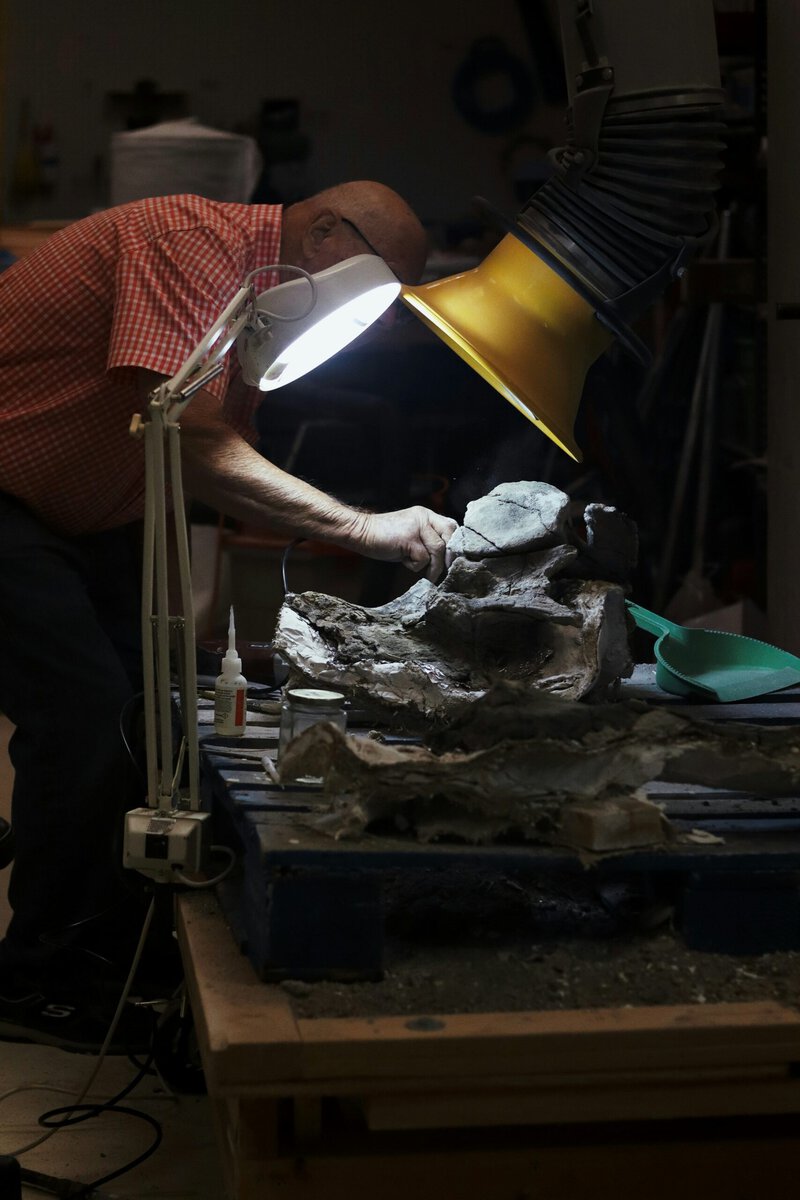
Identifying pterosaur remains inside an ichthyosaur required distinguishing the thin-walled, hollow bones characteristic of pterosaur flight anatomy from the denser bones of fish or other marine prey. That distinction depends on meticulous fossil preparation — the painstaking physical and chemical removal of surrounding matrix rock — combined with comparative anatomy against known pterosaur skeletal material from the region and period.
The bite marks on the ichthyosaur’s exterior provided the third tier of evidence. The crushing, deeply penetrating marks are consistent with the massive conical dentition of a pliosaur like Kronosaurus, which is known from Queensland fossil deposits of the same age. Pliosaur predation on other large marine reptiles has been inferred from bite-marked bones in previous finds, but the Richmond specimen adds a new dimension: the victim’s last meal is also preserved, allowing scientists to reconstruct the ecological moment at every trophic level simultaneously.
Scientists describe the pterosaur evidence specifically as the “first definitive” documentation of ichthyosaur-on-pterosaur predation — a careful qualifier that distinguishes it from earlier, contested, or ambiguous gut-content claims elsewhere in the scientific literature. Smithsonian Magazine’s reporting on the find places the discovery in the context of how rarely the fossil record captures such complete predation events.
What This Fossil Revises About Cretaceous Marine Ecosystems
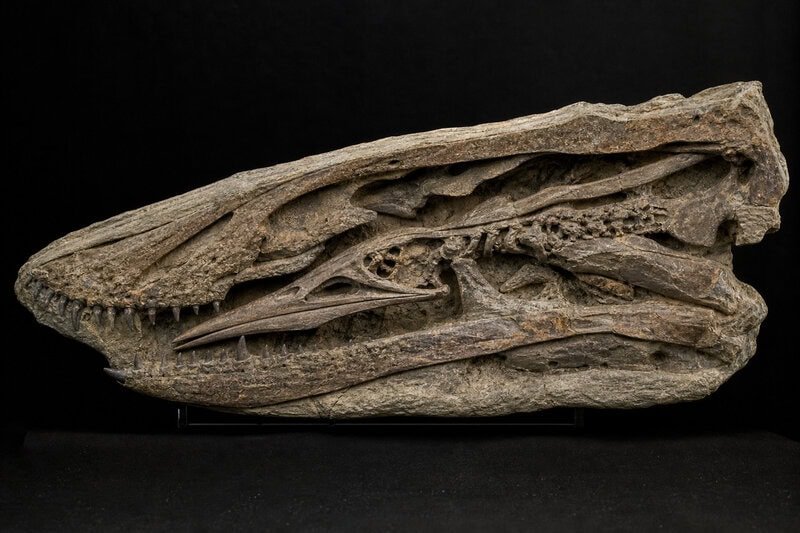
The conventional model of Cretaceous marine food webs placed pterosaurs primarily as aerial consumers of fish — hunters operating above the water rather than prey within it. Incidental predation by marine reptiles on pterosaurs had been suggested theoretically, but no physical evidence had previously confirmed it. This fossil provides the first hard data point establishing that the boundary between aerial and aquatic predation networks was actively crossed by large ichthyosaurs.
The find also bears on the status of ichthyosaurs in the mid-Cretaceous. The group had been widely considered to be in decline by this period, with their ecological dominance giving way to mosasaurs and pliosaurs. That this individual was a capable, active predator taking large and taxonomically unusual prey — a flying reptile — suggests the lineage remained ecologically competitive later into the Cretaceous than some reconstructions have assumed.
Researchers appropriately caution that a single specimen cannot rewrite an entire ecosystem model. What the Richmond fossil does establish is that aerial-to-aquatic prey transfer occurred in the Cretaceous Eromanga Sea — a concrete data point that will inform ecological reconstructions of the region and period for years to come. It also raises productive questions for taphonomy, the study of how organisms decay and become fossils, about the precise sequence and speed of events that allowed three tiers of biological evidence to survive mineralization intact.
Why This Discovery Matters Beyond the Headlines
Confirmed three-tier food chain fossils are rare enough that each example becomes a reference specimen — a fixed point against which hypotheses about ancient predator behavior, body-size scaling, and ecological structure can be tested for decades. The Richmond specimen is particularly valuable because it involves three taxonomic groups that operated in fundamentally different environments: a reptile that flew, a reptile that swam, and a reptile that dominated the open ocean. Their co-occurrence in a single fossil demonstrates that Cretaceous predation networks crossed environmental boundaries that scientists have sometimes modeled as largely separate systems.
The discovery is also a reminder of where transformative paleontological finds still originate. The Richmond specimen came to light not from a funded expedition to a known fossil bed, but from people paying close attention to sun-baked remote terrain. The Cretaceous, it turns out, is not yet finished surprising us — and the most complete picture of its food webs may still be waiting somewhere in the ground beneath outback Queensland.