
The most expensive part of building a private spacecraft is rarely the rocket engine. It is the avionics — the integrated electronics and software that tell a vehicle where it is, where it is going, and what to do when something goes wrong — and certifying those systems can consume years of engineering time and millions of dollars before a vehicle ever reaches a test stand. On or around July 31, 2026, a small publicly traded company called Rocket One (ticker: RKTO) announced it had secured a nonexclusive patent license from NASA covering one of the agency’s most pragmatically significant flight-computing systems. The agreement illustrates how a half-century-old federal research pipeline is quietly reshaping the economics of commercial spaceflight — and why avionics, not propulsion, has become the defining cost barrier for a new generation of launch vehicle developers.
What NASA’s Affordable Vehicle Avionics System Actually Is
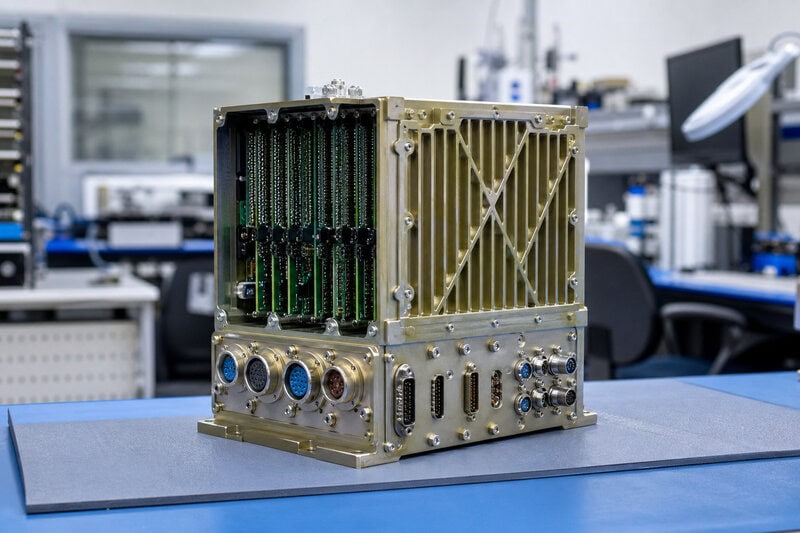
Avionics — a contraction of “aviation electronics” — refers to the integrated hardware and software systems aboard a spacecraft responsible for navigation, guidance, telemetry, and command execution. Without reliable avionics, even the most sophisticated propulsion hardware is inert. NASA’s Affordable Vehicle Avionics (AVA) System was developed specifically to address a design problem that plagues smaller launch vehicle developers and satellite operators: traditional flight-computing architectures, inherited from large institutional programs, are expensive, heavy, and time-consuming to certify.
AVA was engineered to consolidate multiple discrete flight-control functions onto a single, compact, low-power board — reducing component count, mass, and cost without sacrificing the reliability standards that spaceflight demands. For a startup entering the commercial launch market, the practical implication is substantial. Custom-building or procuring certified avionics from scratch can absorb years of specialized engineering labor and significant capital before a vehicle ever reaches a launch pad. By licensing AVA, Rocket One gains legal rights to develop and commercialize software, analytical tools, and workflows for modeling, simulation, testing, and mission planning built around a proven architectural blueprint — shortcutting the most capital-intensive phase of early-stage spacecraft development without starting from a blank sheet of paper.
How Public Research Reaches Private Rockets: The NASA Technology Transfer Pipeline
The mechanism behind the deal is NASA’s Technology Transfer Program, administered under the agency’s Space Technology Mission Directorate. The program exists explicitly to move federally funded innovations into commercial use through patent licenses, software releases, and partnership agreements. NASA’s annual Spinoff publication, which documents commercialization outcomes, records hundreds of commercial products derived from agency research across industries ranging from medical devices to materials science.
The Rocket One agreement is structured as a nonexclusive license — a category that allows NASA to grant the same technology rights to multiple commercial partners simultaneously. This preserves market competition while maximizing the societal return on public research investment. Historically, NASA technology transfer has concentrated on propulsion, materials, and life sciences. Avionics transfers represent a growing frontier as the commercial space sector matures and begins demanding flight-proven computational architectures rather than developing them entirely in-house.
One important caveat applies to every transfer agreement of this type: a NASA patent license is not a certified flight system. Licensees must still invest in integration, validation, and regulatory compliance. The license is a legally authorized starting point and an architectural foundation, not a finished product cleared for launch. That distinction matters for understanding both the genuine opportunity and the substantial work that remains ahead of Rocket One.
Rocket One’s Strategy: Wrapping NASA Avionics in an AI-Enabled Mission Platform
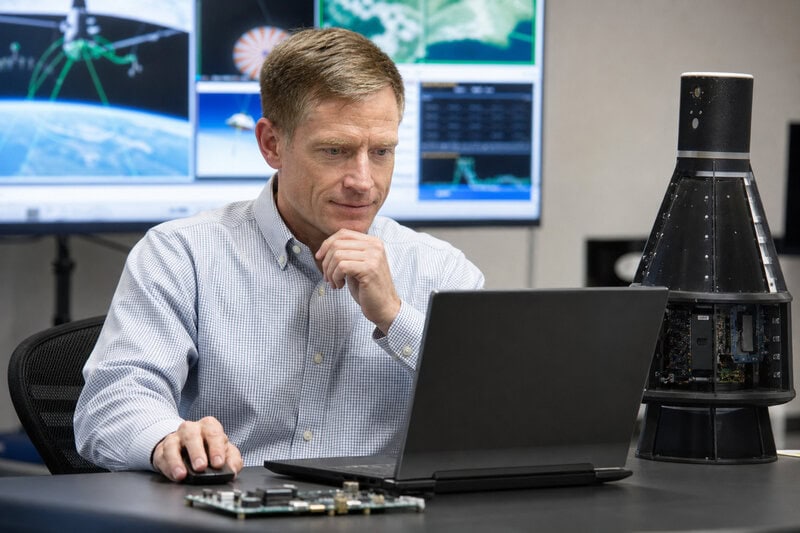
Rocket One’s announced intent is to integrate the AVA license into a broader AI-enabled platform designed to streamline spacecraft engineering workflows, technical decision-making, and mission readiness preparation. The platform’s stated value proposition targets the engineering efficiency gap that currently separates well-resourced institutional programs from smaller commercial operators trying to compress development timelines on tighter budgets.
In practical terms, AI models trained on simulation, testing, and mission-planning data could flag design conflicts early, predict failure modes before they propagate into hardware problems, or compress the timeline between a mission concept and a launch-ready vehicle configuration. Autonomous spacecraft navigation — meaning onboard systems capable of making real-time guidance and fault-response decisions without waiting for ground-station commands — is a natural downstream application of combining AVA’s flight-computing architecture with machine-learning inference layers. The agreement expands Rocket One’s existing AI and space technology portfolio, suggesting the company is positioning itself as a platform provider to the broader commercial space ecosystem rather than solely as a launch vehicle operator or satellite developer.
What the company has not yet disclosed publicly is a detailed technical roadmap: which specific AI methods it will apply, which engineering workflows it will target first, or what development timeline it is working toward. Those gaps are not unusual at the licensing announcement stage, but they do mean the platform remains a stated strategy rather than a demonstrated capability.
Separating AI Hype From Aerospace Engineering Reality
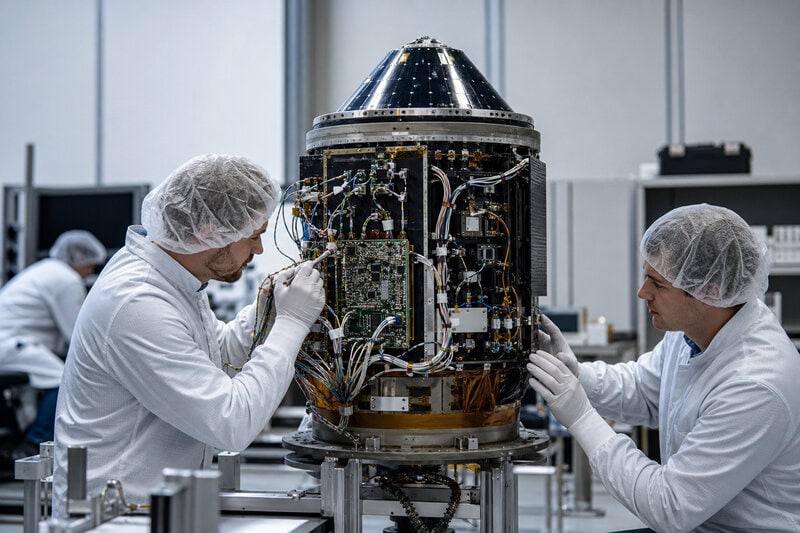
The phrase “AI-powered” requires careful unpacking in an aerospace context. In engineering practice, the term most precisely describes systems that use machine learning, neural networks, or optimization algorithms to perform tasks — anomaly detection, trajectory optimization, sensor fusion — that would otherwise require continuous human oversight or rigid pre-programmed deterministic logic. The distinction between adaptive AI inference and traditional deterministic software carries real regulatory weight in flight-critical applications.
Established consensus holds that AI-assisted autonomy meaningfully reduces ground-operator workload on deep-space missions where communication latency makes real-time human control physically impossible. Mars missions, for example, can experience one-way communication delays of up to 24 minutes, making some degree of onboard autonomous decision-making an operational necessity rather than a luxury.
What remains genuinely contested is the certification question. No universally accepted regulatory framework yet exists for qualifying AI-driven, flight-critical decision systems to the same rigor as deterministic avionics software — a gap under active discussion at the FAA and international standards bodies. Readers should understand a meaningful distinction within Rocket One’s own stated scope: AI tools that assist engineers on the ground during design and simulation phases carry far lower certification risk than AI systems making autonomous commands aboard an operating vehicle. Rocket One’s platform appears to target both categories, but their technical maturity levels — and their paths to regulatory acceptance — differ substantially and should not be conflated in evaluating the company’s near-term prospects.
Why This Agreement Matters Beyond One Company’s Press Release
The Rocket One-NASA agreement is emblematic of a broader structural shift in the commercial space industry. As launch costs have fallen dramatically over the past decade — driven by reusable rocket development and increased launch cadence — competitive advantage has migrated upward in the stack. It increasingly lives in the software and systems layer: mission planning tools, autonomous navigation algorithms, and the avionics architectures that tie everything together. Propulsion hardware, once the defining differentiator, is becoming closer to a commodity for an expanding tier of operators.
Nonexclusive NASA licenses, by design, democratize access to flight-proven architectures. If multiple startups license AVA simultaneously, the aggregate effect could compress avionics development timelines across a generation of commercial programs — accelerating mission cadence industry-wide rather than conferring advantage on a single operator. That multiplier effect is precisely what the technology transfer program’s nonexclusive structure is intended to produce, and it is why the deal has implications beyond Rocket One’s own balance sheet.
The agreement also signals that NASA’s transfer program is a meaningful strategic tool for early-stage companies seeking to build technical credibility without the institutional resources of a Northrop Grumman or a Lockheed Martin. Access to a NASA-developed architecture provides a degree of provenance and documented engineering rigor that a startup’s internally developed system would take years to accumulate independently — a form of institutional endorsement that carries weight with prospective customers and partners even before a product ships.
Investors and industry observers should note, with appropriate sobriety, that a patent license is an input rather than an output. The value ultimately created depends entirely on Rocket One’s execution in building, validating, marketing, and winning customers for the resulting platform — milestones the company had not yet publicly demonstrated as of the announcement date. The license lowers the starting cost of avionics development; it does not guarantee a successful commercial product.
What to Watch as This Story Develops

Several concrete developments would signal whether the AVA license translates into operational reality. The most immediate indicator is whether Rocket One announces specific customer engagements, demonstration missions, or integration partnerships that would validate market demand beyond the licensing announcement itself. A platform without documented adopters remains a thesis rather than a business, regardless of the quality of its underlying architecture.
Regulatory trajectory matters equally. Developments at the FAA’s Office of Commercial Space Transportation and evolving NASA software assurance standards will shape how quickly an AI-enhanced, AVA-derived system could achieve the flight certification required for use aboard commercial launch vehicles. The certification pathway for AI components in flight-critical systems is a live policy question whose resolution will affect every company working in this space — not Rocket One alone — and the timeline for that resolution remains genuinely uncertain.
The competitive landscape is not empty. Other companies are actively developing AI-driven mission planning and autonomous navigation tools, which means any first-mover advantage conferred by the NASA license is time-sensitive and directly dependent on development velocity. Architectural access is a head start, not a moat.
Avionics rarely makes headlines. It is unglamorous infrastructure — circuit boards, firmware, sensor buses, and flight software — that the public never sees and the press rarely covers in depth. Yet it is the layer on which every successful space mission ultimately runs, and the layer where development costs most reliably determine whether a commercial program survives long enough to reach orbit. A NASA avionics blueprint migrating into an AI-enabled commercial platform is, for that reason, a development worth tracking with considerably more attention than the initial announcement has received.