
Imagine retaining every thought, memory, and desire — but losing the ability to tell anyone. For patients with amyotrophic lateral sclerosis (ALS) or locked-in syndrome, that is not a thought experiment; it is daily life. The brain continues to generate the electrical signals that would normally drive speech, but the pathway from neuron to vocal cord has been severed by disease. It is precisely this gap that a growing cohort of brain-computer interface companies is racing to close — and Paradromics Inc., an Austin, Texas-based neurotechnology startup, is among the most closely watched contenders in that race.
The Scale of the Problem

The clinical need driving BCI research is not abstract. According to the National Institute on Deafness and Other Communication Disorders, roughly 1.7 million Americans acquire a communication disorder from neurological causes each year, placing speech restoration among the most urgent frontiers in modern medicine. For many of those patients, existing assistive technologies — eye-tracking boards, breath-activated switches — offer partial solutions at best, and no solution at all once motor control deteriorates far enough. That unmet need defines the stakes for every company working in this space, and it is the lens through which Paradromics’ progress should be evaluated.
Paradromics describes its platform as “the fastest and most durable brain-computer interface platform, designed to restore speech today and redefine human capability tomorrow.” That is bold language in a field crowded with bold claims. The central question this article sets out to answer is a practical one: what does the available evidence actually show, and what remains genuinely unproven?
What a Brain-Computer Interface Actually Does

A brain-computer interface, or BCI, is a system that reads the electrical signals produced by neurons — the brain’s primary signaling cells — and translates those signals into commands a computer can act on, bypassing damaged nerves or muscles entirely. The concept sounds science-fictional, but the underlying neuroscience has been validated across decades of laboratory and clinical research.
Here is the core mechanism in plain language: when a person intends to speak, neurons in the motor cortex fire in specific, measurable patterns milliseconds before any muscle moves. A well-placed electrode array can record those firing patterns and, with the right algorithms, decode the sounds or words the person was attempting to produce. The word “decode” is important — researchers are reconstructing intended speech from neural activity, not reading thoughts in any broader sense. This distinction is one that established BCI researchers consistently emphasize to prevent public misunderstanding, and it is worth holding onto throughout any coverage of this technology.
Two broad hardware philosophies currently dominate the field. The first involves implanted intracortical arrays: electrodes placed directly into brain tissue, capable of recording from individual neurons with high resolution. BrainGate and Neuralink both use variants of this approach. The second encompasses minimally invasive strategies — Synchron’s endovascular device, for instance, is threaded through a blood vessel into the brain rather than requiring open-skull surgery, trading some signal resolution for substantially lower procedural risk. Where a given company sits on that risk-benefit spectrum shapes everything from its regulatory pathway to the patients it can ethically enroll.
Paradromics’ Technical Approach: Bandwidth, Wireless Design, and Durability
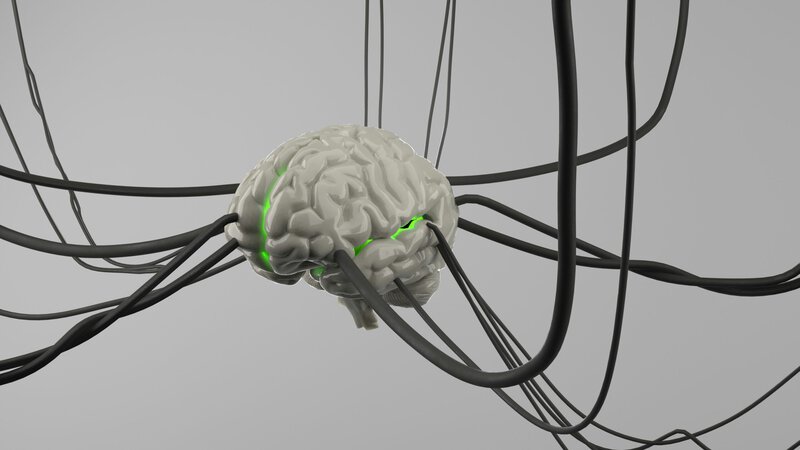
Unpacking Paradromics’ claim to be building the “fastest and most durable” platform requires understanding why bandwidth matters in the first place. A BCI’s bandwidth — roughly, how many neurons it can record from simultaneously — directly determines how much information is available to the decoding algorithm. Published research from academic neural-prosthetics laboratories has consistently linked higher neuron counts to higher decoding accuracy for speech-related signals. More data points give machine-learning models more to work with, reducing the ambiguity that degrades real-world performance.
Durability is where the entire field faces a stubborn biological obstacle. When any foreign object is implanted in brain tissue, the immune system responds by forming scar tissue — a process called gliosis — around the electrodes. Over months to years, this scarring can degrade signal quality, sometimes to the point where a device that worked reliably in year one becomes clinically unreliable by year three. This is an active area of materials-science and bioengineering research across the field, and Paradromics publicly frames its platform as designed to address it. The specific engineering solutions the company employs are not, however, fully detailed in publicly available literature as of mid-2025.
The wireless design of Paradromics’ device represents a genuine and meaningful usability advance. Earlier clinical BCI systems required a physical cable passing through the skull to transmit data — an arrangement that limited patient mobility and created a persistent infection risk at the skin-cable interface. Eliminating that tether is not a trivial engineering achievement, and it matters enormously for the quality of life of patients who might use such a device every day for years.
One important caveat applies across all of these claims: specific electrode counts, decoding accuracy benchmarks, and long-term durability data from Paradromics’ implanted devices have not, as of mid-2025, appeared in published, independently peer-reviewed clinical literature. This is a standard condition for any pre-publication investigational device — not a mark against the company specifically — but it does mean that the platform’s performance claims rest, for now, on the company’s own characterizations rather than on independently replicated data. That distinction matters, and readers should keep it in mind.
The University of Michigan Trial: What We Know and What We Don’t
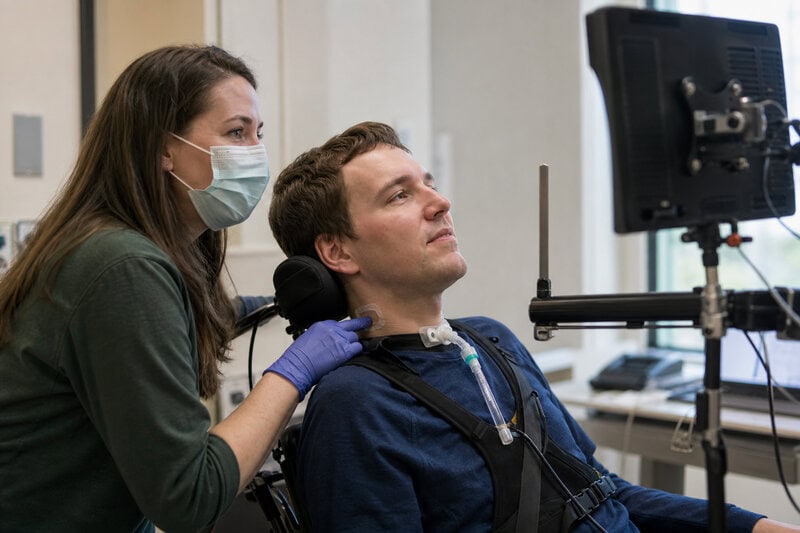
The most concrete milestone in Paradromics’ clinical history to date is documented and verifiable. The University of Michigan implanted Paradromics’ wireless brain-computer interface as part of a national clinical trial for patients with difficulty speaking, making it one of the few neural interface speech-decoding trials currently enrolling human subjects in the United States.
For readers unfamiliar with clinical trial infrastructure, “national clinical trial” is not a marketing term. Trials of this type are registered with the FDA and listed on ClinicalTrials.gov, require institutional review board (IRB) approval to protect participant safety, and follow strict protocols governing everything from informed consent to adverse event reporting. These are markers of scientific legitimacy that meaningfully separate regulated human trials from unregulated demonstrations or animal-model results.
The broader scientific context for this trial is important. Landmark research published in Nature in 2021 and 2023 demonstrated high-accuracy speech decoding from intracortical electrode arrays in paralyzed patients, establishing the proof of concept that neural signals can reliably encode intended speech. That finding is now scientific consensus. What remains an open empirical question is whether any company’s specific hardware can achieve the accuracy and longevity required for real-world, long-duration clinical use outside a controlled research setting. The Michigan trial is one of the studies designed to begin answering that question for Paradromics’ platform specifically.
The distinction between established finding and emerging finding deserves direct emphasis: that the brain encodes attempted speech in measurable neural patterns is not in dispute. That Paradromics’ device can capture and decode those patterns with clinically meaningful accuracy over clinically relevant timescales is a hypothesis the trial is testing, not a conclusion it has yet produced. Reporting those two things as equivalent would be a significant error.
The Competitive Landscape — and Why It Benefits Patients
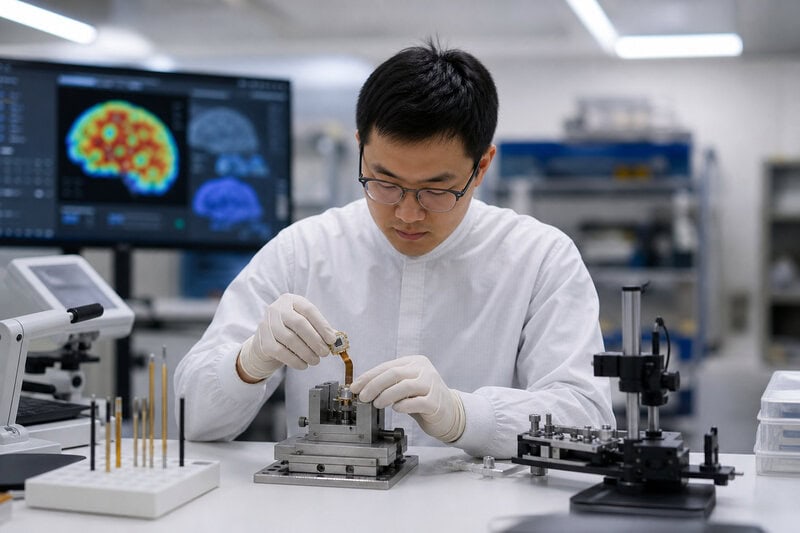
Paradromics operates in a competitive field that includes several well-resourced players, each making different technical bets. Neuralink completed its first human implant in January 2024, per the company’s own announcement, using a high-channel-count intracortical array and a fully wireless design. Synchron has pursued an endovascular approach requiring no open-brain surgery, with human trials ongoing in both the United States and Australia. BrainGate, an academic consortium involving Brown University, Massachusetts General Hospital, and other institutions, holds the longest published human safety dataset in the field.
The diversity of approaches is scientifically healthy. No single electrode technology has yet demonstrated the combination of safety, signal longevity, and decoding performance needed for broad clinical adoption. Parallel development across different methods increases the probability that at least one approach crosses the clinical threshold. Neurotechnology researchers and peer-reviewed journals covering the field have made precisely this point in assessments of where BCI development currently stands.
The regulatory and ethical sweet spot for all of these companies is the treatment of severe paralysis. Neural interface applications for conditions including ALS, spinal cord injury, and locked-in syndrome represent a clear, severe, and unmet clinical need — the standard the FDA uses to justify the risk-benefit profile of investigational brain devices. Augmentation applications, which Paradromics gestures toward in its mission language about “redefining human capability,” face a substantially higher regulatory and ethical bar. Most neuroethicists treat therapeutic and enhancement applications as categorically distinct, and the near-term work for every serious BCI company is therapeutic.
Neuroethics: Consent, Data Privacy, and Who Controls the Signal
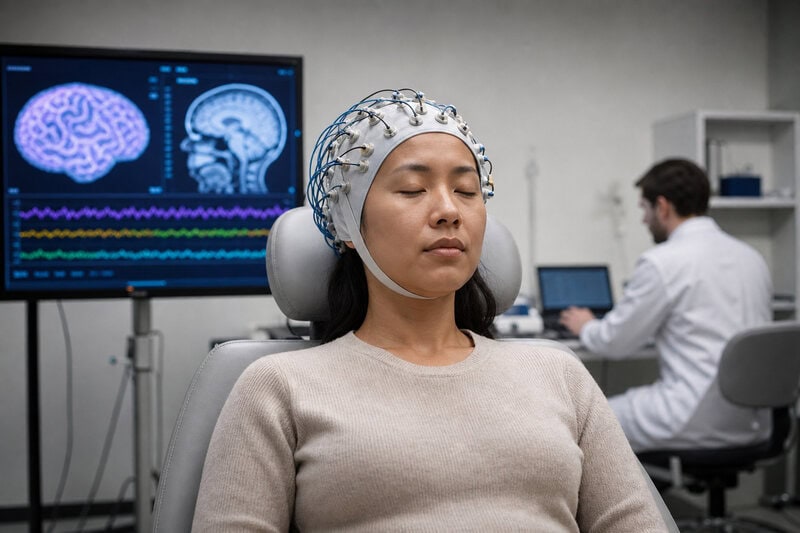
No responsible account of BCI technology can avoid the ethical questions that researchers have been raising for years — not as a reason to halt the science, but as a reason to advance it carefully.
Researchers including Marcello Ienca, formerly at ETH Zurich and now at KU Leuven, have published extensively on the data-ownership problem: neural signals recorded by a commercial BCI system constitute some of the most intimate biological data imaginable, yet current U.S. federal law does not extend HIPAA-style protections to brain data. The signals that encode a person’s intended words could, in principle, encode much more. Who owns that data stream, who can access it, and under what conditions are questions that existing legal frameworks have not fully resolved.
The consent challenge is compounded by the nature of the patient population. People with severe speech or motor impairments may have limited ability to communicate withdrawal of consent once a device is implanted — a concern the Presidential Commission for the Study of Bioethical Issues raised in its 2015 report on neurotechnology and one that IRBs designing these trials must actively address. Colorado in 2024 became the first U.S. state to extend consumer-privacy protections explicitly to neural data, a legislative signal that the regulatory environment is beginning to catch up with the technology, however slowly.
These concerns apply equally to every company doing neural interface work. They are not an indictment of Paradromics specifically. They are the legitimate background conditions against which all BCI development should be evaluated, and acknowledging them is part of accurate science communication rather than alarmism.
The Milestones That Will Tell the Real Story
For readers — whether patients, investors, clinicians, or curious observers — several concrete benchmarks will indicate whether Paradromics’ platform delivers on its claims. The most important is peer-reviewed publication of trial data from the University of Michigan study, assessed by independent researchers with no financial relationship to the company. Independent replication of any reported decoding accuracy figures by a separate institution would be a stronger signal still. Multi-year device stability data — demonstrating that signal quality holds over the timescales relevant to a chronic implant — would address the durability claim directly and meaningfully.
FDA Breakthrough Device Designation is another progress indicator worth tracking. Some BCI systems have received this status, which accelerates the FDA review process without lowering safety standards. Its presence or absence offers a rough indication of how regulators currently assess a device’s evidence package.
Most clinical neuroscientists place a first-generation commercial speech BCI on a five-to-ten-year horizon. That is not pessimism; it reflects the genuine complexity of achieving the safety, reliability, and regulatory approval that a chronic brain implant requires. Paradromics, like its competitors, is attempting something that has never been done at commercial scale. The science says it is possible. The engineering says it is hard. The trials underway will eventually say whether any specific platform has solved the problem well enough to matter clinically.
For the patients already enrolled — people who cannot speak and for whom every other option has been exhausted — that timeline is not a statistic. It is the measure of how much longer they must wait to be heard. That urgency is the legitimate reason to follow this technology carefully, critically, and without illusion. It is also, ultimately, the reason the work is worth doing.