
Forty-one percent of children whose parents both attended church every week went on to worship weekly as adults — compared to just 29 percent when parental attendance was inconsistent or absent. That 12-percentage-point gap, documented in peer-reviewed scholarship on intergenerational religious transmission, is reshaping how sociologists think about where lifelong faith actually comes from. A related finding sharpens the picture further: children whose parents actively shared faith at home were twice as likely to attend church regularly as adults. Together, these numbers challenge the assumption that adult religious behavior is primarily a product of personal spiritual searching. The data point elsewhere — to the family dinner table, the bedtime prayer, the parent willing to say what they believe and why.
What ‘Intergenerational Transmission of Religion’ Actually Means

Intergenerational transmission of religion is the formal sociological term for the process by which religious beliefs, practices, and identities pass from parents to children and persist into adulthood. It sits at the intersection of family dynamics, cultural reproduction, and individual identity formation — which is precisely why it has attracted sustained attention from sociologists, developmental psychologists, and demographers.
Researchers distinguish between two dimensions of this process. Belief transmission refers to whether a child adopts a parent’s theology — the doctrines, cosmology, and moral framework of a given tradition. Practice transmission refers to whether a child maintains behaviors like churchgoing, prayer, or community participation. Crucially, the data show these two channels do not always move together. A young adult may retain theological convictions while abandoning institutional participation, or maintain the habit of Sunday attendance while privately rejecting the theology behind it. Treating them as a single outcome, as some earlier research did, obscures dynamics that matter for understanding religious change across generations.
Sociologists use the term religious socialization to describe the informal, daily mechanisms — family prayers, holiday observance, faith-based conversations at dinner — through which values are transmitted without formal instruction. This concept is important because it shifts attention away from Sunday services and toward the texture of ordinary family life, where most transmission actually occurs.
One methodological caution applies throughout: studies consistently show strong associations between parental practice and adult religiosity, but shared genetics, neighborhood effects, school environments, and peer networks also play roles that are difficult to fully isolate. The associations are robust; the causal pathways remain an active area of research.
The Four Behaviors Most Strongly Linked to Faith Retention

Research indexed in PMC/NIH-reviewed scholarship on family religious transmission identifies a specific cluster of parental behaviors most strongly associated with children retaining faith as adults. According to a new study examining how parents’ faith practices shape adult churchgoing, those behaviors are: regular church attendance, daily personal prayer, open conversations about faith with children, and the cultivation of warm family bonds. No single behavior in isolation produces the same effect as the combination — a finding with direct implications for how faith communities advise parents.
Church attendance functions as what researchers call a behavioral anchor. It exposes children to a consistent social community, shared ritual, and institutional identity that are independently predictive of adult practice — distinct from theology alone. Children who grow up embedded in a congregation develop social ties and a sense of belonging that can persist as independent reasons to remain affiliated, even as their theological views evolve over time.
Faith conversations at home appear to serve a distinct function from attendance. They give children a personal language for belief, making religion feel internally held rather than externally imposed. Sociologists associate this internalized quality with more durable retention: young adults who can articulate why they believe something — not merely that their parents believed it — are meaningfully more likely to carry that belief forward into adulthood.
Parental religious ideology also plays a documented role. Parents who hold more theologically conservative or communally reinforced worldviews tend to transmit religion more consistently, according to scholarship reviewed in PMC-indexed studies. Researchers are careful to note this finding is correlational and culturally contextual; it reflects observed patterns in specific populations and should not be read as a general prescription.
Why Relationship Quality May Matter as Much as Religious Practice

One of the more consequential findings in recent social science research on religious behavior is that the emotional texture of the parent-child relationship functions as an independent predictor of adult religiosity. Adults who reported strong, warm relationships with both parents were measurably more likely to remain religious than those who did not — a finding that holds even after accounting for the level of parental religious practice itself.
Researchers interpret this through the concept of relational authority: children are more likely to internalize the values of adults they feel genuinely connected to. A parent who attends church weekly but maintains a cold or emotionally distant relationship may transmit less faith than a warmer, less overtly devout parent. As reporting on parental faith practices and adult church attendance notes, higher parent-child relationship quality in childhood is associated with stronger retention of both religious belief and practice in adulthood.
This finding has practical implications that earlier research — focused narrowly on attendance statistics — had underweighted. Family cohesion and emotional investment are not merely background conditions for religious transmission. They are active ingredients. Faith embedded in a warm, trusting relationship carries differently than faith delivered as obligation or household routine.
The Protective Dimension: Religious Upbringing and Adolescent Risk
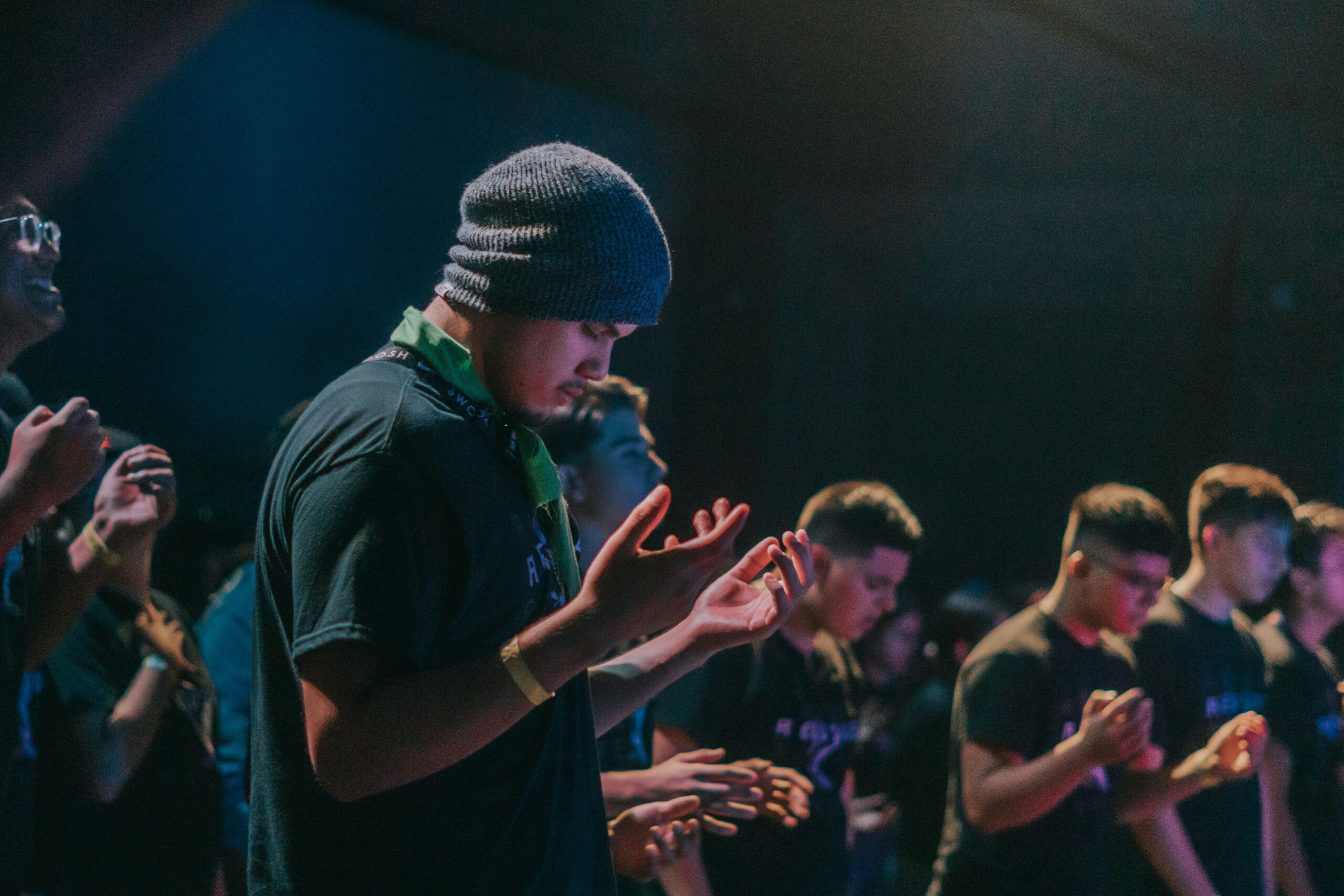
The social science of religious behavior documents a downstream benefit of religious upbringing that extends well beyond church attendance rates. Children raised in religious environments show measurably stronger protection against what researchers call the “big three” risks of adolescence. This pattern has appeared with enough consistency across independent data sets that many sociologists of religion describe it as one of the more robust findings in the field.
According to research on religious upbringing and adolescence published by the Institute for Family Studies, this protective effect is thought to operate through multiple simultaneous pathways: the social monitoring that a faith community provides, the internalization of behavioral norms, and the psychological resources — meaning, identity, and a sense of belonging — that religious frameworks can offer during developmentally vulnerable years.
Researchers consistently frame this as an observed association rather than a proven causal chain. Selection effects complicate the picture: families already oriented toward lower-risk behavior may also be more religious, making it difficult to determine how much of the protective effect is faith-specific versus a proxy for broader family stability. The finding also varies across traditions, cultures, and socioeconomic contexts, which limits the reach of any single generalization.
Where the Science Remains Contested

Not all findings in intergenerational religion research are settled. Scholars actively debate the relative weight of maternal versus paternal influence. Some studies suggest a father’s religious practice is a stronger independent predictor of sons’ adult religiosity; others find maternal influence dominant for daughters. The literature has not reached consensus on this question, and the answer likely varies substantially by denomination, cultural context, and family structure.
Socioeconomic status remains a significant confound throughout the field. Families with greater economic stability have more time and resources for structured religious participation, making it difficult to determine how much of the transmission effect is faith-specific versus a proxy for broader social capital and family stability. Researchers acknowledge this openly, and the better longitudinal studies attempt to control for it — though imperfectly.
Cultural and denominational variation is also substantial. Transmission rates documented in studies of white evangelical Protestants in the United States do not map cleanly onto findings from Catholic, Jewish, Muslim, or religiously unaffiliated populations. As reporting on how parents shape children’s religious futures acknowledges, limiting the generalizability of any single headline statistic is an important methodological discipline — one that the best researchers in this space apply consistently.
The field has also historically relied heavily on self-reported retrospective data, which is subject to memory bias and social desirability effects. Newer longitudinal studies — which track the same individuals over years rather than asking adults to reconstruct their childhoods — are beginning to address this limitation but have not yet fully resolved it. The direction of findings has remained consistent even as methods have improved; the effect sizes, however, continue to be refined.
What This Means for Parents, Policymakers, and Anyone Watching Religious Trends

For parents who care about transmitting faith, the social science converges on a message that is both clear and nuanced: the combination of consistent practice, open conversation, and genuine relational warmth is more predictive of adult religiosity than any single behavior in isolation. Attendance without connection carries less weight than the attendance statistics alone might suggest. Warmth without practice similarly underdelivers. The research makes a strong case that neither the logistics of churchgoing nor the emotional quality of family life can be treated as optional.
For demographers and policymakers tracking the documented decline in institutional religious participation across Western nations, these findings suggest the trend is likely self-reinforcing. As fewer parents attend services weekly, the next generation’s baseline probability of doing so drops measurably — and that effect compounds across cohorts. As coverage of the study’s findings on faith retention highlights, the family home is the single most critical variable in whether children carry faith into adulthood. Broader cultural forces — media, peers, higher education — matter, but they operate downstream of what happens inside the household.
For the broader public trying to understand why some families remain deeply religious across generations while others see faith dissolve within a single generation, the social science offers a grounded, non-mystical explanation. Religious behavior is transmitted through the same relational and social mechanisms that transmit most durable human values: repetition, relationship, and community embedded in daily life rather than reserved for Sunday mornings.
The research does not — and researchers are explicit about this — adjudicate the truth claims of any religious tradition. It describes a social process, not a theological verdict. Its findings apply equally to understanding how secular or non-religious worldviews pass between generations. What the data ultimately describe is the profound and consistently underestimated influence of the ordinary family home — not as backdrop, but as the primary institution shaping whether belief survives into the next generation.