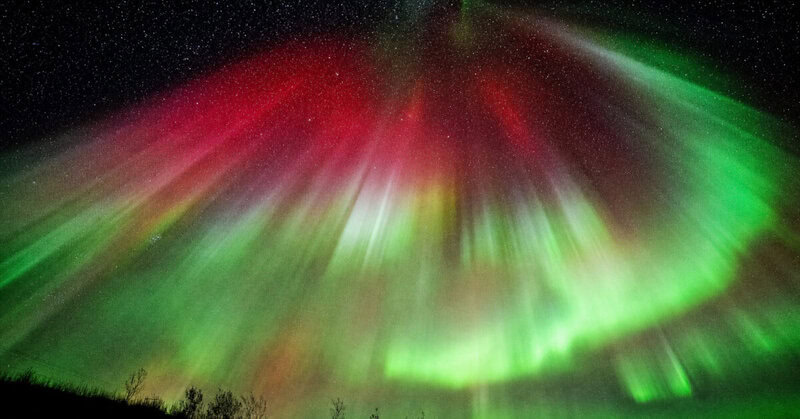
Green and red curtains ripple silently across the night sky, drawing gasps from anyone lucky enough to witness them — but at that exact moment, invisible electric currents may be coursing through the ground beneath their feet. The same solar fury painting that breathtaking display is fully capable of crippling power grids, disabling GPS systems, and knocking out satellites without a single visible warning sign.
What Actually Causes an Aurora
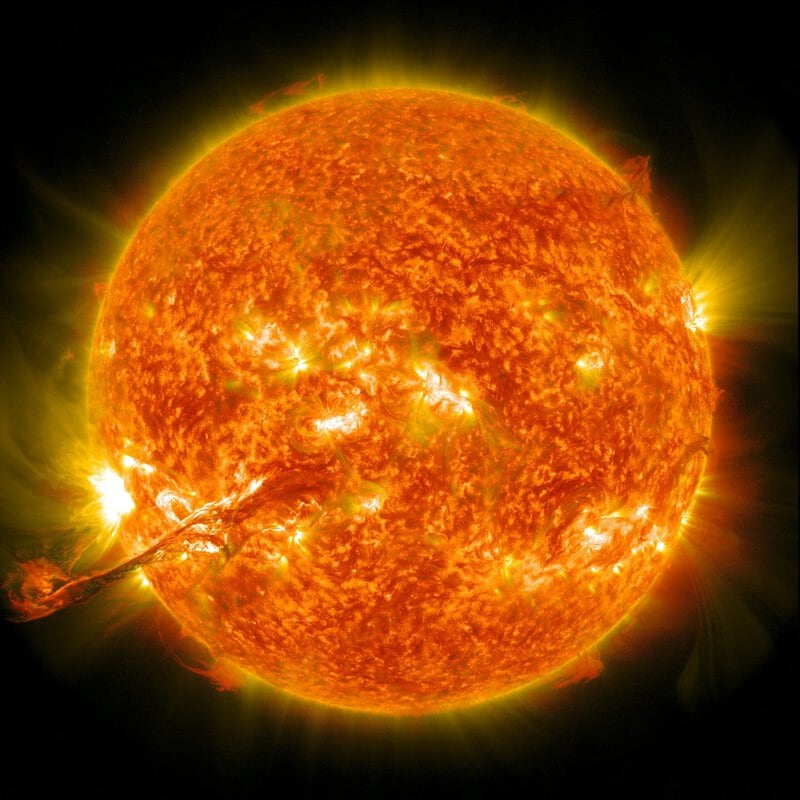
The sun is never truly quiet. It constantly sheds a stream of charged particles known as the solar wind, but the real drama begins with solar flares and coronal mass ejections — events in which the sun hurls billions of tons of magnetized plasma outward into space. When one of these plasma clouds reaches Earth, it slams into the planet’s magnetic field, compressing and distorting it in a phenomenon scientists call a geomagnetic storm.
That collision funnels energetic charged particles down along magnetic field lines toward the polar regions, where they collide with oxygen and nitrogen atoms high in the atmosphere. Those collisions release energy in the form of light — the aurora. The color depends on which gas is involved and at what altitude the collision occurs. Oxygen at lower altitudes, roughly 60 to 150 miles up, typically produces the vivid greens most people associate with the northern lights. Oxygen higher up, above about 150 miles, yields rarer shades of red. Nitrogen contributes blues and purples, though these are less commonly seen by the naked eye. Together, those varying collision altitudes and atmospheric gases produce the layered, rippling curtain appearance that makes auroras so visually arresting.
Understanding how auroras form is essentially understanding how space weather threatens infrastructure on the ground — because the two phenomena share exactly the same origin in the sun’s violent outbursts.
The Hidden Side of the Same Storm
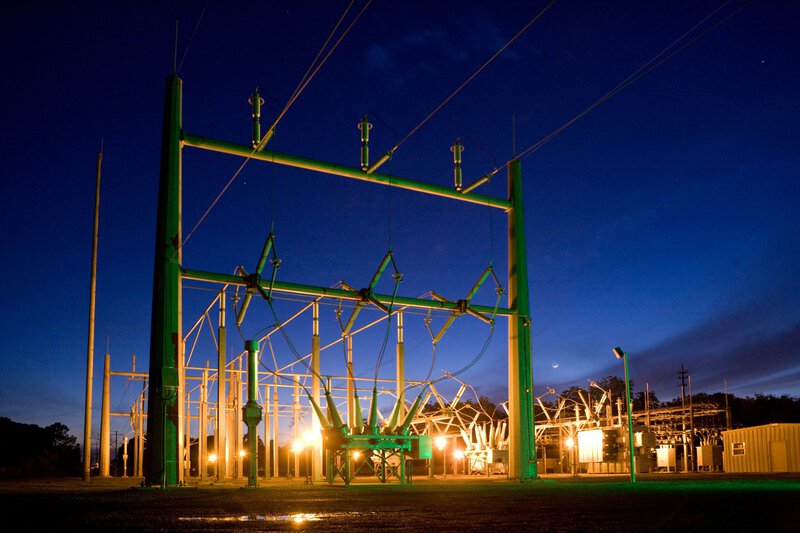
While observers crane their necks upward, the geomagnetic storm is simultaneously doing something far less picturesque far below. As the storm shakes Earth’s magnetic field, it induces electric currents deep in the planet’s crust. These are called geomagnetically induced currents, or GICs, and they travel through any long conducting path they can find: buried pipelines, railroad tracks, and especially high-voltage power transmission lines.
A single space weather event called a substorm — during which energy stored in Earth’s magnetosphere is explosively released tens of thousands of miles away — can drive electric currents powerful enough to damage transformers and other critical grid infrastructure. Unlike a lightning strike, which announces itself with light and sound and lasts a fraction of a second, GICs seep in quietly. They are essentially direct-current surges intruding on systems designed to handle only alternating current, and that mismatch can overheat transformer cores, cause them to draw excessive reactive power, and in severe cases permanently destroy the windings that make them functional. The damage can accumulate over the course of minutes or hours, long after the sky show has ended and observers have gone to bed.
The core danger lies in large power transformers. These devices are expensive, custom-engineered, and cannot simply be pulled from a warehouse shelf. Lead times for manufacturing a single high-voltage transformer can run from one to three years under normal industrial conditions. Replacing damaged units at scale following a major solar storm could cause blackouts that outlast virtually any natural disaster most people have planned for.
How Bad Can It Actually Get?
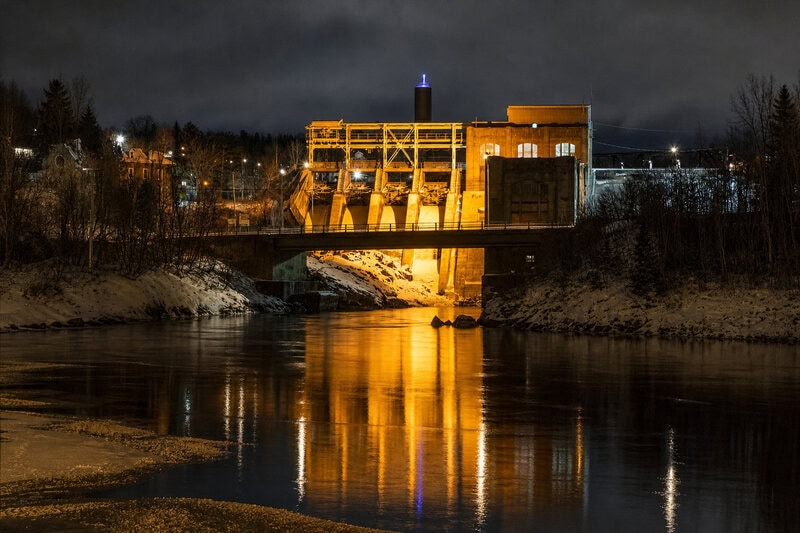
History provides a sobering answer. In March 1989, a severe geomagnetic storm collapsed the Hydro-Québec power grid in under 90 seconds, leaving approximately six million people without electricity for up to nine hours. The speed of the failure stunned engineers — a grid that took decades to build was neutralized faster than it takes to brew a pot of coffee. The same storm induced currents that damaged a large transformer at a nuclear power plant in New Jersey and caused voltage fluctuations across much of the northeastern United States.
That event, significant as it was, pales against the benchmark set in 1859. The Carrington Event — the most powerful geomagnetic storm in recorded history — induced currents so intense that telegraph wires caught fire and auroras were reported as far south as Cuba and Hawaii. Scientists and engineers who have modeled what a Carrington-scale event would mean for today’s interconnected grids describe scenarios involving widespread, long-duration blackouts affecting tens of millions of people, with cascading failures across water treatment, transportation, financial systems, and every other sector of modern life that quietly depends on electricity.
Strong geomagnetic storms also degrade satellite operations, reduce the precision of GPS systems that agriculture, aviation, and financial networks depend on, and disrupt the high-frequency radio communications that transoceanic flights rely on for navigation and safety. During the May 2024 geomagnetic storm — the strongest in roughly two decades — GPS errors were reported across multiple continents and auroras were visible as far south as Florida and Texas.
Why Power Grids Are Especially Vulnerable
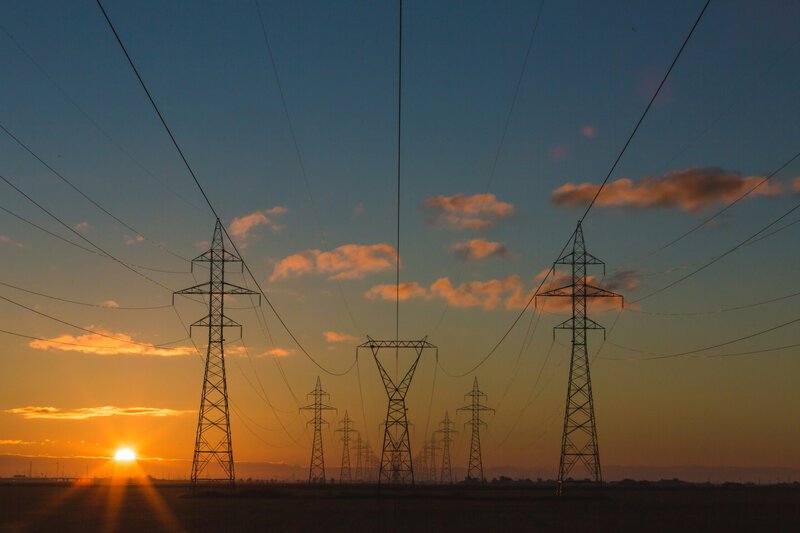
Modern high-voltage transmission lines behave, in physical terms, like enormous antennas. The longer the line, the greater the voltage that a geomagnetic storm can induce along it. The twentieth-century drive toward larger, more interconnected grids — built to move power efficiently across vast distances — inadvertently created infrastructure with an outsized vulnerability to space weather. Efficiency and resilience, in this case, pulled in opposite directions.
Geographic location matters too. Regions at higher latitudes sit closer to the magnetic poles where geomagnetic storm effects are most intense, placing countries like Canada, Norway, Sweden, and Finland at elevated baseline risk. But during extreme events, dangerous induced currents can extend well into mid-latitude regions, putting densely populated areas of the United States and Europe squarely in the crosshairs. The geology beneath a grid also plays a role: regions underlain by resistive rock, such as the Canadian Shield or parts of Scandinavia, force GICs to flow more heavily through surface infrastructure rather than dissipating into the earth, amplifying the risk.
What Scientists and Grid Operators Are Doing About It
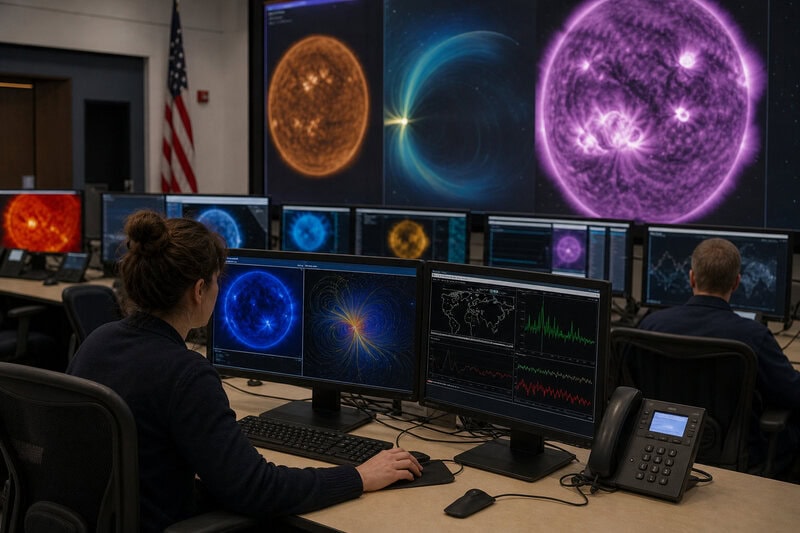
Awareness of the threat has grown considerably, and so has the response. NOAA’s Space Weather Prediction Center monitors the sun continuously, issuing storm watches and warnings that can give grid operators anywhere from 15 minutes to an hour of lead time before a coronal mass ejection arrives. That window is narrow, but it is enough to take protective actions — reducing load, adjusting transformer settings, or switching equipment offline temporarily to shield it from incoming current surges.
Some utilities have begun installing GIC monitoring equipment and neutral-blocking devices on transformers, which reduce the pathways through which induced currents can flow. Researchers are also working to extend forecasting windows by studying the structure of coronal mass ejections closer to the sun, before they begin their one-to-three-day journey to Earth. Better knowledge of a CME’s internal magnetic orientation — particularly whether its field points southward, which is the configuration most likely to trigger a severe geomagnetic storm — could dramatically improve the usefulness of early warnings.
At a policy level, space weather has been formally recognized as a critical infrastructure risk by governments in the United States, the United Kingdom, and the European Union, prompting national resilience strategies and international cooperation that would have seemed unnecessary a generation ago. Research published through institutions including the University of Michigan and covered by Phys.org continues to sharpen the scientific community’s understanding of how these storms propagate and what they affect when they arrive.
The Next Time You See the Northern Lights, Remember This
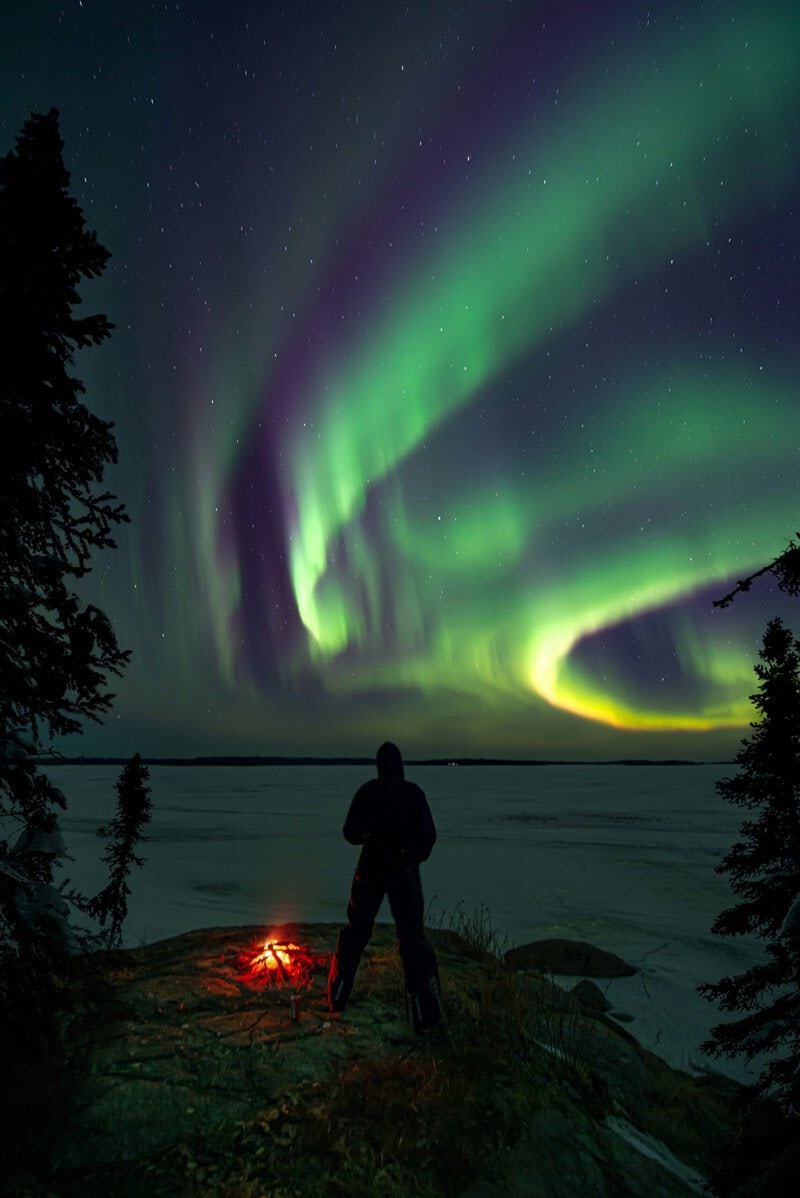
An aurora is not simply a light show. It is visible proof that Earth’s magnetic field is being shaken by a force originating 93 million miles away — and that the same physics producing those green and red curtains overhead is simultaneously stressing infrastructure on the ground. Space weather occupies a strange category among natural hazards: it is beautiful in its most visible form, entirely silent and invisible in its destructive one, and completely beyond human control. The only meaningful responses are preparation and early warning.
The sun moves through an approximately 11-year activity cycle, with solar maximum — the peak of sunspot activity and the period of greatest flare and CME frequency — representing the window of highest risk. As solar activity remains elevated in the mid-2020s, the frequency and potential intensity of geomagnetic storms warrant serious attention from grid operators, policymakers, and the public alike. The science of space weather is not an academic curiosity. It is an urgent and underappreciated dimension of infrastructure risk, as detailed by researchers writing for The Conversation and further examined at outlets including the Seattle Post-Intelligencer. The sky’s most beautiful disaster deserves far more attention than it typically receives — before the next major storm makes the case in the most disruptive way possible.