
In 2017, a team of neuroscientists published a finding in Nature Neuroscience that upended a comfortable assumption: ordinary adults with no special memory training, after just six weeks of practice with an ancient Greek spatial-memory technique, could recall nearly twice as many words as control groups — and brain scans revealed no structural difference between their brains and those of world-class memory champions. The edge was not biological. It was strategic.
The Ancient Blueprint: What the Method of Loci Actually Is

The method of loci — from the Latin locus, meaning “place” — is a mnemonic technique in which a memorizer mentally walks a familiar route and deposits vivid images representing information to be recalled at specific landmarks along the path. It is not a metaphor. It is a functional cognitive tool with a documented history stretching back more than two millennia.
Its origins are recorded by Cicero in De Oratore, attributed to the Greek poet Simonides of Ceos around 477 BCE. According to Cicero, Simonides was able to identify victims of a collapsed banquet hall by mentally revisiting where each guest had been seated — establishing the foundational principle that location anchors memory in a way that abstract sequence alone cannot. Greek and Roman orators subsequently used the technique as standard rhetorical training, memorizing hours-long speeches without notes by mentally walking through familiar architecture and reading off the images they had placed there.
The popular modern term “memory palace” refers to exactly this technique: a self-constructed mental architecture of interconnected spatial locations used as a retrieval scaffold. Contemporary practitioners — including those trained through Anthony Metivier’s Magnetic Memory Method — work from the same structural principle Simonides demonstrated, scaled and systematized for 21st-century learning goals.
The Neuroscience: Why Your Brain Is Already Wired for This
The reason the method of loci works is not mystical. It is anatomical. The hippocampus, a seahorse-shaped structure deep in the medial temporal lobe, serves a dual role that makes spatial memory and episodic memory inseparable by design. John O’Keefe and colleagues, whose work earned the Nobel Prize in Physiology or Medicine in 2014, identified “place cells” in the hippocampus — neurons that fire in response to specific spatial locations. Critically, these same circuits are recruited during the encoding of episodic memories, meaning the brain uses geography as a default filing system.
The Dresler et al. (2017) study, conducted in part at the Donders Institute for Brain, Cognition and Behaviour in the Netherlands, made this connection measurable. After method-of-loci training, participants’ fMRI scans showed increased functional connectivity between the hippocampus and regions of the default mode network associated with scene construction and autobiographical memory. The technique was not merely helping people remember more — it was reshaping how brain regions collaborated during the act of remembering.
Cognitive psychologists describe the underlying mechanism as elaborative encoding: the process of connecting new, abstract information to rich, pre-existing mental representations. Connecting a new piece of information to a familiar location, a vivid image, and an emotional response simultaneously recruits spatial, semantic, and episodic memory systems at once, dramatically increasing the probability of later retrieval. A memory palace is essentially an engineered scaffold for elaborative encoding — a systematic way of forcing the brain to process information deeply rather than superficially.
An important epistemic boundary deserves acknowledgment here: while the short-term benefits of method-of-loci training are well-replicated across multiple studies, long-term retention curves and transfer effects to everyday memory tasks remain active areas of research. Scientists have not yet reached consensus on optimal training protocols, and readers should treat emerging findings with appropriate caution.
Why Rote Repetition Fails and Spatial Encoding Wins
The cognitive case against rote repetition was formalized by Fergus Craik and Robert Lockhart in their 1972 “levels of processing” framework, still widely cited in cognitive psychology. Their central argument: information processed at a “deep” semantic and associative level is retained far more durably than information processed at a “shallow” level, such as the simple phonological repetition involved in reading a word over and over.
The contrast is concrete. Trying to memorize a foreign vocabulary word by repeating it twenty times engages shallow phonological processing — the information barely touches the brain’s meaning-making machinery. Placing a vivid, absurd mental image of that word’s meaning inside a specific room of your childhood home engages spatial, semantic, and episodic processing simultaneously, recruiting multiple overlapping memory systems in a single act of encoding. The depth of processing is not comparable.
A complementary finding reinforces the memory palace structure further. Henry Roediger and Jeffrey Karpicke, writing in Psychological Science in 2006, documented what is now called the “testing effect”: retrieval practice — actively attempting to recall information — strengthens memory traces more robustly than re-studying the same material does. Mentally re-walking a memory palace and reconstructing the images placed at each station is, by its very structure, a retrieval practice exercise. The technique builds in a proven memory mechanism without requiring the learner to consciously schedule it.
A genuine limitation deserves honest acknowledgment: the cognitive overhead of building and populating memory palaces is real. For small volumes of information needed only briefly, simpler strategies may be equally effective and considerably less effortful. The technique earns its complexity at scale — when the goal is long-term retention of large amounts of material.
What the Brain Scans of Memory Champions Actually Show
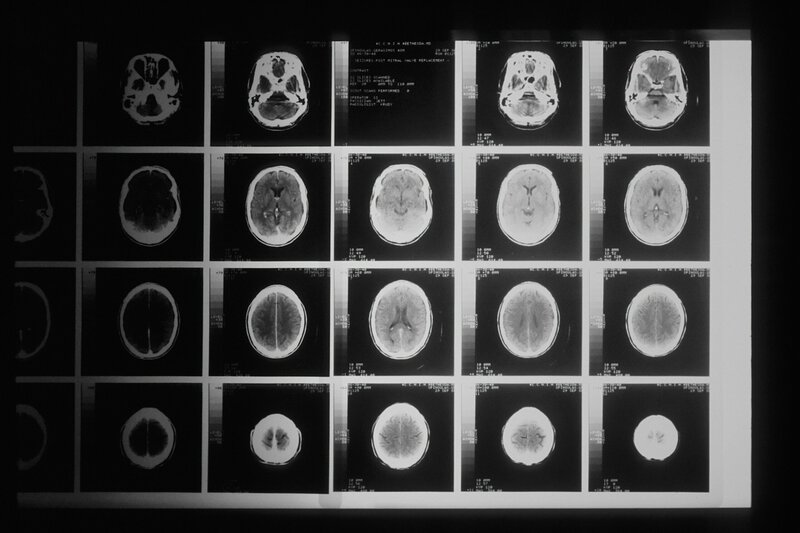
The most striking finding of the Dresler et al. (2017) study was not what distinguished memory champions from ordinary people — it was what did not. Champions showed no difference from controls in baseline memory performance before their own training began, in IQ scores, or in hippocampal volume. The popular assumption that elite memorizers are neurologically exceptional did not survive contact with the imaging data.
What did differ was functional, not structural. Resting-state fMRI revealed that champions’ brains showed stronger connectivity across a specific network of regions including the medial prefrontal cortex, posterior cingulate, and hippocampus — a pattern consistent with habitual use of self-referential, spatial, and narrative memory strategies. Their brains had been shaped by practice, not endowed by genetics.
More striking still: after six weeks of method-of-loci training, novices’ brains began to show connectivity patterns that resembled those of the champions — a result the authors described as evidence of experience-dependent plasticity in memory network organization, while appropriately cautioning that longer follow-up studies would be needed to establish durability. The science supports a clear and citable conclusion: superior recall among memory champions reflects a learned cognitive strategy, not a biological gift — a distinction with significant implications for how memory training should be approached in schools and workplaces.
The Magnetic Memory Method: A Systematic 21st-Century Framework
Anthony Metivier is the founder of the Magnetic Memory Method, a structured approach to applying memory palace techniques for practical learning goals: foreign language vocabulary acquisition, retaining names and faces, memorizing written material, and building durable knowledge across disciplines. The method is delivered as a set of video courses organized around a teachable system rather than informal tips, making it one of the more comprehensively packaged consumer applications of technique-based memory training currently available.
The term “magnetic” in Metivier’s framework refers to a specific encoding principle: rather than passively reviewing flashcards, learners construct multi-sensory, emotionally vivid mental images at defined palace locations. The brain encodes emotionally salient and spatially embedded information preferentially — a process directly consistent with the elaborative encoding research described above. Making information “magnetic” is, in cognitive psychology terms, a systematic method for forcing deep processing.
Metivier organizes the method around the principle of L.O.C.I. — linking information to familiar spatial locations as the cognitive foundation the neuroscience supports. A Forbes article from January 2019 examined claims about dramatically improved memory recall associated with technique-based training of this kind.
A distinction matters here and should be stated plainly. The underlying technique — the method of loci — has strong, replicated empirical support from peer-reviewed research. Whether Metivier’s specific pedagogical sequencing outperforms other structured loci-training programs has not, to this article’s knowledge, been independently studied in a controlled trial. Learners evaluating the method should weigh the robust science behind the core technique alongside the absence of method-specific comparative trials. Independent practitioner perspectives, such as the language-learner review published by Fluent in 3 Months, offer useful ground-level assessments in the absence of clinical comparisons.
How to Start: Turning the Science Into Practice

The foundational steps that practitioners and researchers broadly agree on require no special equipment and can begin immediately. The process, reduced to its essential structure, runs as follows:
- Select a highly familiar location — a childhood home, a regular commute route, a school building — where the spatial layout is already deeply encoded and requires no conscious effort to visualize.
- Identify five to ten distinct stations along a logical path through that location: the front door, the entrance hallway, the kitchen counter, a window. Sequence matters; consistency matters more.
- Assign one vivid image per station to represent each piece of information to be learned. Images that are bizarre, action-based, or personally meaningful encode more deeply than neutral ones — a direct application of the elaborative encoding principle.
- Re-walk the palace mentally at spaced intervals, reconstructing each image from memory rather than reviewing notes. This step operationalizes the testing effect without requiring additional scheduling effort.
Metivier’s framework gives learners a procedural scaffold for each of those steps rather than leaving them to construct the system from abstract principles alone. His Magnetic Memory Method Podcast and video content extend the framework across specific use cases, from vocabulary acquisition to professional presentations. Those who prefer following his work on social platforms can also find ongoing guidance via his Instagram presence, where shorter demonstrations and practitioner exchanges supplement the longer course material.
Realistic Expectations and the Longer Horizon
Honest expectations, grounded in the research, matter as much as technique. The Dresler et al. study used approximately 30 minutes of daily training over six weeks to achieve statistically significant improvements — meaningful gains that required structured, consistent investment, not a weekend shortcut. The technique rewards sustained practice in direct proportion to the depth of encoding it demands. Learners who expect instant results without building and revisiting actual palaces will not replicate those outcomes.
Two further caveats are worth naming. First, the emotional vividness and personal relevance that make images “magnetic” are inherently subjective — what encodes deeply for one learner may feel flat for another, which means some experimentation with image construction is unavoidable before the system runs smoothly. Second, the palaces themselves require maintenance: a location visited only once and never mentally re-walked will fade just as any memory does without retrieval practice.
The longer horizon is genuinely promising, if appropriately tentative. Researchers at institutions including the Donders Institute continue to investigate whether method-of-loci training can be adapted for clinical populations experiencing age-related memory decline. If larger, longer trials confirm those early signals, the significance of this ancient technique may extend well beyond competitive memorization — into medicine, education, and the basic question of how long the human brain can remain sharp. That research is ongoing. What the existing evidence already establishes is more than enough to justify picking a familiar hallway and placing the first image.