
A paleontologist cracks open a 68-million-year-old Tyrannosaurus rex femur and finds something that should not be there: flexible, translucent tissue, structures that look disturbingly like blood vessels, and cell-like forms that conventional science insists cannot survive at this age. That discovery did not just surprise researchers — it forced a fundamental rethink of everything paleontology had assumed about the limits of fossil preservation, and it launched an entirely new discipline in the process.
The Discovery That Started It All: Mary Schweitzer and the T. Rex That Defied Decay
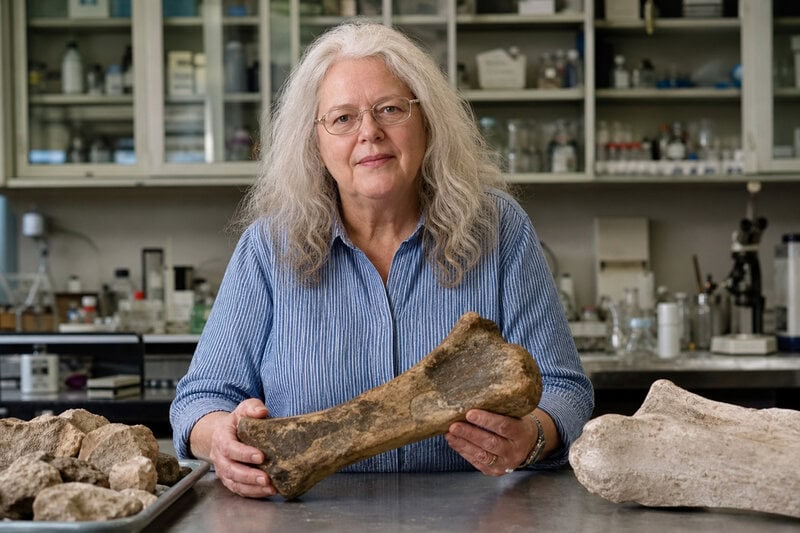
Paleontologist Mary Schweitzer made headlines — and enemies — when her laboratory produced evidence of soft tissue preserved inside dinosaur bones. The specimen at the center of the controversy was a T. rex femur recovered from Hell Creek Formation in Montana, and what her team found inside it was, by any conventional measure, extraordinary: flexible, hollow structures resembling blood vessels, what appeared to be intact cell-like forms, and fragments of recognizable proteins.
The skepticism was fierce and understandable. The prevailing scientific consensus held that organic molecules degrade completely within roughly one million years. At 68 million years old, surviving soft tissue was not just unlikely — it was supposed to be chemically impossible. Critics proposed alternative explanations: bacterial biofilms mimicking tissue structures, contamination in the laboratory, errors in interpretation. Each objection was taken seriously, tested, and in most cases found insufficient to explain away the totality of what Schweitzer’s team had observed.
The findings did not vanish under scrutiny. They multiplied. Independent researchers began reporting similar preserved material in other specimens — hadrosaurs, mosasaurs, and additional theropods — and the debate shifted gradually from outright denial to a harder, more productive question: if this tissue is real, how did it survive?
What “Oldest Dinosaur Blood” Actually Means — And Why the Label Matters
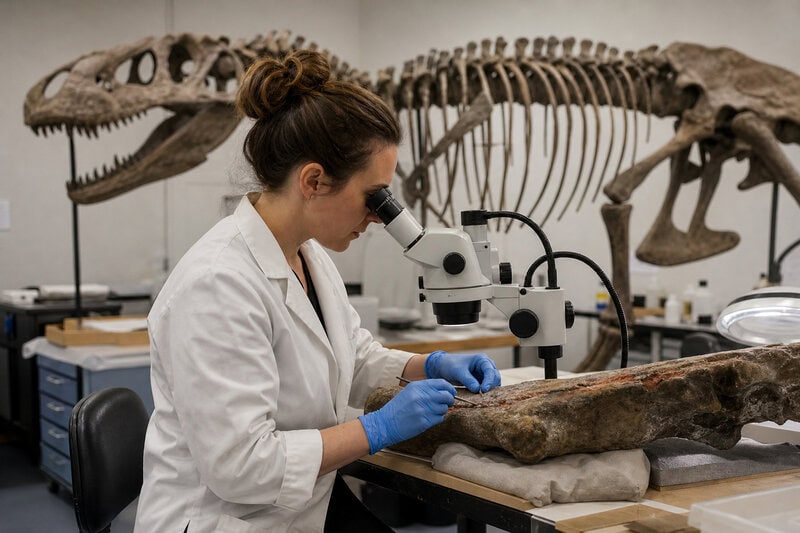
Headlines about the oldest dinosaur blood discovery tend to blur a distinction that matters enormously to scientists. Finding structures that resemble blood vessels or blood cells is not the same as finding chemically intact, sequenceable blood. The difference is significant, and collapsing it generates misunderstanding on both sides of the debate.
What researchers have actually confirmed in the best-studied specimens falls into a category scientists call “original biomaterial” — organic material that has not been entirely replaced by minerals during the fossilization process. The Institute for Creation Research notes that quality analytical science has confirmed the presence of original biomaterial in dinosaur fossils — a point that crosses ideological lines in this scientific conversation, because even researchers who disagree sharply on the implications agree that something genuinely organic is present in these bones.
Under mass spectrometry — an analytical technique that identifies molecules by their molecular weight — the preserved proteins in dinosaur fossils appear as fragmented but identifiable sequences. Critically, some of those sequences match collagen found in modern birds and crocodilians, the closest living relatives of non-avian dinosaurs. The “oldest” label is significant not merely for the age it represents but for what the surviving chemical detail can reveal: partial biochemical profiles of animals that have been extinct for tens of millions of years, profiles that can now be compared directly against living descendants.
The Science of Survival: How Does Soft Tissue Last Millions of Years?
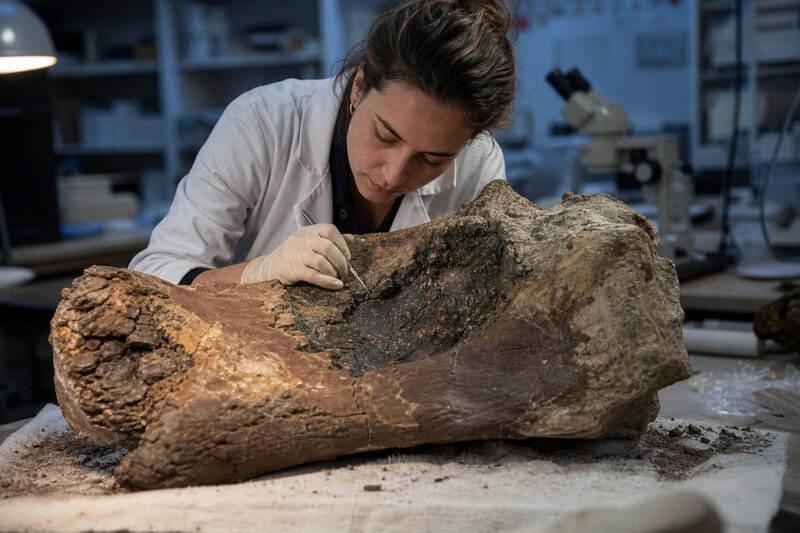
Several hypotheses compete to explain how any organic material survives deep time, and the honest answer is that no single mechanism fully accounts for every documented case. The leading candidates include:
- Iron as a natural fixative: Hemoglobin releases iron when red blood cells break down. That iron may generate free radicals that cross-link surrounding proteins, effectively preserving them in place the way a laboratory fixative would. Researchers have tested this mechanism experimentally using modern tissue samples, producing results that support the hypothesis as at least a partial explanation.
- Rapid burial: Specimens quickly covered by sediment are cut off from oxygen and from the microbial activity that drives decomposition. Speed of burial appears to correlate with quality of preservation across multiple fossil sites, suggesting that early isolation from the biological environment is a critical factor.
- The bone matrix as a microenvironment: Dense cortical bone may create a physically and chemically protective shell around interior soft tissue, shielding it from groundwater infiltration, microbial colonization, and environmental fluctuation over geological timescales. The interior of a large, dense bone is a fundamentally different preservation environment from exposed surface tissue.
It is equally important to be precise about what preservation means in this context. The surviving material is not pristine biological tissue. It is highly degraded, chemically altered, and cross-linked — a molecular shadow of the original structure rather than a faithful copy. A detailed analysis from BioLogos examines what the soft tissue evidence in dinosaur bones actually demonstrates, and it reinforces this nuance clearly: authenticity and intactness are not the same thing. Independent laboratory replications have increasingly supported the case for original dinosaur tissue rather than microbial mimicry, shifting the central debate from whether such material exists to how it persisted and what it can teach us.
The DNA Question: Why Jurassic Park Stays Fiction
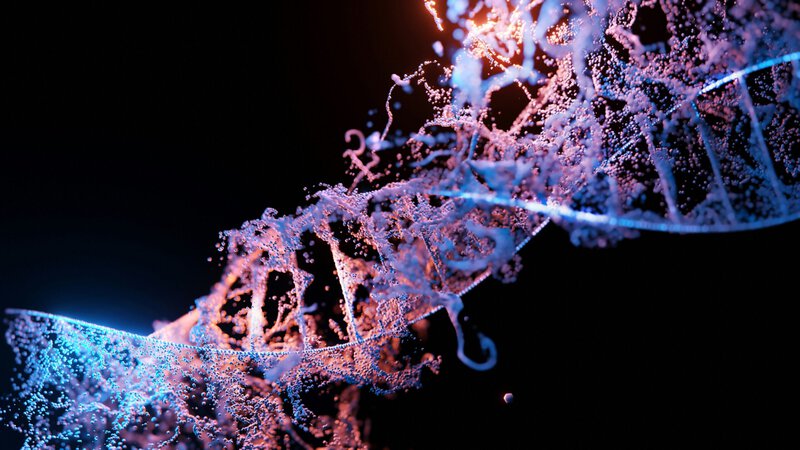
The question almost every reader arrives at is the obvious one: if soft tissue can survive 68 million years, does that mean dinosaur DNA is recoverable? The answer is unambiguous — no — and the reasons are grounded in chemistry rather than pessimism.
Despite sustained effort by research teams around the world, scientists have never recovered a single confirmed, reproducible sequence of dinosaur DNA. The molecule is far more structurally fragile than proteins such as collagen. Even under near-ideal preservation conditions — cold, dry, chemically stable environments — DNA degrades beyond any practical usability within roughly one million years. The phosphodiester bonds that hold the genetic code together simply cannot withstand geological time the way certain structural proteins apparently can. The mechanisms that may preserve collagen offer no equivalent protection to nucleic acids.
The widespread public misconception, fed by decades of popular culture, is that soft tissue preservation and DNA preservation are equivalent phenomena. They are not. Finding collagen fragments in a dinosaur bone is a genuinely extraordinary scientific achievement. It is not, however, finding a genetic blueprint. What is emerging, piece by careful piece, is a richer biochemical picture of how these animals actually lived — not a path to resurrection, but a path to understanding.
What These Fossils Actually Tell Us — And What They Cannot
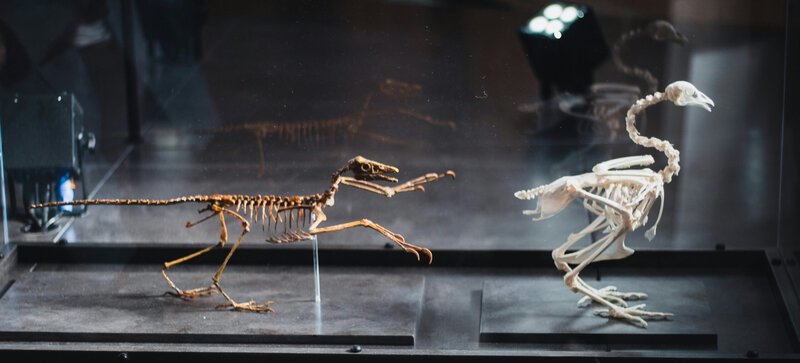
The scientific gains from preserved proteins in dinosaur fossils are significant and continuing to grow. The collagen sequences recovered from specimens have provided molecular evidence — not just anatomical inference — that confirms the evolutionary relationships between non-avian dinosaurs and modern birds. Researchers now have biochemical data to place alongside the skeletal and feather evidence that had already pointed in that direction. The two lines of evidence reinforce each other, strengthening the overall picture of dinosaur evolution in ways that neither line could achieve independently.
Protein analysis also opens partial windows into physiology. Researchers can begin to ask informed questions about dinosaur metabolism, growth rates, and even potential pathways for biological coloration — questions that bones alone cannot answer. Recent reporting from Science Daily covers continued advances in what recovered biomaterials from dinosaur specimens are revealing, reflecting how rapidly this area of inquiry is developing. These are not complete answers, but they are real ones, derived from molecular evidence that sat inside museum specimens for decades before anyone knew to look for it.
The limits deserve equal honesty. The recovered fragments are too degraded and incomplete to reconstruct a full organism, to answer deep genomic questions, or to provide anything approaching a comprehensive biological portrait. The value of these discoveries lies less in any single answer they supply and more in how they refine preservation models and expand the boundary of what fossils can reveal — forcing scientists to ask sharper, better-calibrated questions about molecular survival across deep time.
Where the Field Goes From Here: The Rise of Molecular Paleontology
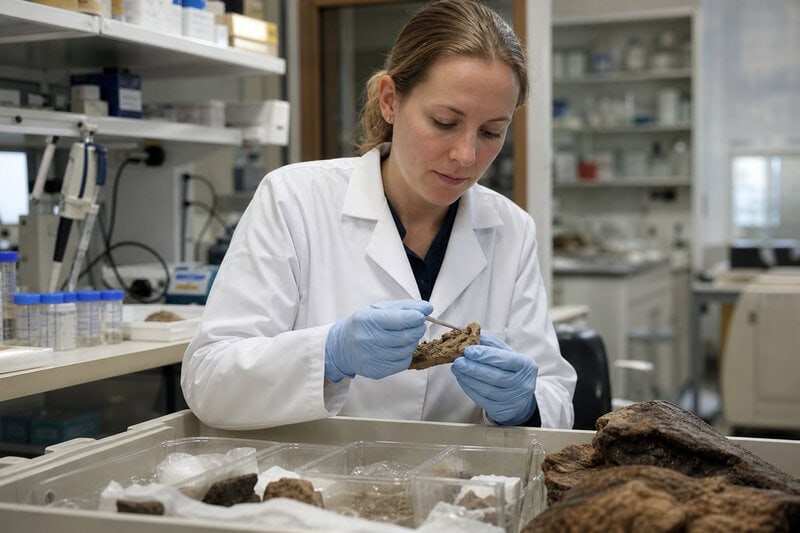
This is an accelerating field. Advances in imaging technology, mass spectrometry, and ancient protein analysis — a discipline now called paleoproteomics — are opening research pathways that seemed permanently closed a decade ago. Researchers are systematically surveying existing museum collections, examining specimens that have sat in storage for generations, specifically searching for overlooked soft tissue preservation. The evidence strongly suggests that many more discoveries are waiting in specimens already collected and catalogued.
The upper limit of soft tissue survival remains genuinely unknown. Every new confirmed find pushes that boundary further back in geological time and raises the possibility that molecular paleontology may ultimately reach further into the past than even its most optimistic practitioners currently predict. The bones that contain these molecular remnants have always been there. What has changed is the sophistication of the tools scientists bring to them — and, perhaps more importantly, the willingness to accept that bones tens of millions of years old might still have something chemically meaningful left to say.