
Despite being one of the most sought-after sport fish in the Eastern Pacific, the roosterfish remains one of the least scientifically understood — a striking gap that a new international research effort is now working to close. Announced on June 15, 2026, the College of Idaho’s roosterfish study in Baja, Mexico represents one of the first structured scientific investigations of the species’ movement patterns in the Gulf of California. Here is what makes the project significant, and why it matters beyond the walls of a small liberal-arts college in Idaho.
A Biology Professor Takes Roosterfish Science Into the Field
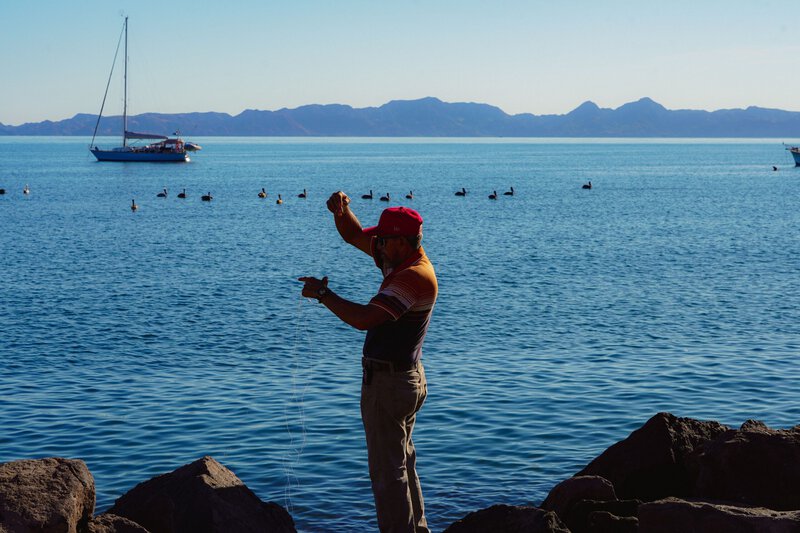
Dr. Chris Walser, a professor of biology at the College of Idaho, personally traveled to Baja, Mexico to lead the expedition’s initial fieldwork. The project carries international scope and collaborative reach that extends well beyond its home campus — a notable achievement for an institution of the College’s size. The decision to focus on the Gulf of California reflects deliberate scientific strategy: roosterfish populate these waters in significant numbers, yet almost no peer-reviewed movement or population data has been collected there. Walser’s expedition is as much a foundation-building exercise as a data-collection mission, establishing the methodological and logistical groundwork for studies that will follow.
Four Tagged Fish — and Why That Small Number Matters
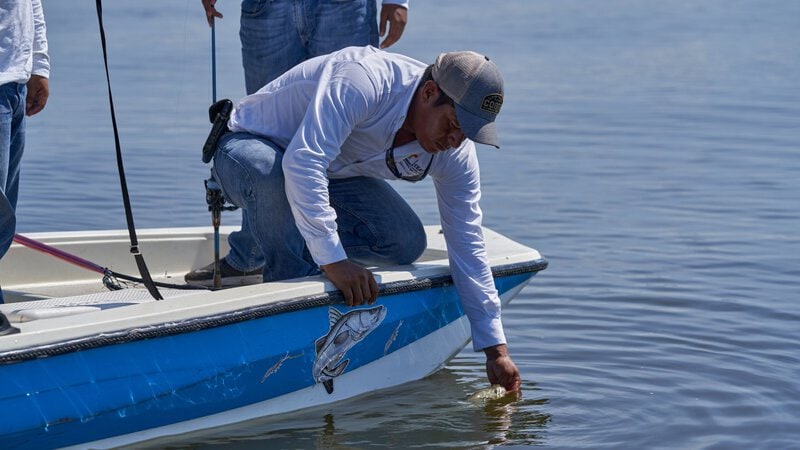
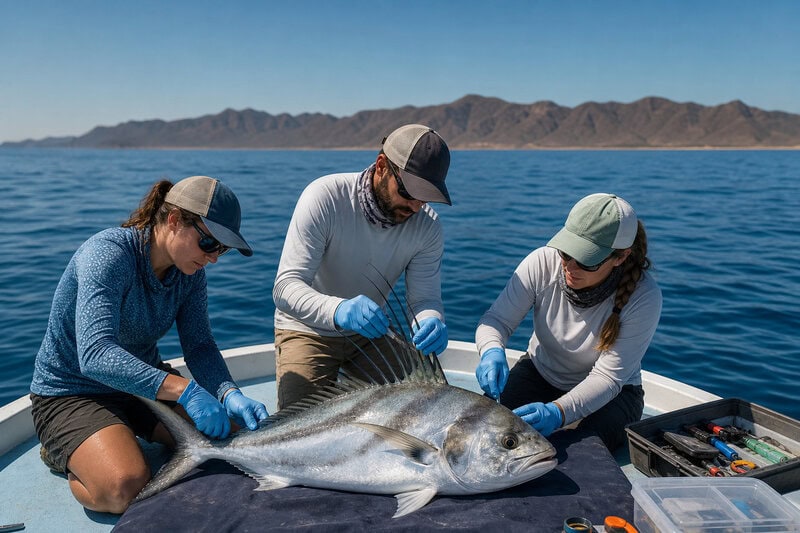
During the initial expedition, Walser’s team successfully tagged four roosterfish — a modest tally that nonetheless constitutes a meaningful first dataset for a species with virtually no satellite-tracking history. Each individual required careful catch-and-tag fieldwork in coastal Baja waters before release, a logistically demanding process in an open-ocean environment where target animals are neither predictable nor easy to handle safely.
In emerging fields of fish ecology, even a small cohort of tagged individuals can generate movement data that fundamentally shifts scientific understanding of a species. Four properly instrumented data points can establish behavioral baselines, reveal migration corridors, and identify habitat preferences that were previously invisible to researchers — provided the tags perform as designed and the data are recovered successfully.
Pop-Up Satellite Tags: Tracking Fish Across Two Dimensions at Once
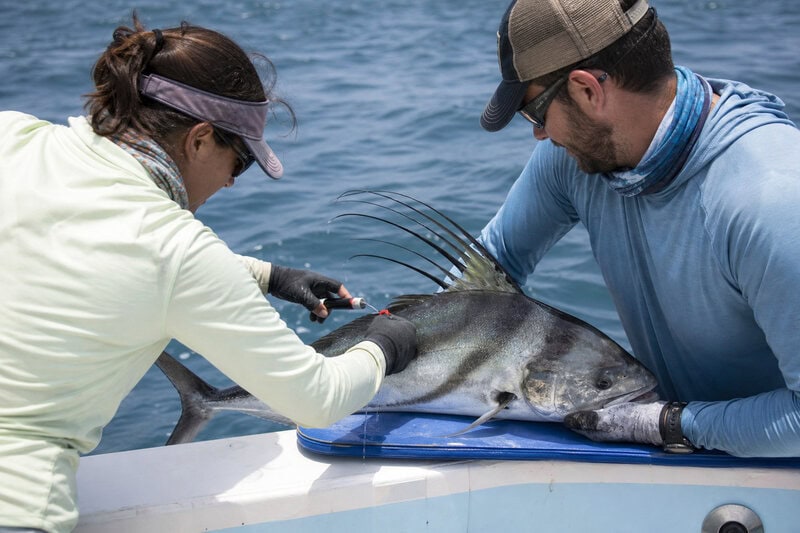
The team deployed pop-up satellite archival tags, known as PSATs — devices that physically attach to a fish, record data continuously over a programmed period, then detach on a preset schedule and float to the ocean surface, where they transmit stored information to an orbiting satellite. The technology allows researchers to follow individual animals across open water without any need for physical recapture, a critical advantage when studying wide-ranging marine species.
The tags capture both horizontal movements — where a fish travels geographically — and vertical movements, meaning how deep the fish dives at different times of day. This dual-axis tracking is essential for constructing a complete picture of roosterfish habitat use, daily behavior, and vulnerability to specific types of fishing pressure. Additional detail on the tagging methodology has been shared through the College of Idaho’s official social media coverage of the project.
Depth Behavior: A Surprisingly Unresolved Question
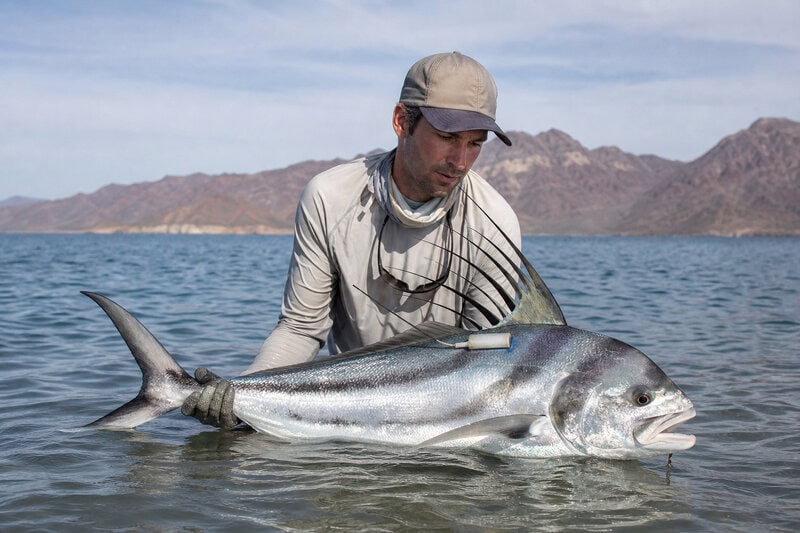
Roosterfish are characteristically coastal animals, rarely straying into deep offshore water — yet the precise boundaries of their depth range are not well documented in peer-reviewed literature. The satellite tags’ vertical-tracking capability was selected specifically to quantify this behavior: establishing with empirical data how shallow roosterfish consistently remain, and whether that shallowness varies by time of day, season, or geographic location along the Baja coast.
Understanding depth preferences carries direct conservation relevance. It determines which fishing methods intersect most heavily with the species, which habitat zones warrant the strongest protection, and which marine protected areas are most ecologically relevant to roosterfish survival. Without reliable depth data, even well-intentioned conservation policies risk being misaligned with the fish’s actual biology.
The Gulf of California: Ground Zero for the Species and the Study
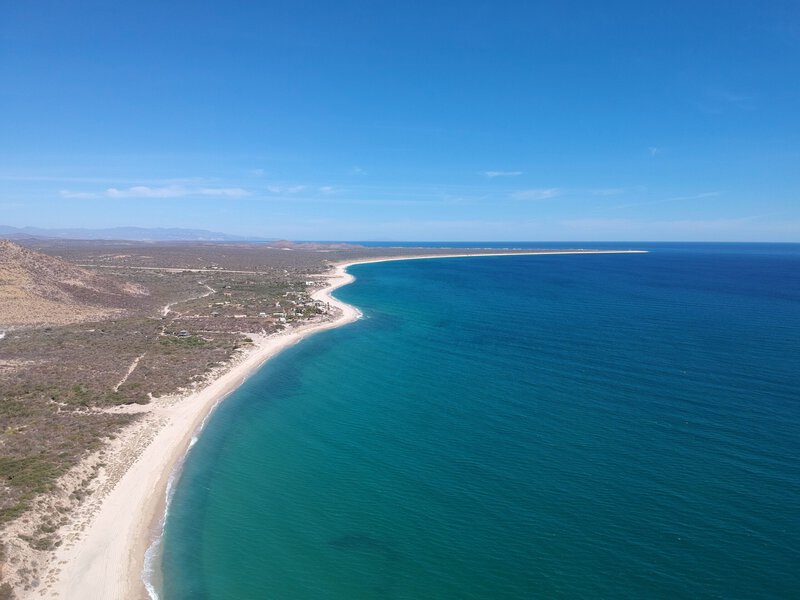
Roosterfish (Nematistius pectoralis) are found exclusively along the coastal Eastern Pacific, ranging from Baja California, Mexico, southward to Peru — an entirely restricted geographic range that makes them a species of particular regional significance. The Gulf of California, sometimes called the Sea of Cortez, sits at the northern apex of that range and is widely recognized by marine biologists as one of the world’s most biodiverse marine environments.
Walser’s team selected the Gulf as its primary study site because it represents critical roosterfish habitat where almost no movement or population data has previously been collected. As regional documentation of the species confirms, the Gulf supports substantial roosterfish populations that have long attracted anglers but received comparatively little formal scientific attention.
Formal Roosterfish Research Is Barely Four Years Old
The International Game Fish Association established its Roosterfish Research Program only in 2022, meaning organized scientific inquiry into the species is strikingly recent. An initial IGFA investigation into roosterfish population connectivity — how geographically separate groups of fish relate to one another genetically and behaviorally — was not completed until January 2025, leaving the field with only the earliest layers of foundational knowledge.
These timelines underscore a remarkable reality: roosterfish, despite being one of the Eastern Pacific’s most recognizable and heavily targeted sport fish, were largely overlooked by marine science until the current decade. The College of Idaho study enters a scientific literature that is, by any reasonable measure, nearly empty.
Population Connectivity: The Central Unknown the Study Aims to Resolve
Population connectivity refers to whether roosterfish inhabiting Baja’s coastal waters belong to the same breeding and migrating population as fish found farther south toward Peru — a question with major implications for how the species should be managed and conserved. If roosterfish form isolated local populations rather than one interconnected stock, overfishing in a single region cannot be offset by immigration from elsewhere, making each regional group far more ecologically fragile than it might otherwise appear.
The IGFA’s January 2025 connectivity investigation was a necessary first step. The College of Idaho’s satellite-tagging work in the Gulf of California aims to generate the direct movement data needed to determine whether individual fish stay close to home or range widely across the broader Eastern Pacific — information that no previous study had produced. The College of Idaho’s official announcement provides full context on the project’s goals and institutional partnerships.
An Iconic Fish That Science Has Long Neglected
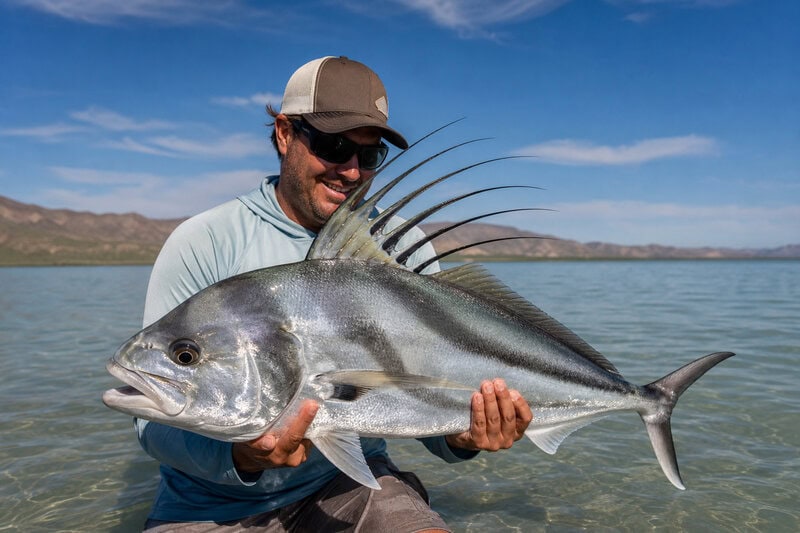
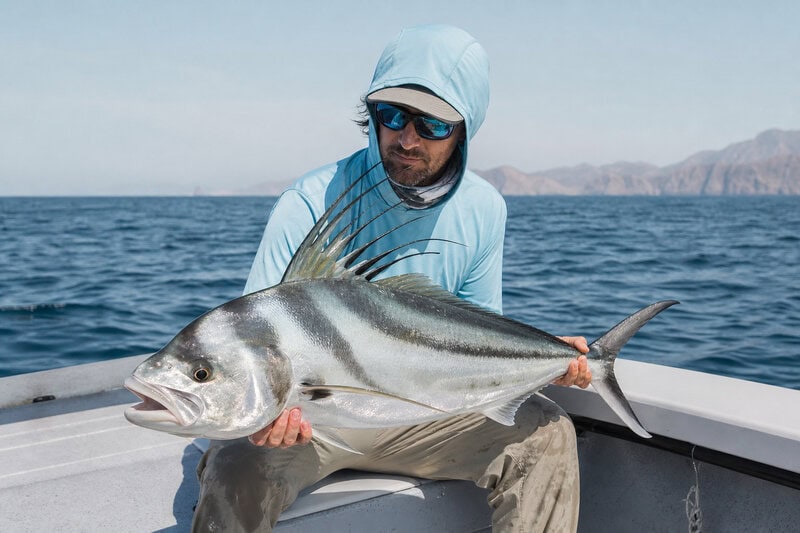
Roosterfish are among the Gulf of California’s most recognizable species, instantly identifiable by their distinctive seven-spined dorsal comb and prized by recreational anglers for their aggressive surface strikes. Their prominence in catch-and-release sport fishing makes them economically significant to coastal communities throughout Baja — supporting guides, tourism operators, and local businesses that depend on healthy, sustainable fish populations.
Yet that cultural and economic prominence has not historically translated into research funding or sustained scientific attention. The mismatch between a fish’s fame and the near-total scarcity of data about its biology is both a scientific problem and an opportunity: the field is open, the tools are proven, and the first serious answers about roosterfish movement, population structure, and habitat requirements may be closer than they have ever been. The College of Idaho’s expedition to Baja is an early but consequential chapter in what may become the defining scientific literature on a species that the Eastern Pacific can no longer afford to leave unstudied.