
One hundred and twenty-five species of snails, limpets, and related mollusks exist nowhere on Earth except around hydrothermal vents on the deep ocean floor — and according to the latest update to the IUCN Red List of Threatened Species, 62% of them are now at risk of extinction. The primary driver is a single industrial threat that has not yet reached full commercial scale: deep-sea mining.
A Threat Rate That Stands Apart
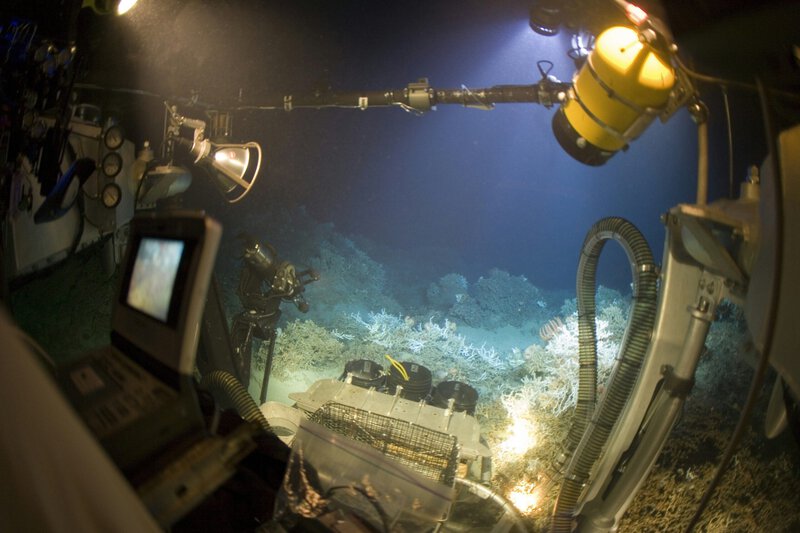
The IUCN — the International Union for Conservation of Nature and the global scientific authority on extinction risk — assessed 201 mollusk species found exclusively around hydrothermal vents. Its conclusion: 125 of those species meet the threshold for “threatened” status. A 62% threat rate within a single, geographically defined habitat is, by the standards of conservation science, extraordinary. Most assessments across broad taxonomic groups produce figures well below that level even after centuries of documented human impact on those groups.
The primary driver the IUCN identifies is not ocean acidification, not plastic pollution, and not climate change — though all of those are documented stressors elsewhere in the marine environment. It is commercial-scale deep-sea mining: the industrial extraction of metal-rich mineral deposits that form on and immediately around the very geological structures these animals depend on for survival.
The Senckenberg Research Institute, one of the world’s leading biodiversity science institutions, has described the IUCN findings as “a warning sign for the entire deep ocean” — framing vent mollusks not merely as victims of a localized threat, but as a signal of a far broader ecosystem crisis unfolding in the least-studied environment on Earth.
What Hydrothermal Vents Actually Are
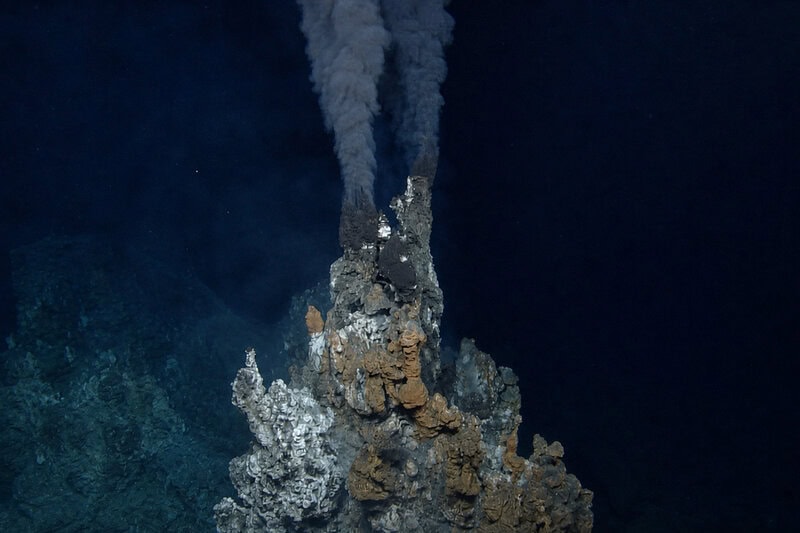
Hydrothermal vents are fissures in the ocean floor, typically located at mid-ocean ridges where tectonic plates pull apart, through which superheated, mineral-laden water erupts from Earth’s interior. Vent fluid temperatures can exceed 400°C (750°F), and the water is saturated with hydrogen sulfide — a compound toxic to the vast majority of life on this planet.
The organisms living around vents have evolved a workaround. Rather than depending on photosynthesis, the solar-powered process that underpins almost every other food web on Earth, vent ecosystems run on chemosynthesis: specialized bacteria convert hydrogen sulfide and other chemicals into biological energy, forming the base of an entire food chain that has never seen sunlight. This makes hydrothermal vents one of the only known environments where complex, multicellular life operates in complete independence from the sun — a fact with profound implications for understanding the origin of life both here and potentially elsewhere in the solar system.
Individual vent fields are geologically short-lived. A single vent system can go dormant within decades as subsurface geology shifts, which means the species that evolved there developed highly specialized adaptations: the ability to detect and navigate toward new vent sites, colonize them rapidly, and survive conditions that would kill virtually any other animal. That evolutionary specialization is also a profound vulnerability. Vent fields are separated from one another by vast stretches of cold, barren seafloor, leaving vent populations geographically isolated, often small, and genetically distinct. If a local population is destroyed, there is no reservoir elsewhere from which it can be replenished.
Millions of Years of Evolution, Concentrated in One Place
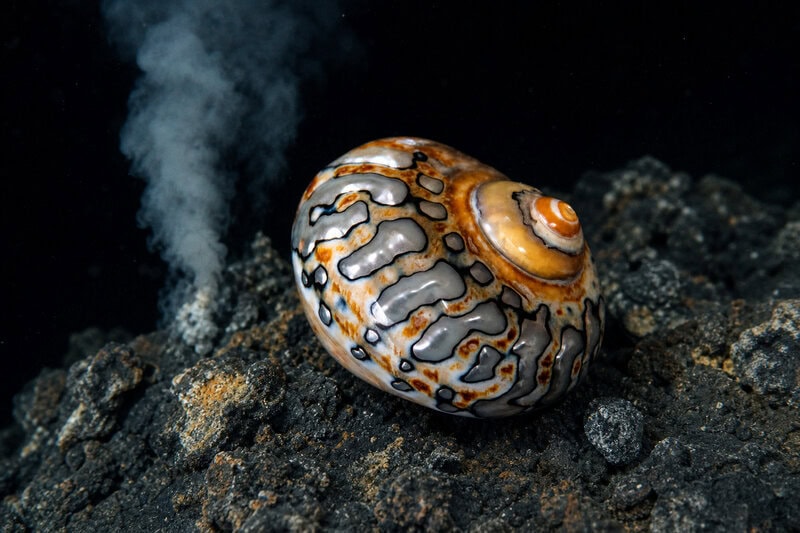
The mollusks catalogued in the IUCN update — deep-sea snails, limpets, and close relatives — are endemic to hydrothermal vents. “Endemic” means they exist in that habitat and nowhere else. For these animals, losing their habitat is not displacement. It is extinction.
Some vent snail lineages have produced structures with no parallel anywhere else in the animal kingdom. The scaly-foot snail (Chrysomallon squamiferum), already listed as Endangered on the IUCN Red List, has evolved an outer shell partially armored with iron sulfide minerals — making it the only animal known to incorporate iron sulfide into a skeletal structure. Materials scientists have studied its architecture as a potential model for impact-resistant and pressure-resistant design. That biological innovation took millions of years of incremental adaptation to darkness, crushing pressure, chemical toxicity, and extreme thermal gradients to produce. The biochemical machinery underlying it is still not fully understood.
Because endemic vent species have no refuge population elsewhere, the IUCN Red List criteria classify even moderate habitat disruption as a high extinction risk. There is no buffer. There is no secondary population available to recolonize a disturbed site. This is precisely the biological logic that pushes 62% of assessed vent mollusks into threatened categories before a single commercial mining operation targeting vent habitats has been fully executed.
How Deep-Sea Mining Works — and Why It Is So Destructive
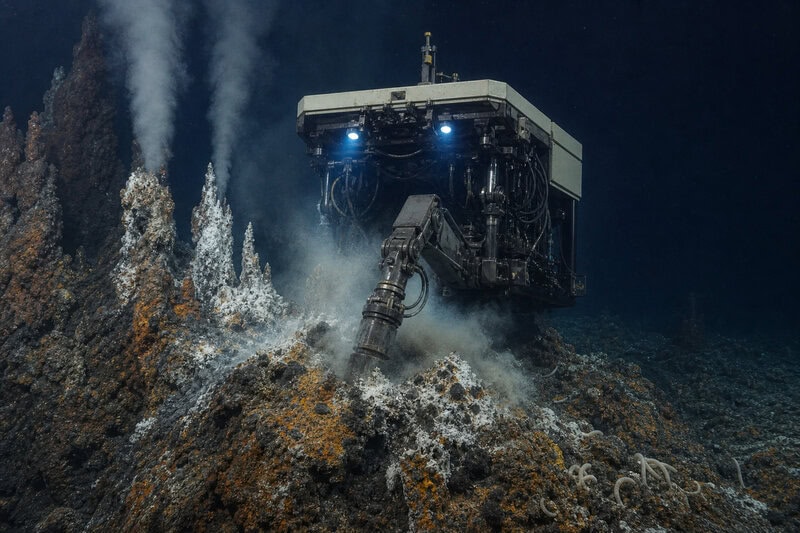
Deep-sea mining in vent contexts targets polymetallic sulfide deposits — concentrations of copper, zinc, gold, silver, and rare-earth elements that accumulate directly on and around hydrothermal vent structures over thousands of years of mineral-rich fluid circulation. Mining these deposits does not merely disturb the surrounding habitat. It physically dismantles the geological structure that makes the habitat possible in the first place.
Industrial-scale extraction uses remotely operated machines that cut, vacuum, and pump seafloor material up to surface vessels. The process generates sediment plumes that can travel hundreds of kilometers from the extraction site, smothering filter-feeding organisms and disrupting communities well beyond the immediate mining footprint. Reuters has reported on scientific concern that these organisms, already holding promise for medical and materials science, could be eliminated before their properties are fully characterized.
Recovery timelines for disturbed deep-sea ecosystems are measured not in years but in decades to centuries — if recovery occurs at all. Research examining the aftermath of a 1989 experimental mining test in the Pacific found no measurable faunal recovery after more than two decades, according to findings published in peer-reviewed literature. For vent-endemic species, the calculus is even starker: once the sulfide structure hosting a vent community is removed, that specific habitat is permanently gone. Unlike fisheries, where reduced pressure can allow stocks to rebuild, or forests, where regrowth is biologically possible, deep-sea mining of vent deposits offers no partial-recovery scenario for species that evolved to live there and nowhere else.
The Regulatory Gap: Who Governs the Deep Sea?
The International Seabed Authority (ISA), a United Nations body, currently oversees mining rights in international waters and has issued more than 30 exploration licenses across the Pacific, Atlantic, and Indian Oceans. Commercial extraction licenses could follow as early as the mid-2020s under the ISA’s existing procedural framework.
As of the IUCN report’s publication, no internationally binding framework requires mining companies to conduct comprehensive biodiversity assessments of vent ecosystems before operations begin. Conservation scientists describe this as a fundamental regulatory failure — a situation in which commercial decisions about irreversible habitat destruction are being made in the absence of species-level data. The IUCN Red List findings, for the first time, provide policymakers with a concrete, quantified scientific baseline: not a projection, not a model, but an actual count of how many species are already at measurable risk.
Several nations, including Chile, Fiji, and a coalition of Pacific Island states, have called for a precautionary pause or moratorium on deep-sea mining pending independent environmental review. The IUCN itself has endorsed a moratorium position. Industry reporting has tracked the growing tension between mining interests and conservation advocacy as the ISA moves toward finalizing commercial extraction rules.
Why This Matters Beyond the Vents

Hydrothermal vent organisms have already contributed to human medicine and science in ways that extend far beyond marine biology. Heat-stable enzymes first discovered in vent-associated bacteria are the biochemical foundation of PCR — polymerase chain reaction — the technology that amplifies DNA samples and is now essential to medical diagnostics, forensic science, and disease testing. The organisms around vents are not merely scientific curiosities. They are, in a demonstrable and documented sense, sources of biological tools humanity already relies on.
Vent ecosystems also represent one of science’s most productive windows into fundamental questions about the origin of life. They demonstrate that complex biological communities can arise, persist, and diversify entirely without solar energy — a finding directly relevant to astrobiology and the search for life in environments such as the subsurface oceans believed to exist beneath the ice of Jupiter’s moon Europa.
Senckenberg researchers argue that the IUCN findings carry a systemic warning extending well beyond the mollusks themselves. If 62% of species in a single, relatively well-studied habitat type are already threatened before commercial mining has begun at scale, the cascading effects once extraction accelerates could be rapid and, in practical terms, irreversible. The deep ocean covers more than 50% of Earth’s surface and remains among the least understood environments on the planet. The IUCN update is a reminder that industrial activity is now reaching ecosystems scientists have not yet finished cataloguing.
What Comes Next — and What Remains Contested
Conservation biologists are calling for vent fields to be formally designated as “Areas of Particular Environmental Interest” under ISA rules — a protected status that exists within the regulatory framework but has been applied inconsistently and without robust enforcement mechanisms. Strengthening that designation, and giving it genuine legal force, is among the concrete policy outcomes scientists say the IUCN findings now justify.
The mining industry has argued that extracting metals from the seafloor may carry a lower overall environmental footprint than equivalent terrestrial mining, particularly for metals critical to electric vehicle battery technology. That claim remains scientifically contested. Peer-reviewed life-cycle analysis specific to vent habitat extraction has not, as of the IUCN report’s publication, validated the industry’s comparative footprint argument. It is an assertion that warrants rigorous scrutiny — but it should not be treated as settled science in regulatory deliberations where the stakes are permanent habitat loss.
Emerging environmental DNA, or eDNA, survey techniques — which allow researchers to detect species presence from water samples containing shed genetic material — are giving scientists faster tools to map vent biodiversity before extraction decisions are finalized. The IUCN notes, however, that baseline biodiversity data for most vent fields globally remains critically incomplete, meaning consequential decisions may still be made in substantial ignorance of what would be permanently lost.
The core scientific consensus, as reflected in the IUCN Red List update, is unambiguous on the central question: commercial deep-sea mining poses a direct, measurable, and near-term extinction risk to organisms that evolution took millions of years to produce. That risk is escalating faster than the international governance frameworks designed to manage it. One hundred and twenty-five species, found nowhere else on Earth, are already in the accounting. How many more join that list will depend on decisions made in the next several years — in regulatory bodies, in corporate boardrooms, and in the governments that have both the standing and the responsibility to demand something better.